
Imagine our world as a grand tapestry woven with threads of both development and conservation. It reflects our current reality, where technology rockets forward, reshaping our lives at lightning speed, while at the same time, more and more people are stepping up to safeguard our natural treasures. Spearheaded by the UN's Sustainable Development Goals (SDGs), this movement is not just about protecting nature; it is about sculpting a future where development and environmental responsibility go together. But our mission goes beyond just the simple conservation – it is about igniting a spark in communities worldwide, inspiring them to be responsible for our shared heritage. Yet, a critical question remains in the balance: In this whirlwind of change, how can we bridge the gap and advocate communities to protect our incredible diversity of life on Earth? In our ongoing battle against environmental challenges, effective communication is the unsung hero of environmental education. That is where environmental interpretation comes in. Coined by Freeman Tilden in his seminal work “Interpreting Our Heritage” in the 1950s, it is basically a secret tool for making environmental education fun and engaging. Tilden has defined interpretation as “an educational activity that aims to reveal meanings and relationships through original objects, first-hand experience, and illustrative media rather than simply communicating factual information”.
Environmental interpretation goes beyond mere facts; it aims to reveal deeper meanings and connections through engaging experiences like storytelling and hands-on activities. By stimulating the senses and sparking emotional responses, interpretation fosters a stronger bond between visitors and the natural world. This tool can take various forms, including guided tours, signage, exhibits, educational programs, multimedia presentations, and interactive experiences. The goal is to spark curiosity, foster a sense of connection to nature, and encourage environmental stewardship. Many professionals, including park rangers, naturalists, educators, and exhibit designers, employ environmental interpretation techniques to facilitate meaningful interactions between people and their environment. Because when we understand and appreciate nature, we are more likely to protect it. So, let us revisit Tilden's six core principles, exploring their enduring relevance in today's guiding practices and how they can lead us to foster deeper connections with the wonders around us.

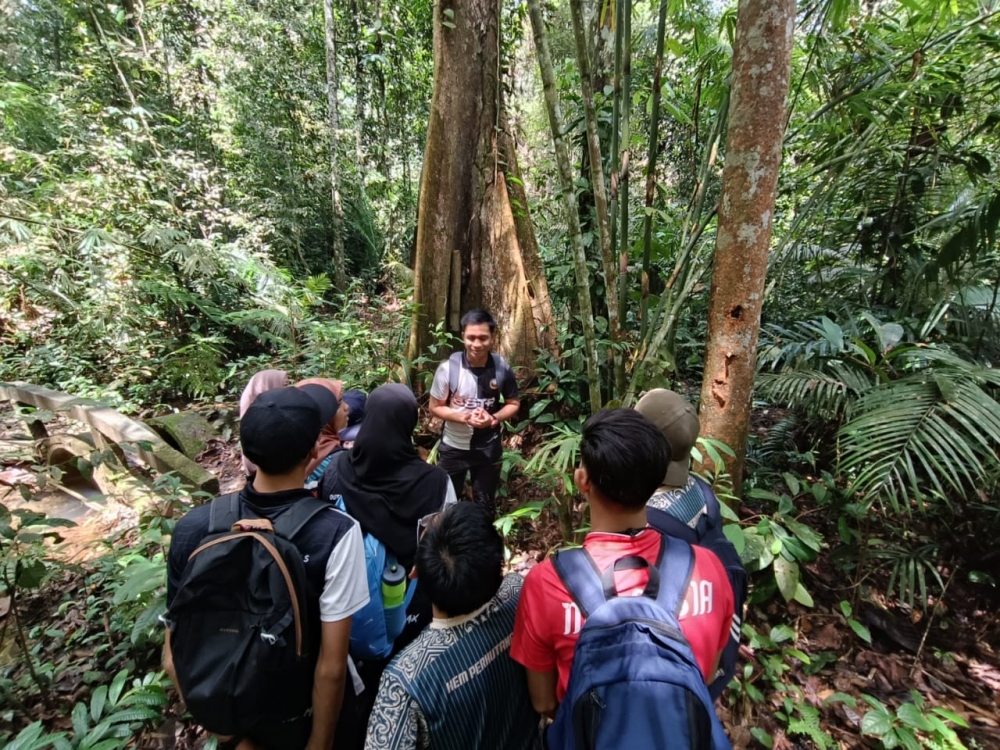
This principle encourages interpreters to establish connections between the natural world and the personal experiences, interests, and concerns of visitors. Practitioners can facilitate meaningful connections by relating information to visitors' lives. Interpretation bridges the gap between the natural world and the visitor's background. By forging connections between the natural world and individuals' lives, interpreters can evoke a sense of relevance and meaning. For example, during a nature walk along a riverbank, a nature guide may relate the importance of water conservation to visitors' daily lives. By highlighting the impact of individual water usage on local ecosystems and communities, the nature guide encourages visitors to consider their role in protecting water resources.
Principle 2 ‘Revelation, Beyond the Facts’
At the core of Tilden's framework lies the concept of interpretation as a process of revelation. Instead of simply listing facts, interpreters should illuminate the hidden meanings, stories, and connections embedded within the natural world. They serve as guides, employing various techniques to unveil nature's wonders and inviting visitors to see the familiar sights with their fresh eyes. For example, while trekking through a forest, nature guides may reveal the ecological relationships between different plant and animal species. By pointing out symbiotic interactions, such as the relationship between certain plants and fungi, the guide unveils the interconnectedness of life in the forest ecosystem.
Principle 3 ‘Interpretation as an Artform’
Tilden recognized the importance of creating memorable and impactful interpretive experiences by engaging with multiple senses. This principle of the arts advocates for the interpreters to use creative and imaginative approaches to interpretation, such as storytelling, music, visual arts, and performance, to bring the natural world to life. Practitioners can harness the power of artistic expression to engage visitors' emotions and imagination. For example, to convey the cultural significance of a sacred site within a national park. By sharing myths, legends, and folklore associated with the landscape, the guide taps into visitors' emotional connections to the land, fostering a deeper appreciation for its cultural heritage.
Principle 4 ‘Provoke, Don’t Instruct’
Tilden emphasized the importance of capturing visitors' attention and stimulating their curiosity through engaging and thought-provoking experiences that can encourage visitors to explore new perspectives and ideas. Tapping into visitors’ emotions will evoke emotional responses, such as awe, wonder, and empathy, that resonate with a sense of responsibility towards conservation. For example, at a wildlife rehabilitation center, an interpreter may provoke visitors' curiosity by asking questions like, "Imagine what this landscape looked like before humans arrived?" or present a scenario where visitors must choose between development and conservation. Let them grapple with the complexities and find their own answers.
Principle 5 ‘Presenting the Whole Picture’
The principle of the whole underscores the interconnectedness of natural and cultural systems, encouraging interpreters to present holistic perspectives that encompass multiple dimensions of the environment. By presenting a holistic view of the environment, interpreters can bridge the gap between science, history, and culture to show the bigger picture and how human actions can impact the delicate balance. For example, an interpreter who leads a tour of a historic site may contextualize the landscape's significance within broader ecological, social, and historical contexts. This is to make sure the interpreter provides the visitors with a comprehensive understanding of the site's significance without leaving them hanging in the information. Principle 6 ‘Tailoring Interpretation with the Audiences’ Interpretation is inherently social, unfolding within the context of human relationships, culture, and society. Interpreters must navigate diverse audiences, addressing varying levels of prior knowledge, cultural backgrounds, and communication preferences. For example, a nature guide who leads a tour through a botanical garden considers the diverse backgrounds of the visitors. Recognizing that each group may have different interests and levels of knowledge, the guide will adapt their interpretation accordingly. By catering to the varied backgrounds and interests of visitors, the guide ensures that everyone can fully appreciate and connect with the beauty and significance of the botanical garden.
Freeman Tilden's six principles of environmental interpretation continue to serve as a guiding framework for engaging audiences with the natural world. These principles have no sequence and can be used in any order. Remember, as Tilden himself said, "Through interpretation, understanding; through understanding, appreciation; through appreciation, protection". By incorporating all six principles into their guiding activities and interpretation programs, practitioners can enhance visitors' experiences, foster meaningful connections with the natural world, and inspire a sense of stewardship and responsibility toward conservation. The future of our environment hinges on fostering a sense of wonder and responsibility within every visitor. Tilden's legacy provides the tools to achieve this, ensuring a future where human progress and environmental care go hand-in-hand.
