
From Campus to Green Careers
Introduction
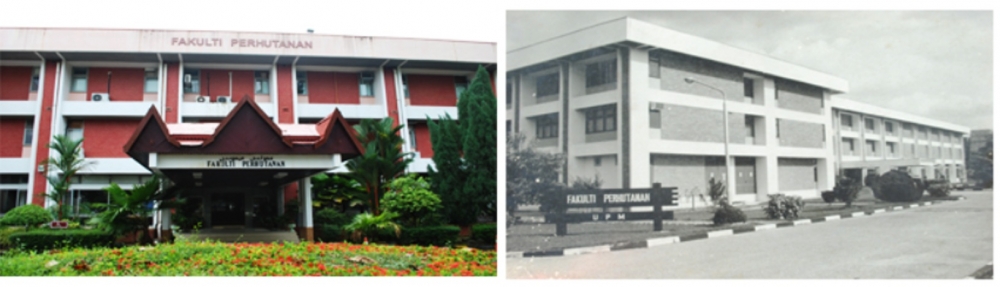
In March 2020, Universiti Putra Malaysia (UPM) consolidated its Faculty of Forestry and Faculty of Environmental Studies to bolster Malaysia's green economy. This reform, which took place nearly five decades after the Faculty of Forestry was established in 1971, reflects a growing recognition that conventional departmental divisions are ill-suited to addressing complex sustainability issues. The merger is a critical institutional commitment to environmental reform. However, its genuine achievement should be evaluated by the employability and relevance of its graduates. The green economy in Malaysia is generating new employment opportunities; however, graduate underemployment and skills disparities necessitate immediate curriculum reform and industry-university alignment (DOSM, 2024; ACCCIM, 2025). It is essential for educational institutions to adapt proactively to the evolving demands of the sustainable development sector. Collaborations with industry stakeholders can ensure that graduates are well-equipped with practical skills and knowledge relevant to the current market needs. Continuous curriculum updates and specialised training programs are also vital to maintaining the relevance of academic offerings in this rapidly changing landscape.
In March 2020, Universiti Putra Malaysia (UPM) consolidated its Faculty of Forestry and Faculty of Environmental Studies to bolster Malaysia's green economy. This reform, which took place nearly five decades after the Faculty of Forestry was established in 1971, reflects a growing recognition that conventional departmental divisions are ill-suited to addressing complex sustainability issues. The merger is a critical institutional commitment to environmental reform. However, its genuine achievement should be evaluated by the employability and relevance of its graduates. The green economy in Malaysia is generating new employment opportunities; however, graduate underemployment and skills disparities necessitate immediate curriculum reform and industry-university alignment (DOSM, 2024; ACCCIM, 2025). It is essential for educational institutions to adapt proactively to the evolving demands of the sustainable development sector. Collaborations with industry stakeholders can ensure that graduates are well-equipped with practical skills and knowledge relevant to the current market needs. Continuous curriculum updates and specialised training programs are also vital to maintaining the relevance of academic offerings in this rapidly changing landscape.
Institutional Transformation and Educational Relevance
Implementing comprehensive environmental and forestry studies marks a significant shift from traditional resource-based training towards a more holistic education that emphasises sustainability, environmental responsibility, and long-term ecological balance. Graduates with a deep understanding of economics, advanced technology, governance frameworks, ecosystems, and social systems are essential to effectively addressing the complex, multifaceted environmental issues we face today. Nevertheless, institutional transformation alone may not guarantee improved employment outcomes for graduates. The merger risks becoming merely an administrative exercise rather than truly fostering an educational revolution if necessary, adjustments to curriculum design, increased industry engagement, and enhanced skills training are not thoughtfully implemented and continuously refined (Ratnasingam et al., 2013).
Job Growth in the Green Economy
It is anticipated that Malaysia's green economy will generate employment opportunities in the coming decades. According to ACCCIM (2025), the number of green growth positions could reach 310,000 by 2050. This industry had achieved early momentum by 2023, as evidenced by the 30,000 green jobs it had created (DOSM, 2024). The construction and energy sectors are the most in demand for green talent, as evidenced by a 60% increase in job advertisements over the past year (ACCCIM, 2025). This expansion is fostered by energy transition strategies and extensive infrastructural development. Consequently, the growth of green jobs is expected to positively impact Malaysia’s economy while also contributing to sustainable development goals.
Implementing comprehensive environmental and forestry studies marks a significant shift from traditional resource-based training towards a more holistic education that emphasises sustainability, environmental responsibility, and long-term ecological balance. Graduates with a deep understanding of economics, advanced technology, governance frameworks, ecosystems, and social systems are essential to effectively addressing the complex, multifaceted environmental issues we face today. Nevertheless, institutional transformation alone may not guarantee improved employment outcomes for graduates. The merger risks becoming merely an administrative exercise rather than truly fostering an educational revolution if necessary, adjustments to curriculum design, increased industry engagement, and enhanced skills training are not thoughtfully implemented and continuously refined (Ratnasingam et al., 2013).
Job Growth in the Green Economy
It is anticipated that Malaysia's green economy will generate employment opportunities in the coming decades. According to ACCCIM (2025), the number of green growth positions could reach 310,000 by 2050. This industry had achieved early momentum by 2023, as evidenced by the 30,000 green jobs it had created (DOSM, 2024). The construction and energy sectors are the most in demand for green talent, as evidenced by a 60% increase in job advertisements over the past year (ACCCIM, 2025). This expansion is fostered by energy transition strategies and extensive infrastructural development. Consequently, the growth of green jobs is expected to positively impact Malaysia’s economy while also contributing to sustainable development goals.
New Careers in Sustainability
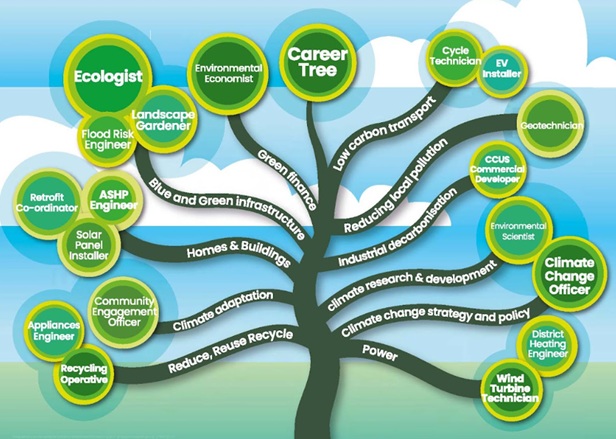
Many career opportunities are available to graduates of environmental and forestry programs as a result of the green revolution. Climate governance, biodiversity offset planning, carbon accounting, and environmental impact assessment are notable examples. Carbon credit auditors, REDD+ project administrators, and corporate decarbonization strategists are becoming increasingly prevalent (ACCCIM, 2025). Environmental, social, and governance (ESG) consulting is also on the rise, particularly in the financial sector. In terms of green talent concentration, banking typically lags behind extractive industries; however, its green workforce expanded by 14.8% year over year, indicating a growing demand for sustainability expertise (ACCCIM, 2025).
Transformation of Green Professions and Digitalisation
Digital transformation is revolutionising forestry and environmental management. Remote sensing, GIS, AI-based species identification, and blockchain-enabled timber traceability are becoming commonplace (Ratnasingam et al., 2013). These technologies now enable near real-time forest monitoring, automated deforestation detection, and predictive environmental risk assessment, significantly improving the speed and accuracy of conservation decision-making. The Malaysian forestry and wood-based industries require graduates who can manage complex data-driven workflows and utilise new technology. Therefore, there is a need for digitally integrated curricula. This transformation involves environmental data science, urban forestry, and ecosystem service valuation.
Hybrid Skills and Labour Market Competitiveness
Due to these modifications, graduates are expected to possess hybrid capabilities that combine environmental expertise with quantitative and computational skills, including spatial data analysis, drone operation, and programming. This diverse talent set provides you with a competitive advantage. Between 2022 and 2023, a skills shortage persisted, as the number of job listings that required at least one green skill increased by 15.2%, while the global supply of green talent increased by 12.3% (ACCCIM, 2025). The green economy is more advantageous to graduates who are digitally adept.
Labor Market Structure and Underemployment
Despite robust sectoral growth, Malaysia is grappling with a fundamental issue: graduate underemployment. In 2024, graduate unemployment decreased to 3.2%, and labour force participation increased to 86.0%. Nevertheless, aggregate metrics obscure the substantial obstacles faced by less-experienced graduate students. DOSM (2024) indicates substantial talent underutilization, as evidenced by the fact that 66.0% of 24-year-old graduates face economic challenges. Although this does not account for sector-specific wage differences or the low earnings prospects of many entry-level environmental professions, the median graduate income increased from RM4,409 in 2023 to RM4,521 in 2024 (DOSM, 2024).
Skills Mismatch and Training System Limitations
Underemployment among graduates is a consequence of academic training failing to align with industry requirements. The green-skilled workforce experienced a mere 4.8% growth between 2022 and 2023, indicating a talent gap (ACCCIM, 2025). Conversely, green employment increased by 22.4%. The development of green skills is limited to 15% of Malaysian workers due to time constraints, cost, and inadequate institutional incentives (ACCCIM, 2025). Nevertheless, these structural barriers impede the employability of sustainability graduates, indicating that sectoral expansion alone is insufficient to improve labour market outcomes.
Reforms that Enhance Employability
To resolve these concerns, it is imperative to reform curriculum design, industry engagement, and skills development pathways. The merged Faculty of Forestry and Environment should establish stakeholder advisory boards that include industry leaders and indigenous community representatives, mandate sustainability-focused internships, and provide micro-credentials in high-demand fields such as drone-based environmental surveying and carbon verification. The labour market alignment would be enhanced through curriculum co-design with the Malaysian Timber Certification Council and the Green Technology Council. The government must allocate additional resources to green skills training to quadruple Malaysia's green workforce by 2050, as current development trajectories are insufficient to meet anticipated demand (ACCCIM, 2025).
Conclusion
This merger of the forestry and environmental faculties at UPM in 2020 represents a significant step toward aligning higher education with Malaysia's sustainability objectives. The green economy presents potential opportunities in digital forestry, ESG consultancy, and climate governance. However, graduates continue to be adversely affected by underemployment and skills mismatches (DOSM, 2024; ACCCIM, 2025). The success of this institutional reform is contingent upon investment in future-ready skills, industry partnership, and curricular innovation. Without these measures, Malaysia risks producing graduates who are academically qualified but economically underutilised during its green transition.
References
ACCCIM. (2025). Transitioning Malaysia into green economy powerhouse. Associated Chinese Chambers of Commerce and Industry of Malaysia.
https://acccimserc.com/images/researchpdf/2025/20250120%20Transitioning%20Malaysia%20into%20Green%20Economy%20Powerhouse.pdf
Department of Statistics Malaysia. (2025, October 31). Graduate statistics 2024. https://www.dosm.gov.my/portal-main/release-content/graduates-statistics-2024
Department of Statistics Malaysia. (2024, June 10). Labour force statistics, Malaysia, 2024.
https://www.dosm.gov.my/portal-main/release-content/labour-force-statistics-april-2024
Ratnasingam, J., Ioras, F., Vacalie, C. C., & Wenming, L. (2013). The future of professional forestry education: Trends and challenges from the Malaysian perspective. Notulae Botanicae Horti Agrobotanici Cluj-Napoca, 41(1), 12–20. https://doi.org/10.15835/nbha4119139
Many career opportunities are available to graduates of environmental and forestry programs as a result of the green revolution. Climate governance, biodiversity offset planning, carbon accounting, and environmental impact assessment are notable examples. Carbon credit auditors, REDD+ project administrators, and corporate decarbonization strategists are becoming increasingly prevalent (ACCCIM, 2025). Environmental, social, and governance (ESG) consulting is also on the rise, particularly in the financial sector. In terms of green talent concentration, banking typically lags behind extractive industries; however, its green workforce expanded by 14.8% year over year, indicating a growing demand for sustainability expertise (ACCCIM, 2025).
Transformation of Green Professions and Digitalisation
Digital transformation is revolutionising forestry and environmental management. Remote sensing, GIS, AI-based species identification, and blockchain-enabled timber traceability are becoming commonplace (Ratnasingam et al., 2013). These technologies now enable near real-time forest monitoring, automated deforestation detection, and predictive environmental risk assessment, significantly improving the speed and accuracy of conservation decision-making. The Malaysian forestry and wood-based industries require graduates who can manage complex data-driven workflows and utilise new technology. Therefore, there is a need for digitally integrated curricula. This transformation involves environmental data science, urban forestry, and ecosystem service valuation.
Hybrid Skills and Labour Market Competitiveness
Due to these modifications, graduates are expected to possess hybrid capabilities that combine environmental expertise with quantitative and computational skills, including spatial data analysis, drone operation, and programming. This diverse talent set provides you with a competitive advantage. Between 2022 and 2023, a skills shortage persisted, as the number of job listings that required at least one green skill increased by 15.2%, while the global supply of green talent increased by 12.3% (ACCCIM, 2025). The green economy is more advantageous to graduates who are digitally adept.
Labor Market Structure and Underemployment
Despite robust sectoral growth, Malaysia is grappling with a fundamental issue: graduate underemployment. In 2024, graduate unemployment decreased to 3.2%, and labour force participation increased to 86.0%. Nevertheless, aggregate metrics obscure the substantial obstacles faced by less-experienced graduate students. DOSM (2024) indicates substantial talent underutilization, as evidenced by the fact that 66.0% of 24-year-old graduates face economic challenges. Although this does not account for sector-specific wage differences or the low earnings prospects of many entry-level environmental professions, the median graduate income increased from RM4,409 in 2023 to RM4,521 in 2024 (DOSM, 2024).
Skills Mismatch and Training System Limitations
Underemployment among graduates is a consequence of academic training failing to align with industry requirements. The green-skilled workforce experienced a mere 4.8% growth between 2022 and 2023, indicating a talent gap (ACCCIM, 2025). Conversely, green employment increased by 22.4%. The development of green skills is limited to 15% of Malaysian workers due to time constraints, cost, and inadequate institutional incentives (ACCCIM, 2025). Nevertheless, these structural barriers impede the employability of sustainability graduates, indicating that sectoral expansion alone is insufficient to improve labour market outcomes.
Reforms that Enhance Employability
To resolve these concerns, it is imperative to reform curriculum design, industry engagement, and skills development pathways. The merged Faculty of Forestry and Environment should establish stakeholder advisory boards that include industry leaders and indigenous community representatives, mandate sustainability-focused internships, and provide micro-credentials in high-demand fields such as drone-based environmental surveying and carbon verification. The labour market alignment would be enhanced through curriculum co-design with the Malaysian Timber Certification Council and the Green Technology Council. The government must allocate additional resources to green skills training to quadruple Malaysia's green workforce by 2050, as current development trajectories are insufficient to meet anticipated demand (ACCCIM, 2025).
Conclusion
This merger of the forestry and environmental faculties at UPM in 2020 represents a significant step toward aligning higher education with Malaysia's sustainability objectives. The green economy presents potential opportunities in digital forestry, ESG consultancy, and climate governance. However, graduates continue to be adversely affected by underemployment and skills mismatches (DOSM, 2024; ACCCIM, 2025). The success of this institutional reform is contingent upon investment in future-ready skills, industry partnership, and curricular innovation. Without these measures, Malaysia risks producing graduates who are academically qualified but economically underutilised during its green transition.
References
ACCCIM. (2025). Transitioning Malaysia into green economy powerhouse. Associated Chinese Chambers of Commerce and Industry of Malaysia.
https://acccimserc.com/images/researchpdf/2025/20250120%20Transitioning%20Malaysia%20into%20Green%20Economy%20Powerhouse.pdf
Department of Statistics Malaysia. (2025, October 31). Graduate statistics 2024. https://www.dosm.gov.my/portal-main/release-content/graduates-statistics-2024
Department of Statistics Malaysia. (2024, June 10). Labour force statistics, Malaysia, 2024.
https://www.dosm.gov.my/portal-main/release-content/labour-force-statistics-april-2024
Ratnasingam, J., Ioras, F., Vacalie, C. C., & Wenming, L. (2013). The future of professional forestry education: Trends and challenges from the Malaysian perspective. Notulae Botanicae Horti Agrobotanici Cluj-Napoca, 41(1), 12–20. https://doi.org/10.15835/nbha4119139