

Forests are often appreciated for their scenic beauty, biodiversity, and recreational value. However, beyond their lush greenery, their role in protecting water resources is often overlooked. Rivers originating from forested catchments provide water for domestic use, agriculture, industry, and aquatic ecosystems. Healthy forests are therefore closely linked to clean and sustainable water supplies.
In Malaysia, increasing pressure from urbanization, agricultural expansion, infrastructure development, and land-use change has raised concerns about the long-term sustainability of water resources. Activities such as land clearing and uncontrolled development can accelerate soil erosion, increase sedimentation, and degrade river water quality. Against this backdrop, forest reserves play an increasingly important role as natural water catchments and environmental buffer zones.
Although Melaka is one of the smaller states in Peninsular Malaysia and does not possess extensive forested landscapes, its remaining forest reserves continue to provide significant ecological services. In fact, the relatively small size of these forests makes them even more important to conserve. Small forest ecosystems are generally more vulnerable to disturbances such as urban expansion and land fragmentation. Every remaining hectare of forest contributes significantly to regulating hydrological processes and maintaining river water quality.
Forests function like natural sponges within the hydrological cycle. During rainfall events, forest canopies intercept rainwater while the soil beneath absorbs and stores water. This process reduces surface runoff, minimizes soil erosion, and supports continuous river flow during dry periods. Vegetation and root systems also stabilize soil and reduce sediment transport into rivers.
Conversely, when forests are disturbed or cleared, exposed soil becomes highly susceptible to erosion. Sediments, nutrients, and pollutants are then transported into river systems, resulting in increased turbidity and declining water quality. Such conditions may negatively affect aquatic ecosystems and reduce the suitability of water for human use.
The importance of river protection in Melaka can be understood through the historical condition of the Melaka River itself. During the 1990s, the river experienced severe pollution due to rapid urban development, domestic waste discharge, sedimentation, and uncontrolled human activities along the river corridor. At one point, sections of the river were heavily contaminated, poorly maintained, and associated with unpleasant odors and degraded environmental conditions. The deterioration of the river not only affected water quality and aquatic ecosystems but also reduced the aesthetic and socio-economic value of the surrounding areas.
Recognizing the seriousness of the issue, the Melaka State Government initiated a major river rehabilitation program in the early 2000s. Approximately RM350 million was invested to restore and rehabilitate the Melaka River through river cleaning, beautification works, riverbank stabilization, improved drainage systems, and pollution control measures. The rehabilitation project eventually transformed the river into one of Melaka’s major tourism and recreational attractions while significantly improving its environmental condition.
This successful rehabilitation effort demonstrates how river degradation can be reversed through strong environmental management, long-term planning, and government commitment. More importantly, it highlights the importance of protecting upstream forest catchments as part of broader river conservation strategies. Without healthy forests to regulate runoff, control erosion, and filter sediments, downstream river rehabilitation efforts become increasingly difficult and costly.
Recognizing the importance of forest ecosystems in protecting water resources, a study was conducted to evaluate river water quality in selected forest reserves and recreational forest areas in Melaka. The study focused on several important sites, including Batang Melaka Forest Reserve (1271.23ha), Bukit Senggeh Forest Reserve (1612.48ha), Sedanan Forest Reserve (1705.03ha), and Bukit Batu Lebah Eco Forest Park which is located within Bukit Senggeh Forest Reserve).
These forest reserves were selected because they contain rivers and water bodies that are ecologically important to nearby communities and surrounding ecosystems. Despite increasing development pressures in certain areas, these forests continue to function as important catchment systems that help sustain water flow and maintain water quality.
The study involved both field measurements and laboratory analyses. Water samples were collected from upstream, downstream, and lake areas to assess variations in water quality along the river system. Several important parameters were measured, including temperature, pH, dissolved oxygen (DO), turbidity, total dissolved solids (TDS), and total suspended solids (TSS).
The findings showed that most water quality parameters remained within acceptable standards, indicating that the forest reserves are still functioning effectively in protecting water resources. Generally, upstream areas with denser forest cover exhibited cleaner water and lower turbidity levels compared to downstream sections that were more influenced by surrounding human activities.
One notable observation involved dissolved oxygen (DO) levels, which ranged between Class III and Class IV at several locations. Dissolved oxygen is a critical parameter because it reflects the ability of rivers to support aquatic life. Lower DO concentrations may result from slower water flow, organic matter decomposition, or elevated water temperatures.
Meanwhile, pH and total dissolved solids (TDS) values were mostly classified under Class I according to Malaysia’s National Water Quality Standards (NWQS), indicating relatively stable and minimally contaminated water conditions. Turbidity values generally ranged between Class I and Class IIA, although some locations recorded higher readings following rainfall events and sediment runoff.
Among the rivers studied, Batang Melaka River recorded the highest turbidity levels, likely influenced by soil erosion and surface runoff from nearby land-use activities. In contrast, Sungai Gapis exhibited the lowest turbidity values, suggesting that its surrounding catchment area remains relatively well preserved.
The findings clearly demonstrate that even relatively small forest reserves can play a major role in maintaining water quality and regulating hydrological processes. In highly developed regions such as Melaka, forest reserves serve as critical environmental buffer zones that protect rivers from excessive sedimentation, pollution, and hydrological instability.
However, the study also highlights growing challenges facing forest and water resource management. Land clearing, infrastructure development, agricultural activities, and climate change continue to threaten river ecosystems. Increasingly intense rainfall events may accelerate soil erosion and sediment transport, while prolonged dry periods may reduce river flow and affect water quality.
These challenges underscore the urgent need for integrated river basin management approaches that recognize the close relationship between forests, rivers, land use, and human activities. Protecting riparian buffer zones, controlling development near catchment areas, reducing erosion-prone activities, and conducting continuous water quality monitoring are among the important measures needed to sustain water resources.
Equally important is public awareness and community involvement. Forest conservation should not be viewed solely as a biodiversity issue, but also as a critical strategy for ensuring long-term water security and environmental resilience.
The study ultimately serves as an important reminder that small forests should never be underestimated. Although Melaka’s forest reserves may be limited in size, their ecological functions are immense. These forests continue to provide essential ecosystem services that benefit both people and the environment.
As development pressures continue to increase, protecting forest reserves will become increasingly important in ensuring clean water, stable ecosystems, and sustainable living conditions for future generations.
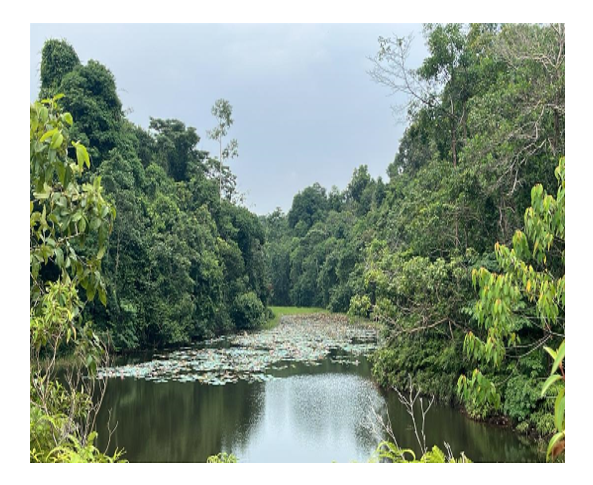
Figure 1: A Class I river flowing from the Bukit Senggeh Forest Reserve towards Jus Dam, one of the important water supply reservoirs in Melaka
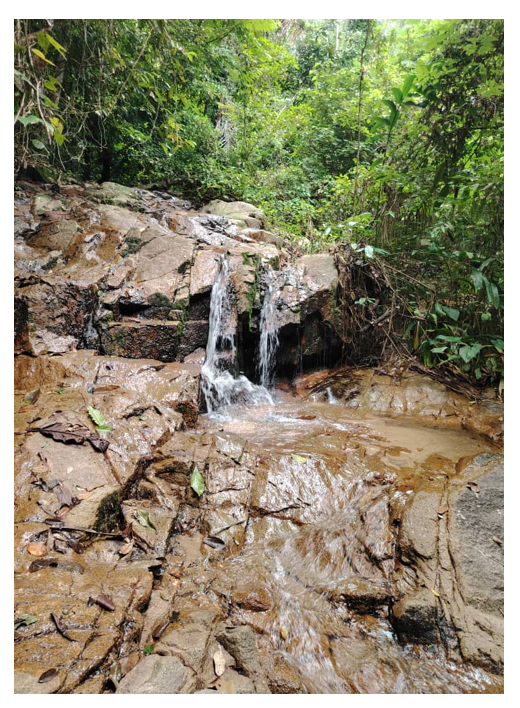
Figure 2: Class I Bukit Gapis waterfall, flowing from Bukit Senggeh Forest Reserve to Sungai Batang Melaka, which is the main tributary of Sungai Melaka
