
The conversion of tropical peat swamp forests to oil palm plantations disrupts natural hydrology by replacing a high, stable water table with an artificially drained system characterised by deeper and more variable water levels. This shift from anaerobic to aerobic conditions triggers rapid peat oxidation and subsidence, leading to significant carbon dioxide emissions and a permanent loss of the ecosystem's water-holding capacity. Consequently, the landscape becomes increasingly vulnerable to seasonal extremes, heightening the risk of catastrophic fires during dry periods and flash flooding during heavy rains.
A comparative study in Selangor’s Raja Musa peat swamp forest reveals that converting wetlands to oil palm plantations significantly lowers the water table and reduces soil moisture. The influence of rainfall and land use on water table depth, soil moisture, pH, and soil compaction in the Raja Musa peat swamp forest and nearby oil palm plantations in Selangor was examined. A total of 20 tube wells (10 in the peat swamp and 10 in the oil palm plantation). Data were collected biweekly, covering both dry and wet seasons. Parameters measured include water table depth, soil moisture, soil pH, and soil compaction.
The results show clear differences in water table behaviour between the two land uses. The peat swamp forest consistently recorded higher water levels, ranging from approximately 16.21 m to 17.01 m above sea level. In contrast, the oil palm plantation showed lower water levels, ranging from about 16.06 m to 16.67 m. While peat swamps maintain stable, high water levels with a mean depth of -0.31 m, oil palm plantations exhibit deeper, more volatile water tables, averaging -0.57 m and showing greater seasonal fluctuations due to drainage systems (Figure 1). These findings highlight that land use changes profoundly affect hydrological stability and soil properties in crucial peatland ecosystems.
Seasonal variation also influenced water table dynamics. During the dry season, the peat swamp recorded a mean water table depth of about -0.56 m, while during the wet season it increased to around -0.14 m. Similarly, in the oil palm plantation, the mean water table depth changed from approximately -0.75 m in the dry season to -0.38 m in the wet season. Despite this increase, water table levels in the plantation remained consistently deeper than those in the peat swamp. Rainfall variation also played an important role in influencing water table levels. Higher rainfall recorded during the latter part of the study period corresponded to increases in water table levels at both sites, indicating a strong relationship between rainfall and water table response (Figure 2). Statistical analysis showed that the differences in water table depth between the two sites were significant (1.954 x 10-08), indicating that land use strongly influences water table conditions.
In addition to hydrological differences, soil properties also varied between the two sites. The peat swamp had higher soil moisture, indicating saturated conditions, whereas the oil palm plantation had lower moisture levels. Soil pH in the peat swamp ranged between 3.5 and 4.5, indicating strongly acidic conditions, whereas the plantation recorded slightly higher pH values. However, soil compaction did not differ significantly between the two land uses. Despite this, the drainage system in oil palm plantations contributes to deeper water tables and reduced water retention compared to natural peat swamp forests (Table 1).
Overall, the findings indicate that land use change from peat swamp forest to oil palm plantation affects water table depth, seasonal response, and soil properties. The peat swamp forest maintained higher and more stable water levels, while the oil palm plantation showed a deeper and more variable water table. To mitigate the hydrological impacts of converting peat swamp forests, a transition from drainage-heavy models to those centred on rewetting and stringent water table management must be implemented. For existing plantations, this involves maintaining water levels between -30 cm and -50 cm using structures like canal blocks and water gates to prevent peat oxidation, land subsidence, and fire risks without compromising crop yields. Beyond operational changes, broader solutions include adopting paludiculture (cultivating native, water-loving species like sago), implementing multi-stakeholder governance to protect remaining intact forests, and strictly enforcing "No Peat" policies to halt any new drainage-based development.
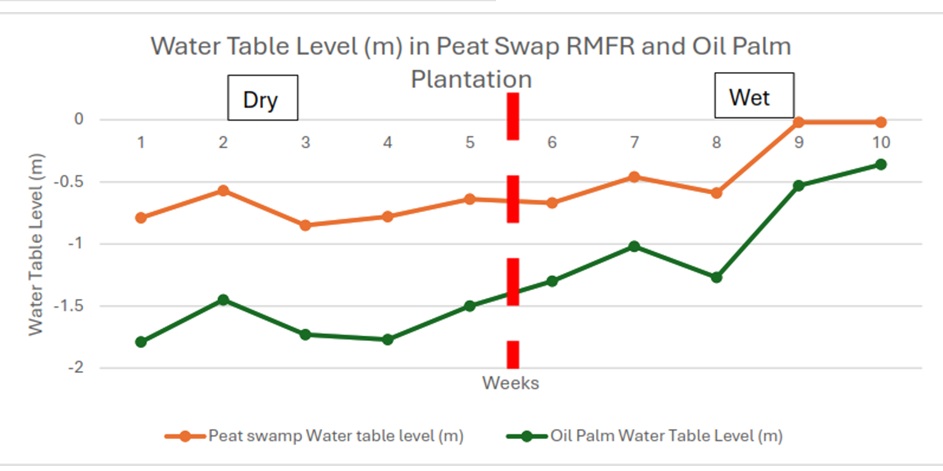
Figure 1: Water table in peat swamp higher than oil palm plantation
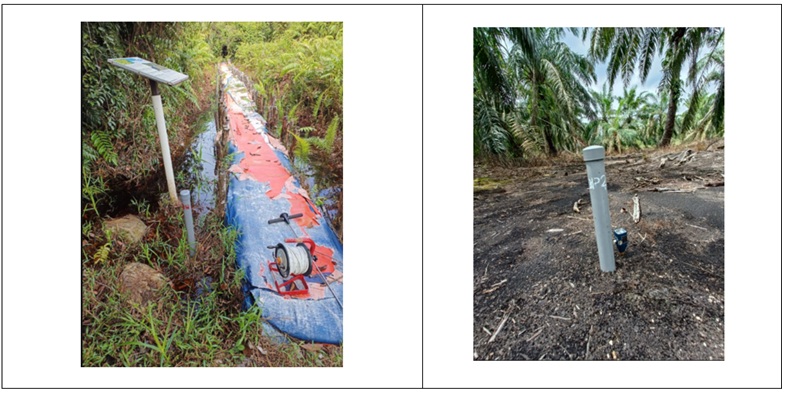
Figure 2: Condition peat swamp (left) and oil palm (right) during wet season
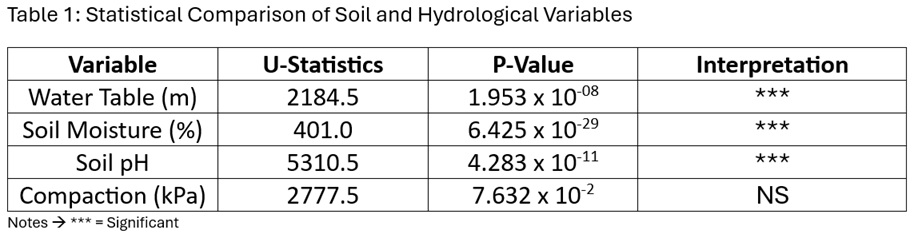
Table 1: Statistical Comparison of Soil and Hydrological Variables
