
From Observation to Innovation as Students Pitch a Greener Future
People often talk about sustainability in terms of global goals and institutional plans, but on campus, it typically appears in daily routines, such as how people use water, manage waste, commute, or make choices related to campus living practices. These practices are closely aligned with the United Nations' calls for more sustainable consumption and production, with Target 12.8 explicitly emphasising the need to ensure that people everywhere have access to information and knowledge for sustainable living. On campus, this target manifests in both formal and informal efforts to promote environmental education and sustainability awareness, empowering students and staff to adopt sustainable practices in their daily lives and institutional routines (Cai et al., 2025; Filho et al., 2023).
Rather than seeing sustainability as an abstract concept, higher education increasingly emphasises experiential and place-based learning, in which students are invited to identify and propose improvements. For instance, students determine ecological footprints at universities, identify hotspots, analyse how daily campus activities such as energy use could drive environmental impacts, and suggest intervention strategies (Genta et al., 2021). In light of this, students taking the course Sustainability, Ethics and Environmental Issues were introduced to two linked learning activities (i.e., the Campus Sustainability Treasure Hunt and the Green Pitch Challenge). These activities are designed to help students connect sustainability knowledge with real-life observation, reflection, and creativity in solving environmental issues on campus. First, students are required to identify sustainable and unsustainable campus practices, interpret them through frameworks such as environmental economics, industrial ecology, and the circular economy, and then develop innovative, practical ideas aligned with SDG Target 12.8.
Through the learning activities, students expressed the greatest concern about waste and recycling, particularly in residential colleges and dining areas. Students noticed that waste separation in these areas could be improved, and food waste could be reduced. According to their survey, many still used single-use containers. To improve the current situation, students proposed ideas such as smart segregation bins, smart composting systems, Bring-Your-Own-Container campaigns with QR rewards, and biodegradable plates made from mycelium. Of course, some of these ideas may be more challenging to implement, but overall, the students are starting to think beyond disposal. They now see that waste is not just something to throw away. But also something to reduce, redesign, reuse, and recycle. These ideas could be further developed to support UPM's efforts to accelerate on-campus waste reduction.
Rather than seeing sustainability as an abstract concept, higher education increasingly emphasises experiential and place-based learning, in which students are invited to identify and propose improvements. For instance, students determine ecological footprints at universities, identify hotspots, analyse how daily campus activities such as energy use could drive environmental impacts, and suggest intervention strategies (Genta et al., 2021). In light of this, students taking the course Sustainability, Ethics and Environmental Issues were introduced to two linked learning activities (i.e., the Campus Sustainability Treasure Hunt and the Green Pitch Challenge). These activities are designed to help students connect sustainability knowledge with real-life observation, reflection, and creativity in solving environmental issues on campus. First, students are required to identify sustainable and unsustainable campus practices, interpret them through frameworks such as environmental economics, industrial ecology, and the circular economy, and then develop innovative, practical ideas aligned with SDG Target 12.8.
Through the learning activities, students expressed the greatest concern about waste and recycling, particularly in residential colleges and dining areas. Students noticed that waste separation in these areas could be improved, and food waste could be reduced. According to their survey, many still used single-use containers. To improve the current situation, students proposed ideas such as smart segregation bins, smart composting systems, Bring-Your-Own-Container campaigns with QR rewards, and biodegradable plates made from mycelium. Of course, some of these ideas may be more challenging to implement, but overall, the students are starting to think beyond disposal. They now see that waste is not just something to throw away. But also something to reduce, redesign, reuse, and recycle. These ideas could be further developed to support UPM's efforts to accelerate on-campus waste reduction.
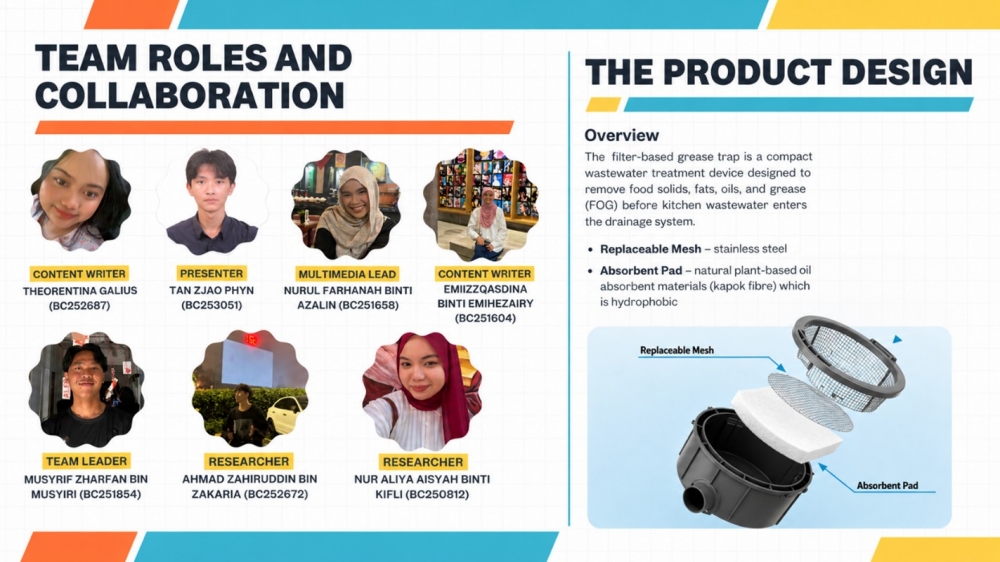
Figure1: A filter-based grease trap proposed by Group 4 students to capture food solids, fats, oils, and grease before kitchen wastewater flows into the drainage system.
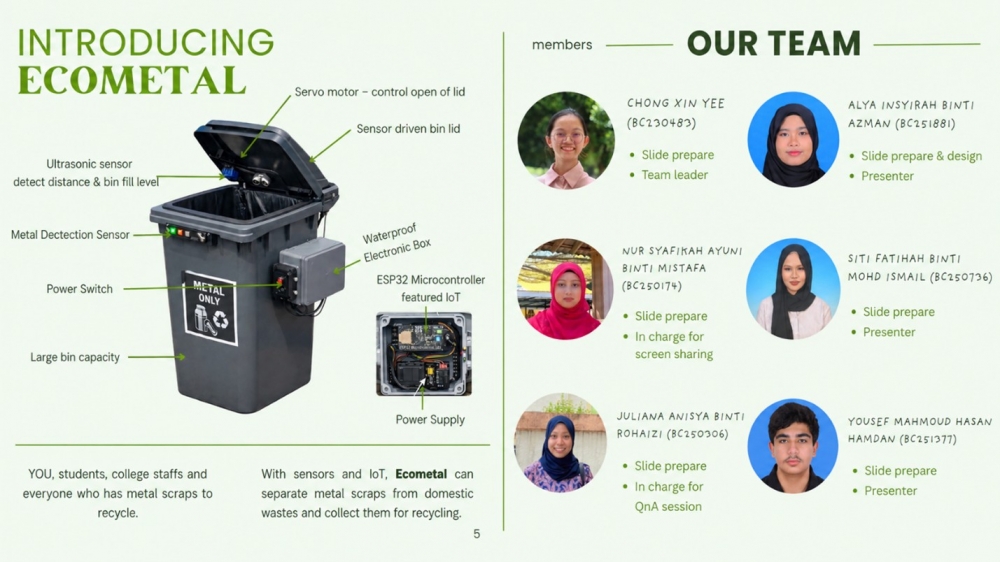
Figure 2: Ecometal proposed by Group 1 students to separate metal scraps from domestic wastes and collect them for recycling
In addition to waste issues, students proposed ideas for water and sanitation. From their site survey, they highlighted UPM's sustainable features: rainwater harvesting systems, water dispensers for students and staff, and handwashing stations that promote sustainable behaviour. However, they noted that food waste handling and drainage management in the food court require improvement. Suggestions included setting up used cooking oil collection points, installing filter-based grease traps and bioenzyme treatment systems, improving signage, and increasing awareness efforts in high-traffic areas. Through these activities, students focused not just on infrastructure, but also on habits, maintenance, and how people interact with shared facilities.
Students also focused on saving energy and creating greener learning spaces. Some groups noticed existing good practices, such as motion-sensor lights, which help reduce unnecessary electricity use. Others suggested using more natural daylight and natural cooling. This led to the idea of a Green Lecture Hall Model. The model could include natural lighting, passive cooling, solar panels, motion-sensor lighting, and rainwater-based cooling concepts. Some of these ideas are more ambitious and would need long-term planning, technical study, and higher investment. However, these suggestions show that students are beginning to think about how learning spaces are designed, how they feel, and how much energy and resources they use. This shows that they are starting to think like environmental problem-solvers.
Other interesting ideas focused on transport and resource innovation. One group examined UPM’s green campus environment and suggested that walking around campus could be made more attractive and more widely used. This led to the idea of UPM GreenStride, a walking app with route guidance, rewards, and reporting functions. This is a practical idea. It also highlights an important point, whereby green infrastructure is useful only when people feel encouraged and supported to use it. Another group focused on improving agricultural land use and exploring how farm resources can support sustainability. They proposed an Eco-Mobile Retort System designed to convert agricultural biomass into biochar. Overall, these ideas show that students are thinking about sustainability in a wider way. Sustainability is not only about bins, drains, or electricity. It also includes movement, landscape, agriculture, and better ways to connect and use campus resources.
The real value of these activities was not about the ideas produced by the students. More importantly, it was the change in how students observed the campus. In lecture slides, sustainability can sometimes seem boring or too abstract. However, during field activities, students learned through observation, discussion, and pitching their ideas. They were “pushed” to consider what responsible consumption means in real-world campus settings. This kind of learning is important because it helps students to build a sense of ownership. It also gives them more confidence to suggest positive changes on campus. From these learning activities, the students showed that meaningful sustainability learning can begin with something simple: noticing things people usually ignore. Some of their proposals were simple, some were more ambitious, and some may need further improvement. Even so, these activities sent a clear message: a more sustainable university is shaped not only by policy or infrastructure but also by the willingness of the university community to observe carefully, think critically, imagine better solutions, and suggest changes. These students' ideas suggest that a greener future can begin when we learn to see familiar places in a new way.
Students also focused on saving energy and creating greener learning spaces. Some groups noticed existing good practices, such as motion-sensor lights, which help reduce unnecessary electricity use. Others suggested using more natural daylight and natural cooling. This led to the idea of a Green Lecture Hall Model. The model could include natural lighting, passive cooling, solar panels, motion-sensor lighting, and rainwater-based cooling concepts. Some of these ideas are more ambitious and would need long-term planning, technical study, and higher investment. However, these suggestions show that students are beginning to think about how learning spaces are designed, how they feel, and how much energy and resources they use. This shows that they are starting to think like environmental problem-solvers.
Other interesting ideas focused on transport and resource innovation. One group examined UPM’s green campus environment and suggested that walking around campus could be made more attractive and more widely used. This led to the idea of UPM GreenStride, a walking app with route guidance, rewards, and reporting functions. This is a practical idea. It also highlights an important point, whereby green infrastructure is useful only when people feel encouraged and supported to use it. Another group focused on improving agricultural land use and exploring how farm resources can support sustainability. They proposed an Eco-Mobile Retort System designed to convert agricultural biomass into biochar. Overall, these ideas show that students are thinking about sustainability in a wider way. Sustainability is not only about bins, drains, or electricity. It also includes movement, landscape, agriculture, and better ways to connect and use campus resources.
The real value of these activities was not about the ideas produced by the students. More importantly, it was the change in how students observed the campus. In lecture slides, sustainability can sometimes seem boring or too abstract. However, during field activities, students learned through observation, discussion, and pitching their ideas. They were “pushed” to consider what responsible consumption means in real-world campus settings. This kind of learning is important because it helps students to build a sense of ownership. It also gives them more confidence to suggest positive changes on campus. From these learning activities, the students showed that meaningful sustainability learning can begin with something simple: noticing things people usually ignore. Some of their proposals were simple, some were more ambitious, and some may need further improvement. Even so, these activities sent a clear message: a more sustainable university is shaped not only by policy or infrastructure but also by the willingness of the university community to observe carefully, think critically, imagine better solutions, and suggest changes. These students' ideas suggest that a greener future can begin when we learn to see familiar places in a new way.
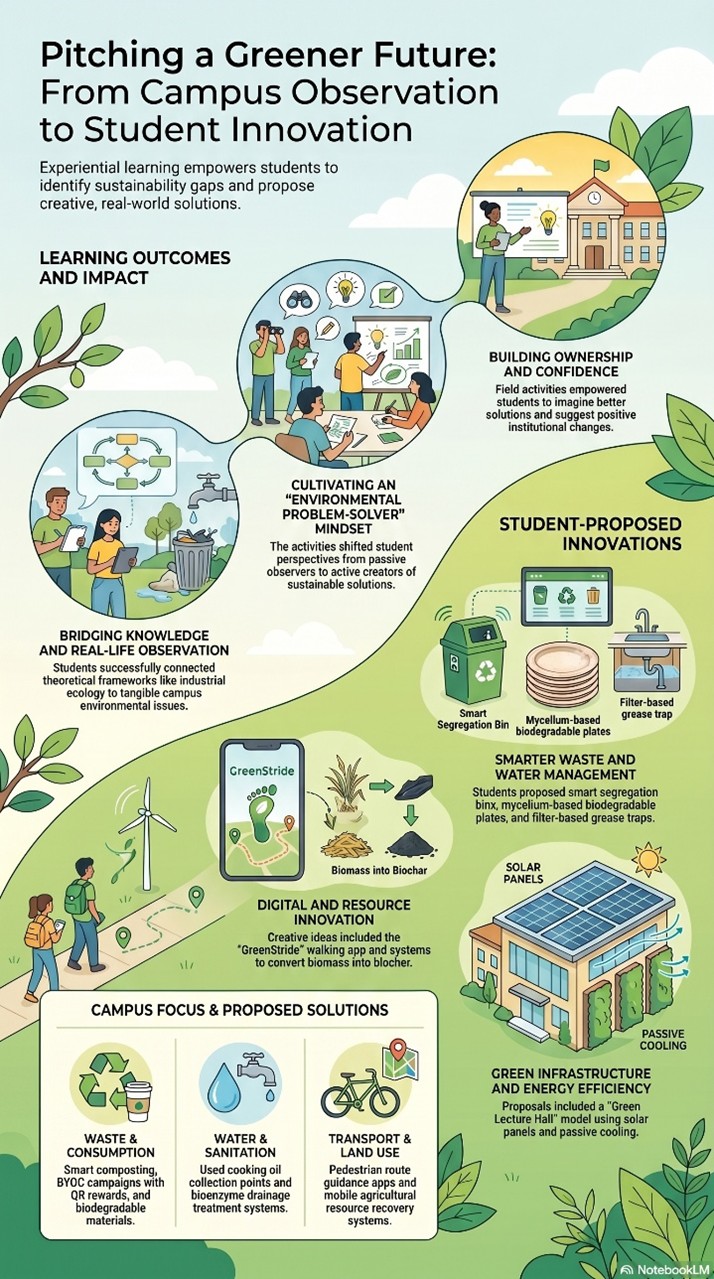
Figure 3: Overview of experiential learning and student-proposed sustainability innovations for a greener campus. Figure generated using NotebookLM based on student proje
References
Cai, C., Shahbaz, P., & Haq, S. ul. (2025). Transforming students’ green behaviour through environmental education: the impact of institutional practices and policies. Frontiers in Psychology, 15. https://doi.org/10.3389/fpsyg.2024.1499781
Filho, W. L., Ribeiro, P. C. C., Setti, A. F. F., Azam, F. M. S., Abubakar, I. R., Castillo‐Apraiz, J., Tamayo, U., Özuyar, P. G., Frizzo, K., & Borsari, B. (2023). Toward food waste reduction at universities. Environment Development and Sustainability, 26(7), 16585–16606. https://doi.org/10.1007/s10668-023-03300-2
Genta, C., Favaro, S., Sonetti, G., Fracastoro, G. V., & Lombardi, P. (2021). Quantitative assessment of environmental impacts at the urban scale: the ecological footprint of a university campus. Environment Development and Sustainability, 24(4), 5826–5845. https://doi.org/10.1007/s10668-021-01686-5
