
From Soil to Salad: Are Microplastics-Contaminated Soils Threatening Vegetable Safety in Malaysia?
Microplastics: An Emerging Contaminant and its effects on vegetables
Vegetables are a vital component of a healthy diet, providing essential vitamins, minerals, and dietary fibre. However, increasing environmental pollution, particularly microplastic contamination in soils, has raised concerns about the safety and quality of vegetables consumed daily. Microplastics (MPs), defined as plastic particles smaller than 5 mm, are increasingly recognised as emerging contaminants in agricultural soils (Microplastics). They originate from degraded plastic mulch, wastewater irrigation, sewage sludge, and atmospheric deposition (Bläsing & Amelung, 2018; Rillig et al., 2017). Once in the soil, MPs interact with physical, chemical, and biological processes, influencing plant growth and food safety (Qi et al., 2020).
Uptake and interaction mechanisms of microplastics in Plants
Microplastics tend to accumulate in the rhizosphere, where they can alter soil structure, reduce porosity, and affect water retention, thereby influencing root growth and microbial communities (Rillig et al., 2017; de Souza Machado et al., 2019). These changes can disrupt nutrient availability and root–microbe interactions, including mycorrhizal associations essential for plant nutrition (de Souza Machado et al., 2019). Additionally, MPs can adsorb contaminants such as heavy metals and pesticides, enhancing their bioavailability and potential toxicity (Guo et al., 2020).
Smaller particles, particularly nanoplastics (<100 nm), can penetrate root tissues through apoplastic and symplastic pathways and may translocate to aerial plant parts via the xylem (Li et al., 2020; Sun et al., 2020). This movement depends on particle size, surface charge, and plant species. Nanoplastics have been shown to affect photosynthesis and plant metabolism when accumulated in shoots and leaves (Sun et al., 2020). The extent of uptake varies among plant species and developmental stages, with seedlings being more vulnerable due to higher metabolic activity and weaker structural barriers (Li et al., 2020).
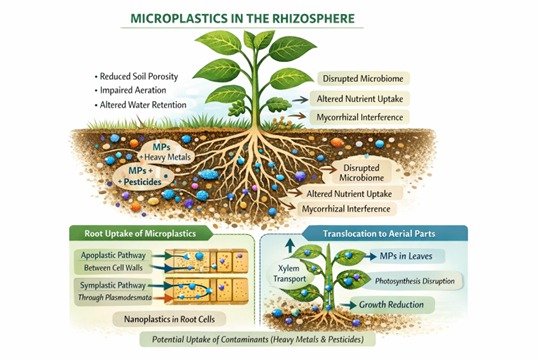
Figure 1: Distribution and accumulation of microplastics in the rhizosphere
Impacts of microplastics on plant growth and physiology
Microplastics can impair plant growth through multiple mechanisms, including physical obstruction of roots and induction of oxidative stress (Qi et al., 2020; Sun et al., 2020). Accumulation around roots can limit water and nutrient uptake, while exposure to MPs increases reactive oxygen species (ROS), leading to cellular damage (Sun et al., 2020). Although plants activate antioxidant defences, prolonged stress may result in reduced growth and productivity.
MPs also negatively affect photosynthesis by reducing chlorophyll content and damaging chloroplast structure, thereby lowering biomass accumulation (Qi et al., 2020). These stresses can delay plant development and reduce crop yield, particularly in leafy vegetables. Furthermore, MPs act as vectors for pollutants such as heavy metals and endocrine-disrupting chemicals, facilitating their entry into plant tissues and increasing toxicity risks (Guo et al., 2020). In addition, MPs can disrupt soil microbial communities and enzyme activities, impairing nutrient cycling and overall soil fertility (de Souza Machado et al., 2019).
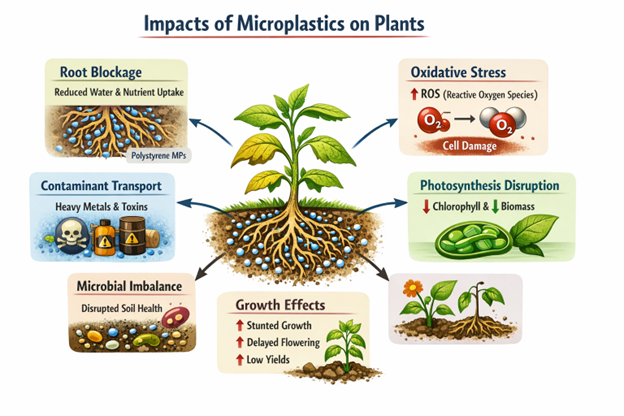
Figure 2: Impacts of microplastics on plant growth and physiology
Conclusion
Microplastics in agricultural soil are a growing but often unseen issue. They may influence vegetable quality and safety by affecting plant growth and carrying other pollutants. While risks are still being studied, improving plastic management and sustainable farming practices is key to safeguarding Malaysia’s food supply.
References
Bläsing, M., & Amelung, W. (2018). Plastics in soil: Analytical methods and possible sources. Science of the Total Environment, 612, 422–435.
de Souza Machado, A. A., Lau, C. W., Till, J., Kloas, W., Lehmann, A., Becker, R., & Rillig, M. C. (2019). Impacts of microplastics on the soil biophysical environment. Environmental Science & Technology, 53(10), 6044–6052.
Guo, X., Chen, C., Wang, J., & Liu, Z. (2020). Microplastics as emerging environmental contaminants in agricultural soils: Effects and interactions with other pollutants. Journal of Hazardous Materials, 398, 122912.
Li, L., Luo, Y., Li, R., Zhou, Q., Peijnenburg, W. J. G. M., Yin, N., Yang, J., Tu, C., & Zhang, Y. (2020). Effective uptake of submicrometre plastics by crop plants via a crack-entry mode. Nature Sustainability, 3(11), 929–937.
Qi, Y., Yang, X., Pelaez, A. M., Lwanga, E. H., Beriot, N., Gertsen, H., Garbeva, P., & Geissen, V. (2020). Macro- and microplastics in soil–plant system: Effects on plant growth and uptake. Environmental Pollution, 254, 112983.
Rillig, M. C., Ingraffia, R., & de Souza Machado, A. A. (2017). Microplastic incorporation into soil in agroecosystems. Frontiers in Plant Science, 8, 1805.
Sun, X. D., Yuan, X. Z., Jia, Y., Feng, L. J., Zhu, F. P., Dong, S. S., Liu, J., Kong, X., & Tian, H. (2020). Differentially charged nanoplastics demonstrate distinct accumulation in Arabidopsis thaliana. Nature Nanotechnology, 15(9), 755–760.
