
Forests at the Frontline: A Forester – Environmentalist Perspective on SDGs and Planetary Health
Introduction
Forests are vital for maintaining planetary health, yet they are increasingly at the centre of conflicts between development ambitions and environmental conservation. From the viewpoint of both a forester and an environmentalist, forests are not just timber reserves or carbon sinks, but living ecosystems that support biodiversity, regulate climate, secure water resources, and promote human well-being. Within the framework of the Sustainable Development Goals (SDGs), forests remain a sensitive subject because managing them often involves difficult trade-offs between economic progress, social needs, and ecological integrity.
Forests are vital for maintaining planetary health, yet they are increasingly at the centre of conflicts between development ambitions and environmental conservation. From the viewpoint of both a forester and an environmentalist, forests are not just timber reserves or carbon sinks, but living ecosystems that support biodiversity, regulate climate, secure water resources, and promote human well-being. Within the framework of the Sustainable Development Goals (SDGs), forests remain a sensitive subject because managing them often involves difficult trade-offs between economic progress, social needs, and ecological integrity.
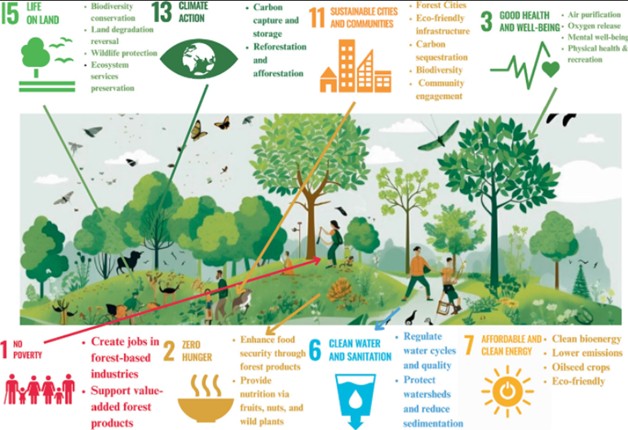
Figure 1: Intact tropical forests play a crucial role in carbon storage and climate regulation (SDG 13). Source FAO, 2020
Forests and Climate Regulation under SDG 13
Forests play a vital role in climate regulation, which is one of their most important contributions to planetary health. They absorb and store substantial amounts of carbon dioxide, aiding in climate change mitigation and reducing the frequency of extreme weather events. This directly advances SDG 13 (Climate Action). However, large-scale deforestation driven by agriculture, infrastructure development, and logging continues to undermine these advantages. For a forester, this presents a professional dilemma: how to balance forest use with long-term sustainability. From an environmentalist’s perspective, the issue is even more urgent, as forest loss accelerates biodiversity decline and weakens ecosystem resilience.
Forests, Human Health, and SDG 3
Forests are also closely linked to SDG 3 (Good Health and Well-being). Healthy forests regulate air quality, protect water catchments, and reduce the risk of zoonotic disease outbreaks by maintaining stable wildlife habitats. Forest degradation, on the other hand, can increase human exposure to disease vectors and environmental pollutants. This connection between forest health and human health highlights the concept of planetary health, where environmental degradation directly translates into public health risks. From this perspective, forest conservation should be viewed as a preventive health measure rather than an environmental luxury.
Social Equity, Indigenous Communities and Forest Governance
Another sensitive issue is the relationship between forests and local communities, especially indigenous and forest-dependent populations. SDG 15 (Life on Land) and SDG 10 (Reduced Inequalities) emphasise inclusive and equitable resource management. In many cases, forest policies prioritise commercial interests over traditional land rights, leading to social conflict and environmental injustice. As a forester, community engagement is essential for effective forest management. As an environmentalist, ignoring social dimensions weakens conservation efforts, as local resistance often contributes to illegal logging and unsustainable land use.
Economic Development versus Forest Sustainability
Economic development remains one of the most challenging aspects of forest management. Forests are frequently perceived as obstacles to progress rather than long-term assets for sustainable development. While SDG 8 (Decent Work and Economic Growth) promotes economic expansion, such growth often comes at the expense of forest ecosystems. Plantation forestry, mining, and large-scale agriculture may provide short-term economic gains, but they often result in long-term ecological degradation. This raises a critical question: should development that compromises planetary health still be considered sustainable?
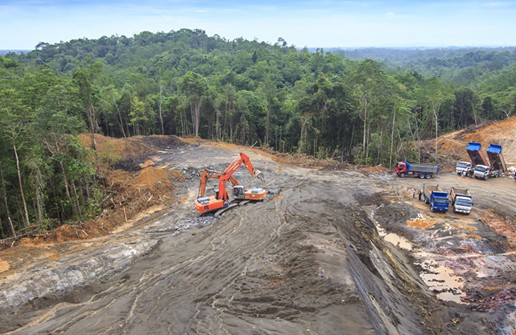
Figure 2: Infrastructure development in forested landscapes illustrates the tension between economic growth and forest sustainability
Sustainable Forest Management as a Middle Ground
Sustainable forest management (SFM) offers a potential pathway to balance conservation and development by integrating ecological, social, and economic objectives. Practices such as reduced-impact logging, forest certification, and ecosystem-based management demonstrate that forests can be utilised without being destroyed. However, implementation remains inconsistent due to weak governance, limited enforcement, and political pressure. From my perspective, SFM should be strengthened through science-based decision-making and stronger institutional commitment, rather than being treated as an optional approach.
Conclusion
Forests are central to the SDGs and planetary health, yet they remain vulnerable to competing interests and short-term priorities. Viewing forests through both a forester’s and an environmentalist’s perspective shows that conservation and development are not mutually exclusive, but they demand ethical responsibility, long-term planning, and inclusive governance. Protecting forests is not only about conserving ecosystems but also about safeguarding climate stability, human health, and future generations. Without healthy forests, achieving the SDGs and maintaining planetary health will stay an unattainable goal.
References
Food and Agriculture Organization of the United Nations. (2020). Global forest resources assessment 2020. FAO. https://www.fao.org/forest-resources-assessment/2020
Myers, S. S., Frumkin, H., & Patz, J. A. (2020). Planetary health: Protecting human health on a rapidly changing planet. The Lancet, 390(10111), 2860–2868. https://doi.org/10.1016/S0140-6736(17)32846-5
Ellis, E. C., Gauthier, N., Klein Goldewijk, K., Bliege Bird, R., Boivin, N., Díaz, S., … Watson, J. E. M. (2021). People have shaped most of terrestrial nature for at least 12,000 years. Proceedings of the National Academy of Sciences, 118(17), e2023483118. https://doi.org/10.1073/pnas.2023483118
Keune, H., Bracke, P., De Cort, W., & Vandenheede, H. (2020). Ecosystems, biodiversity and health: Moving towards a planetary health perspective. Environmental Research, 185, 109355. https://doi.org/10.1016/j.envres.2020.109355
Newbold, T., Hudson, L. N., Hill, S. L. L., Contu, S., Lysenko, I., Senior, R. A., … Purvis, A. (2020). Global effects of land use on local terrestrial biodiversity. Nature, 520(7545), 45–50. https://doi.org/10.1038/nature14324
UNDP. (2020). Human development report 2020: The next frontier—Human development and the Anthropocene. United Nations Development Programme. https://hdr.undp.org/content/human-development-report-2020
Sustainable forest management (SFM) offers a potential pathway to balance conservation and development by integrating ecological, social, and economic objectives. Practices such as reduced-impact logging, forest certification, and ecosystem-based management demonstrate that forests can be utilised without being destroyed. However, implementation remains inconsistent due to weak governance, limited enforcement, and political pressure. From my perspective, SFM should be strengthened through science-based decision-making and stronger institutional commitment, rather than being treated as an optional approach.
Conclusion
Forests are central to the SDGs and planetary health, yet they remain vulnerable to competing interests and short-term priorities. Viewing forests through both a forester’s and an environmentalist’s perspective shows that conservation and development are not mutually exclusive, but they demand ethical responsibility, long-term planning, and inclusive governance. Protecting forests is not only about conserving ecosystems but also about safeguarding climate stability, human health, and future generations. Without healthy forests, achieving the SDGs and maintaining planetary health will stay an unattainable goal.
References
Food and Agriculture Organization of the United Nations. (2020). Global forest resources assessment 2020. FAO. https://www.fao.org/forest-resources-assessment/2020
Myers, S. S., Frumkin, H., & Patz, J. A. (2020). Planetary health: Protecting human health on a rapidly changing planet. The Lancet, 390(10111), 2860–2868. https://doi.org/10.1016/S0140-6736(17)32846-5
Ellis, E. C., Gauthier, N., Klein Goldewijk, K., Bliege Bird, R., Boivin, N., Díaz, S., … Watson, J. E. M. (2021). People have shaped most of terrestrial nature for at least 12,000 years. Proceedings of the National Academy of Sciences, 118(17), e2023483118. https://doi.org/10.1073/pnas.2023483118
Keune, H., Bracke, P., De Cort, W., & Vandenheede, H. (2020). Ecosystems, biodiversity and health: Moving towards a planetary health perspective. Environmental Research, 185, 109355. https://doi.org/10.1016/j.envres.2020.109355
Newbold, T., Hudson, L. N., Hill, S. L. L., Contu, S., Lysenko, I., Senior, R. A., … Purvis, A. (2020). Global effects of land use on local terrestrial biodiversity. Nature, 520(7545), 45–50. https://doi.org/10.1038/nature14324
UNDP. (2020). Human development report 2020: The next frontier—Human development and the Anthropocene. United Nations Development Programme. https://hdr.undp.org/content/human-development-report-2020
