

Paths to Decarbonisation vs Forest Integrity
Introduction
Rapid decarbonisation has become a global priority in response to climate change, with renewable energy often seen as the main option to achieve emissions-reduction targets under SDGs 7 (Affordable and Clean Energy) and 13 (Climate Action). While this transition is essential, current decarbonisation efforts frequently aim for a balance between expanding renewable energy and protecting the environment. Forests serve not only as carbon sinks but also as vital elements that support biodiversity, water regulation, and human well-being, in line with SDGs 15 (Life on Land) and 3 (Good Health and Well-Being). However, ongoing research indicates that certain renewable energy pathways, such as bioenergy expansion, infrastructure development, and resource extraction, can exert significant pressure on forest ecosystems. Figure 1 below shows a floating solar photovoltaic (FPV) system, which exemplifies how renewable energy expansion can avoid deforestation and better align climate mitigation with forest conservation. Therefore, this article critically examines the relationship between decarbonisation pathways and forest integrity, suggesting that carbon-focused climate solutions could create ecological trade-offs and SDG incoherence when forest health is neglected in climate decision-making.
Rapid decarbonisation has become a global priority in response to climate change, with renewable energy often seen as the main option to achieve emissions-reduction targets under SDGs 7 (Affordable and Clean Energy) and 13 (Climate Action). While this transition is essential, current decarbonisation efforts frequently aim for a balance between expanding renewable energy and protecting the environment. Forests serve not only as carbon sinks but also as vital elements that support biodiversity, water regulation, and human well-being, in line with SDGs 15 (Life on Land) and 3 (Good Health and Well-Being). However, ongoing research indicates that certain renewable energy pathways, such as bioenergy expansion, infrastructure development, and resource extraction, can exert significant pressure on forest ecosystems. Figure 1 below shows a floating solar photovoltaic (FPV) system, which exemplifies how renewable energy expansion can avoid deforestation and better align climate mitigation with forest conservation. Therefore, this article critically examines the relationship between decarbonisation pathways and forest integrity, suggesting that carbon-focused climate solutions could create ecological trade-offs and SDG incoherence when forest health is neglected in climate decision-making.
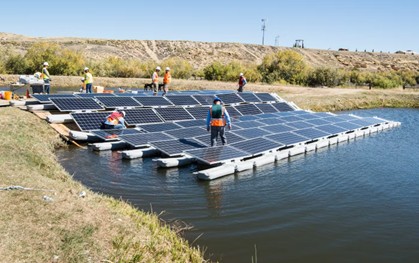
Figure 1: Installation of a floating PV array on a Walden water retention pond (Source: https://www.eco-business.com/news/floating-solar-has-large-scale-renewable-potent
Climate Benefits of Renewable Energy and Ecological Trade-Offs
The demand for critical minerals such as lithium, cobalt, copper, and rare earth elements, which are essential for solar panels, wind turbines, and energy storage, is expected to increase sixfold between 2020 and 2040. This surge has intensified mining in ecologically sensitive regions, posing serious risks to forest ecosystems and biodiversity. Globally, mining activities are estimated to threaten around 13,581 species, highlighting the extent of ecological disruption caused by mineral extraction (Rasolofomboahangy, 2025). These examples show that decarbonisation through renewable energy does not eliminate environmental harm; instead, it shifts it from the atmosphere to forested and biodiverse landscapes. The current decarbonisation model remains fundamentally linear and extractive, depending on increased resource removal to reduce emissions rather than on decreasing material demand or enhancing systemic efficiency. Figure 2 below depicts the world’s largest open-pit copper mine in Chile, illustrating the scale and environmental impact of mineral extraction, including habitat destruction, water depletion, and soil disturbance.
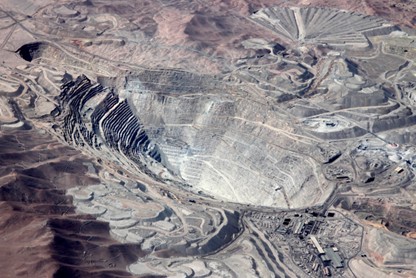
Figure 2: The world’s largest open-pit copper mine is in Chile (Source: https://blog.ucs.org/charlie-hoffs/mining-raw-materials-for-solar-panels-problems-and-solutions/
Land conversion for bioenergy also put major pressure on forests. The Forest Declaration Assessment (2025) identifies agricultural expansion, including bioenergy crops as the dominant driver of global forest loss, accounting for roughly 85% of deforestation over the past decade. Biomass-based energy strategies in Southeast Asia have raised similar concerns. Indonesia’s proposals to co-fire coal plants with 10% wood biomass could threaten nearly 10 million hectares of intact forest. Achieving even a small portion of the biomass target could require clearing an area of forest nearly 35 times larger than the entire city of Jakarta (Tierney, 2024). Taken together, these cases show that forest degradation is not an unintended consequence of renewable energy expansion, but a foreseeable result of policies that prioritise carbon reduction alone. When climate action focuses narrowly on emissions targets, land-use change and biodiversity loss are treated as secondary concerns. As a result, forests are increasingly converted or degraded in the name of decarbonisation, calling into question whether these pathways truly support long-term environmental sustainability.
When Climate Action Undermines Planetary Health
Policies that treat forests mainly as carbon storage units for climate mitigation, often described as “carbon forestry,” can undermine planetary health instead of protecting it. As Ojha et al. (2019) argue, this narrow framing overlooks the broader ecological functions of forests, including supporting biodiversity, regulating water, and buffering against diseases. In practice, climate policies that only credit carbon outcomes, such as classifying bioenergy as carbon-neutral, create a significant accounting loophole. This approach allows deforestation, biodiversity loss, water depletion, and local health impacts to be systematically ignored. Consequently, ecosystems that provide vital life-supporting services are degraded under the justification of climate action.
This carbon-centric approach also generates a planetary health paradox. Although renewable energy can improve global air quality and contribute to climate mitigation, its local health impacts are often negative and insufficiently assessed. For example, Figure 3 shows the Mae Moh power plant in Thailand, where residents report that smokestacks continue to release pollution day and night despite upgrades to reduce emissions. Biomass power plants and geothermal facilities, for example, can emit local air pollutants that increase the risk of respiratory and cardiovascular illnesses, undermining SDG 3 (Good Health and Well-being) even as they replace fossil fuels (Perera, 2018; Tian et al., 2024). This reveals an inherent inequity in the current energy transition, where the global health benefits of decarbonisation are widely shared, but the local health risks and ecological damage are experienced disproportionately by specific, often vulnerable, communities living near extraction and energy-generation sites.
When Climate Action Undermines Planetary Health
Policies that treat forests mainly as carbon storage units for climate mitigation, often described as “carbon forestry,” can undermine planetary health instead of protecting it. As Ojha et al. (2019) argue, this narrow framing overlooks the broader ecological functions of forests, including supporting biodiversity, regulating water, and buffering against diseases. In practice, climate policies that only credit carbon outcomes, such as classifying bioenergy as carbon-neutral, create a significant accounting loophole. This approach allows deforestation, biodiversity loss, water depletion, and local health impacts to be systematically ignored. Consequently, ecosystems that provide vital life-supporting services are degraded under the justification of climate action.
This carbon-centric approach also generates a planetary health paradox. Although renewable energy can improve global air quality and contribute to climate mitigation, its local health impacts are often negative and insufficiently assessed. For example, Figure 3 shows the Mae Moh power plant in Thailand, where residents report that smokestacks continue to release pollution day and night despite upgrades to reduce emissions. Biomass power plants and geothermal facilities, for example, can emit local air pollutants that increase the risk of respiratory and cardiovascular illnesses, undermining SDG 3 (Good Health and Well-being) even as they replace fossil fuels (Perera, 2018; Tian et al., 2024). This reveals an inherent inequity in the current energy transition, where the global health benefits of decarbonisation are widely shared, but the local health risks and ecological damage are experienced disproportionately by specific, often vulnerable, communities living near extraction and energy-generation sites.
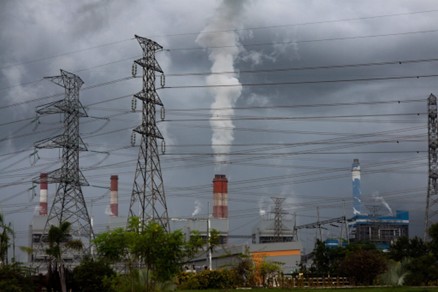
Figure 3: Smokestacks pump pollution across Lampang province in Thailand. (Source: https://news.mongabay.com/2025/10/anguish-for-residents-as-thailands-most-polluting-coa
Conclusion
While renewable energy and decarbonisation are essential for addressing climate change, current pathways often shift environmental and health burdens onto forests and local communities. Mining, bioenergy expansion, and poorly designed energy infrastructure can degrade ecosystems, reduce biodiversity, and create inequitable health impacts. Therefore, balancing emissions reduction with forest integrity and human well-being is critical. Integrating forest-friendly technologies, such as floating solar, and considering the broader ecological and social implications of climate policies can help ensure that decarbonisation supports both planetary health and sustainable development goals.
References
Forest Declaration Assessment. (2025, October 14). Delivery on forest pledges massively off course with only five years until zero deforestation deadline [Press release]. https://forestdeclaration.org/press-release-forest-pledges-2025/
Ojha, H., Maraseni, T., Nightingale, A., & Bhattarai, B. (2019). Rescuing forests from the carbon trap. Forest Policy and Economics, 101, 15-18.
Perera, F. (2018). Pollution from fossil-fuel combustion is the leading environmental threat to global pediatric health and equity: Solutions exist. International journal of environmental research and public health, 15(1), 16.
Rasolofomboahangy, V. (2025, December 17). Mining controversies: The hidden toll of green energy. Mongabay.
https://news.mongabay.com/2025/12/mining-controversies-the-hidden-toll-of-green-energy/
Tian, J., Culley, S. A., Maier, H. R., & Zecchin, A. C. (2024). Is renewable energy sustainable? Potential relationships between renewable energy production and the Sustainable Development Goals. npj Climate Action, 3(1), 35.
Tierney, J. (2024, October 9). Unheeded warnings: Forest biomass threats to tropical forests in Indonesia and Southeast Asia. Solutions for Our Climate. https://forourclimate.org/research/538
