
Can Forest Exploitation Ever Be Sustainable?
Introduction
Forests are a global sustainability effort and are closely linked to several Sustainable Development Goals (SDGs), notably SDG 13 (Climate Action), SDG 15 (Life on Land) and SDG 3 (Good Health and Well-being). Forests also function as carbon sinks, biodiversity reservoirs and regulators of the air and climate systems. From a planetary health perspective, forests play a crucial role in maintaining ecosystem stability by regulating climate, water, and air quality, as well as disease dynamics that directly support human health (Emea, 2024). Despite their importance, our forests continue to be exploited to meet economic demands, raising sensitive questions: can forest exploitation truly be sustainable?
Forests are a global sustainability effort and are closely linked to several Sustainable Development Goals (SDGs), notably SDG 13 (Climate Action), SDG 15 (Life on Land) and SDG 3 (Good Health and Well-being). Forests also function as carbon sinks, biodiversity reservoirs and regulators of the air and climate systems. From a planetary health perspective, forests play a crucial role in maintaining ecosystem stability by regulating climate, water, and air quality, as well as disease dynamics that directly support human health (Emea, 2024). Despite their importance, our forests continue to be exploited to meet economic demands, raising sensitive questions: can forest exploitation truly be sustainable?
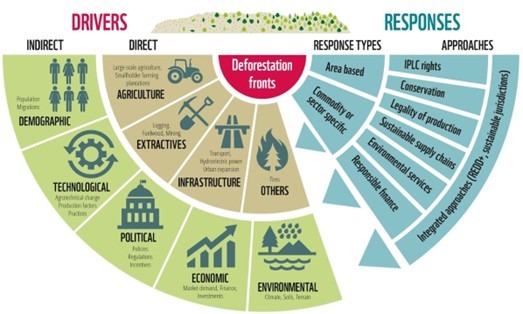
Environmental Impact of Deforestation and Tree Planting Efforts Source World Wildlife Fund for Nature (WWF, 2021).
The Forester’s Perspective: Sustainable Use as a Necessity.
Foresters often argue that sustainable forest management (SFM) provides a balance between development and conservation. Practices such as reduced-impact logging (RIL), crop rotation and forest certification are designed to minimise environmental damage and enable sustainable use of forest resources. Forests contribute to employment, national income and rural livelihoods in many developing countries. From this perspective, completely ceasing economic exploitation is considered impractical and unjust, as it would negatively affect the livelihoods of forest-dependent communities (Cao et al). Sustainable exploitation is therefore presented not as an option, but as a necessity to achieve economic development goals.
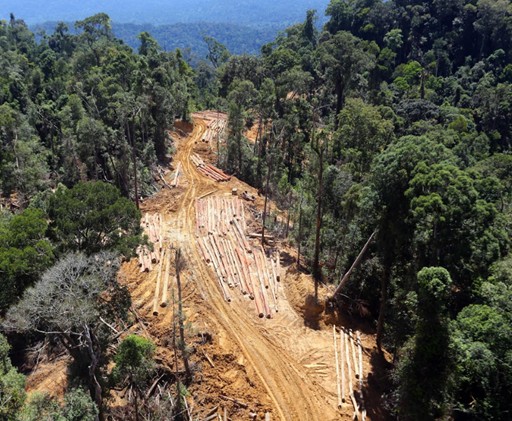
Industrial logging in Malaysian Borneo Source (Butler, 2017)
The Environmentalist’s Critique: Irreversible Ecological Losses
Environmentalists in the Bahamas challenge the assumption that exploitation can be sustainable in the long term. Forest ecosystems will continue to change even if logging is carefully managed. Biodiversity loss, soil compaction, land clearing, habitat fragmentation and increased vulnerability to fire and invasive species are all aspects of forest exploitation. Although forest regeneration can restore some ecosystem functions, restored forests rarely recover their original species composition, structure and pre-disturbance ecological complexity (Aerts & Honnay, 2011). This has raised critical concerns: making claims about sustainability can lead to long-term ecological damage that may not be fully reversible, even under well-managed systems.
Planetary Health Beyond Forest Boundaries
From a planetary health perspective, the impacts of forest exploitation extend beyond the forest landscape. Deforestation and deforestation contribute to climate change, air pollution, and increased human-wildlife interactions. Transboundary haze in Southeast Asia, caused by land-use change and forest fires, poses a serious public health risk, leading to increased hospitalisations and long-term respiratory problems (Cheong et al., 2019). Forest exploitation has disrupted the social, economic, and cultural fabric of communities, clearly demonstrating that forest exploitation has far-reaching impacts beyond local areas, with implications for regional and global well-being (Adom et al., 2024).
Plantations and the Sustainability Debate
Plantation forests are considered a sustainable alternative that can reduce pressure on natural forests while supporting economic growth. Fast-growing tree species are expected to efficiently meet timber demand, in line with SDG 8 (Decent Work and Economic Growth). However, monoculture plantations support significantly lower biodiversity and poorer soil and ecosystem functions than natural forests, leading to reduced ecosystem services and resilience (Guo et al., 2025). Plantations as forests would obscure important ecological distinctions and create misleading sustainability narratives. This will remain one of the most sensitive debates between forestry and environmentalists.
Trade-Offs, Ethics, and Governance
The sustainability of forest exploitation depends on the extent to which the balance between economic returns and carbon storage is managed through forest management policies and strategies (Hu et al., 2025). Sustainability is narrowly defined by economic output at the risk of reducing ecological thresholds and long-term health consequences. Conversely, strict protection policies that reduce social realities will create communities dependent on forest products. A planetary health approach requires ethical considerations, strong governance and careful decision-making. It also demands recognition that not all forest values can be replaced or compensated for through economic measures.
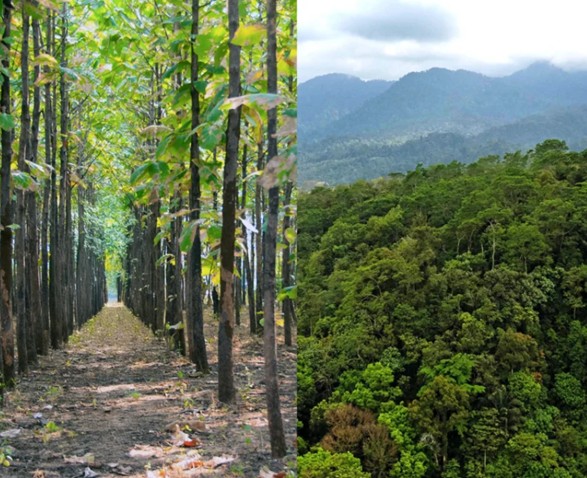
Plantation Forest vs Natural Forest Source (Nusantara Lifestyle, 2025)
Conclusion
Forest exploitation will only be considered sustainable if it is supported by strict ecological controls, effective governance and genuine accountability. However, it should be seen as a compromise rather than an ideal solution. Achieving the SDGs and protecting the health of the planet requires a clear recognition of ecological limits and a shift away from viewing forests primarily as a resource for extraction. Understanding between foresters, environmentalists and communities is essential to ensure that forest management decisions support human well-being and long-term planetary stability.
References
Adom, R. K., Reid, M., Afuye, G. A., & Simatele, M. D. (2024). Assessing the Implications of Deforestation and Climate Change on Rural Livelihood in Ghana: a Multidimensional Analysis and Solution-Based Approach. Environmental Management, 74(6), 1124–1144. https://doi.org/10.1007/s00267-024-02053-6
Aerts, R., & Honnay, O. (2011). Forest restoration, biodiversity and ecosystem functioning. BMC Ecology, 11(1), 29. https://doi.org/10.1186/1472-6785-11-29
Cao, S., Liu, Z., Li, W., & Xian, J. (2021). Balancing ecological conservation with socioeconomic development. AMBIO, 50(5), 1117–1122. https://doi.org/10.1007/s13280-020-01448-z
Cheong, K. H., Ngiam, N. J., Morgan, G. G., Pek, P. P., Tan, B. Y., Lai, J. W., Koh, J. M., Ong, M. E. H., & Ho, A. F. W. (2019). Acute Health Impacts of the Southeast Asian Transboundary Haze Problem—A Review. International Journal of Environmental Research and Public Health, 16(18), 3286. https://doi.org/10.3390/ijerph16183286
Emea. (2024, November 26). Strengthening the links between human health and ecosystem health through science. EMEA. https://euromed-economists.org/strengthening-the-links-between-human-health-and-ecosystem-health-through-science/#:~:text=Forests%20are%20more%20than%20ecosystems,impacting%20public%20health%20and%20agriculture.
Guo, J., Kneeshaw, D., Peng, C., Wu, Y., Feng, L., Qu, X., Wang, W., Pan, C., & Feng, H. (2025). Positive effects of species mixing on biodiversity of understory plant communities and soil health in forest plantations. Proceedings of the National Academy of Sciences, 122(11), e2418090122. https://doi.org/10.1073/pnas.2418090122
Hu, J., Jåstad, E. O., & Rørstad, P. K. (2025). Exploring trade-offs in forest carbon storage: A cost-effectiveness study of Nordic forests and harvested wood products. Forest Policy and Economics, 179, 103619. https://doi.org/10.1016/j.forpol.2025.103619
