
Why the Caterpillar Matters: A Systems Approach to Sustainability
ESD + SDG = Sustainability competencies
The history of the Sustainable Development Goals (SDGs) can be traced back to the United Nations Conference on Sustainable Development (UNCSD), held in Rio de Janeiro (Rio+20 Summit) in June 2012. This conference is where the SDGs was first galvanized following the outcome document of the summit “The Future We Want” that mandates the SDGs as the succeeding goals after the completion of the Millenium Development Goals. Following this decision, a proposal was crafted; outlining 17 goals and 169 targets, and submitted to the United Nation (UN) General Assembly (UNGA) in July 2014. The culmination of this process was the unanimous adoption of the 2030 Agenda for Sustainable Development by 193 world leaders on September 25, 2015, during the UN Sustainable Development Summit in New York. This agenda, featuring the 17 SDGs (Figure 1), were designed to guide global efforts toward sustainable development, for achieving a better and more sustainable future for all.
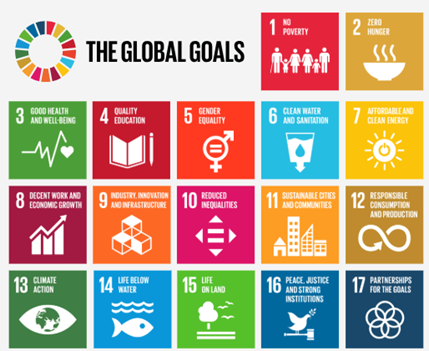
Figure 1: The 17 Sustainable Development Goals (SDGs)
The journey of Education for Sustainable Development (ESD) intertwines with the Sustainable Development Goals (SDGs). Before 2015, UNESCO led the UN Decade of Education for Sustainable Development (2005–2014) that laid the foundation for discussions on "competencies" in various academic circles, although no global standard was established. In 2015, a significant integration occurred when the SDGs were adopted, and ESD was explicitly included as SDG Target 4.7 (Figure 2), which aims for all learners to acquire the knowledge and skills necessary for promoting sustainable development by 2030. The year 2017 marked the formalization of these efforts as UNESCO published the influential guide, Education for Sustainable Development Goals: Learning Objectives, consolidating previous research into eight essential sustainability competencies (Figure 3). From 2020 onward, UNESCO introduced the ESD for 2030 framework, highlighting these competencies as crucial tools for driving "individual and societal transformation" by empowering people with the knowledge, skills, values, attitudes and behaviors to live responsibly for the betterment of the environment, economy, and society in line with the global goals of the 17 SDGs.
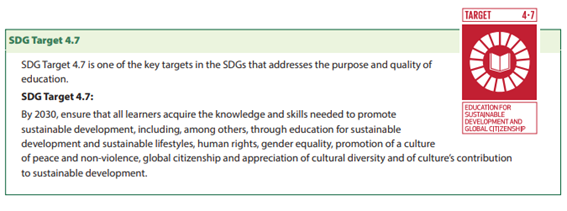
Figure 2: SDG 4: Quality Education – Target 4.7 Source: Education for Sustainable Development: A Roadmap (2020), UNESCO.
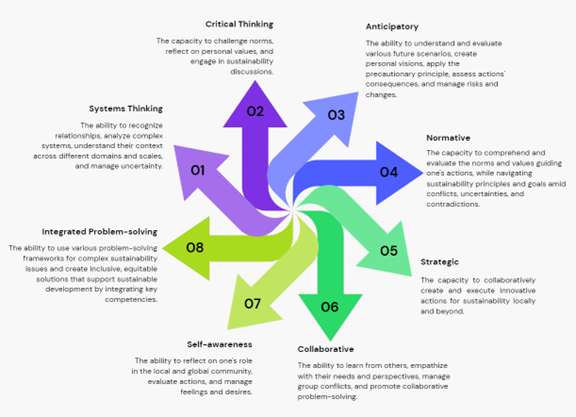
Figure 3: The eight sustainability competencies compiled by UNESCO
Education for Sustainable Development (ESD) in Malaysian context
ESD in mandated into Malaysian’s higher education through the Malaysian Qualifications Agency (MQA) Act (Act 679, 2007) which dictates the adoption of the Malaysian Qualifications Framework (MQF). The latest MQF by MQA which is MQF 2.0 (2024) demands the integration of the Global Sustainability Agenda, namely the SDGs and the ESD through the eight sustainability competencies, as skillsets to be embedded or integrated into the learning outcomes of the programs.
The Core Skill: Systems Thinking
Environmental problems are systemic in nature, meaning they cannot be solved by looking at isolated parts rather a systemic approach is needed; the ability to recognize relationships, analyze complex nested systems, and manage uncertainty across different scales. It is important to understand that everything in nature is interconnected; including us humans, as we are part of nature, not apart from nature. Our activities for achieving development and economic growth uses resources from the environment and produces emission into the air, discharges into waterways, as well as waste generation towards the land and the oceans.
System Thinking applies the concept of perception shifts; from parts to whole, from objects to relationships, from objective knowledge to contextual knowledge, from quantity to quality, from contents to patterns, and from patterns to processes (Figure 4).
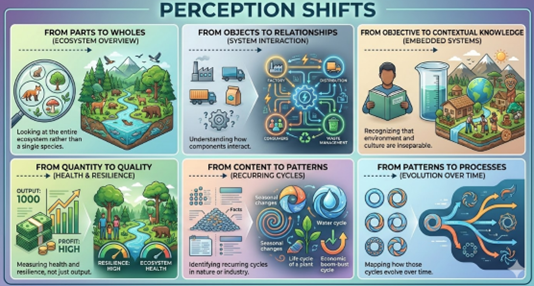
Figure 4: The six perception shifts of systemic thinking. Image: Generated by Gemini AI Pro
Systems are hierarchically organised, with smaller components; such as an individual, nestled within bigger subsystems, such as a population, community, or the entire biosphere (Figure 5). It focuses on understanding the interconnections and relationships between each subset of the larger system.
Within these layers of hierarchies, we encounter emergence; when things interact with one another and together create something that did not exist before and was not the property of any of the prior (Figure 6). A classic example is the metamorphosis of a caterpillar into a butterfly; the "system" gains the radical new capability of flight through internal transformation of the caterpillar.
Within these layers of hierarchies, we encounter emergence; when things interact with one another and together create something that did not exist before and was not the property of any of the prior (Figure 6). A classic example is the metamorphosis of a caterpillar into a butterfly; the "system" gains the radical new capability of flight through internal transformation of the caterpillar.
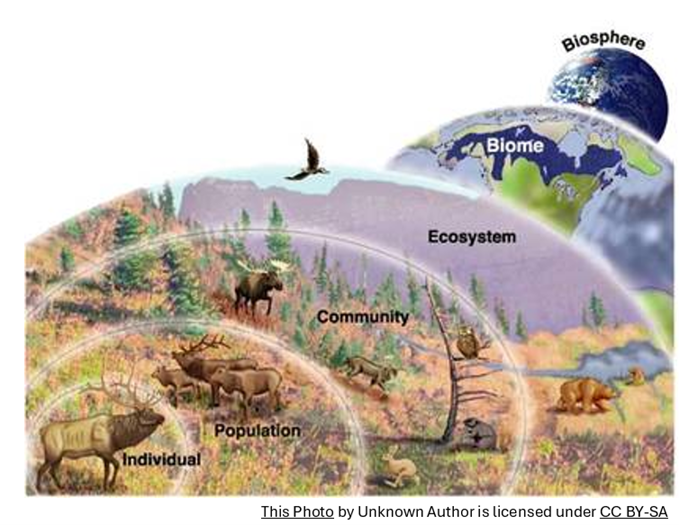
Figure 5: Example of the concept hierarchy, showing layers of organization where smaller subunits are nested in larger subsystems.
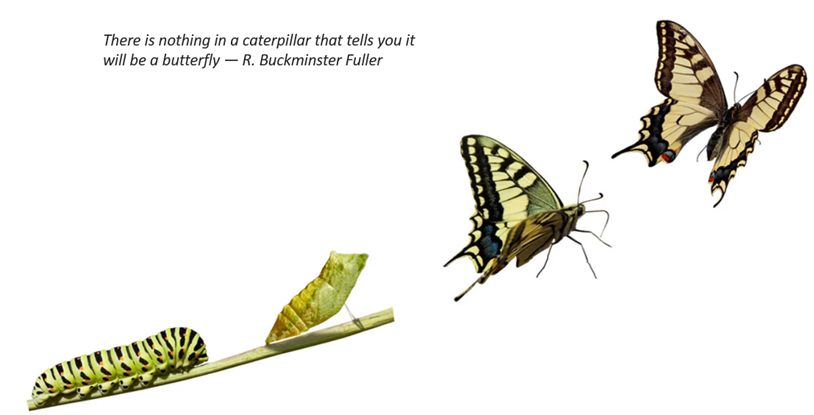
Figure 6: Example of the concept emergence, when a caterpillar transforms into a butterfly through metamorphosis.
Systems thinking also emphasizes on managing feedback loops; understanding the processes that amplify and enhance the system in the current process in positive feedback loops, and those that counter-back, balance, or seek to correct deviations from the system's current state in negative feedback loops (Figure 7).
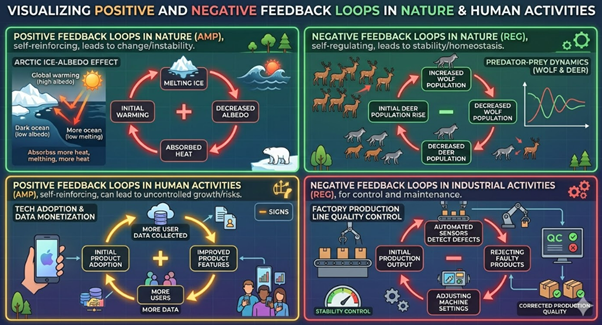
Figure 7: Feedback loops in nature and human activities. Image: Generated by Gemini AI Pro
Hence, the thought process that will be instilled to students as future environmental stewards is to consider environmental problems as a whole, not by parts and to understand the interconnectedness and relationships of every components of the environment; that one problem may lead to another and one solution may be good to one part but may cause catastrophic problems to another. Students must learn that one small environmental solution can lead to massive, unexpected positive shifts (emergence), or, if poorly planned, disastrous problems elsewhere if broader context are ignored. Students need to move away from quantity and focus on the quality of our environmental interactions. Our economic growth uses resources and produces emissions that impact air, water, and land simultaneously. A systems approach ensures we don't fix the air but as a consequence, end up polluting the water. By understanding and utilizing feedback loops as inputs for holistic decision-making, students can better determine the path for sustainable development. With this systemic thinking skill students will be ready with a mental agility to face the volatility, uncertainty, complexity and ambiguity (VUCA) of the future as environmental stewards.
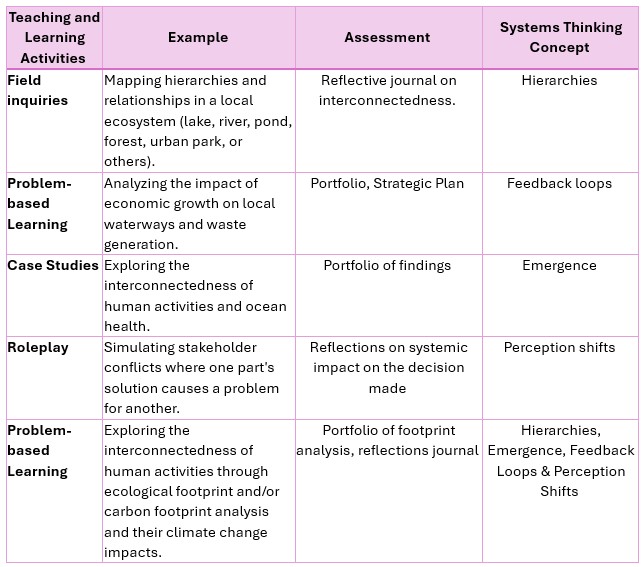
Bringing "The Caterpillar" into the Classroom
To teach systems thinking, educators must move beyond classical teaching approaches. Here are some classroom ideas that
can be implemented:
References
1. Education for Sustainable Development: A Roadmap (2020), UNESCO.
2. Education for Sustainable Development Goals: Learning Objectives (2017). UNESCO.
3. Leicht, A., Heiss, J. & Byun, W. J. (2018). Issues and trends in education for sustainable development (Vol. 5). UNESCO.
4. University College London Teaching Toolkit – Embedding Sustainability into Your Teaching and Learning. https://www.ucl.ac.uk/teaching-learning/publications/2025/sep/embedding-sustainability-your-teaching-and-learning#How%20can%20I%20embed%20ESD%20in%20my%20teaching?
