

Are We Really Managing Our Forests or Simply Delaying Their Collapse?
Introduction
The pressing question: Are we really managing our forests or simply delaying their collapse? Calls for a critical reassessment of contemporary forest governance in light of accelerating ecological degradation. While global policy frameworks and national strategies often tout “sustainable forest management” as a cornerstone of environmental stewardship, mounting scientific evidence reveals a troubling discrepancy between rhetoric and reality. This paper contends that many current approaches to forest management serve more as stopgap measures than as genuine pathways to long-term ecological resilience, effectively deferring rather than averting systemic collapse.
Key Content
Global forest loss remains alarmingly high despite decades of international commitments. According to the Food and Agriculture Organisation (FAO, 2020), the world lost approximately 10 million hectares of forest per year between 2015 and 2020. While this represents a marginal slowdown compared to previous decades, it still reflects a net decline in forest cover, with tropical regions bearing the brunt of deforestation driven by agricultural expansion, logging, and infrastructure development (FAO, 2020; Curtis et al., 2018).
Moreover, the concept of “sustainable forest management” is often undermined by weak enforcement, conflicting land-use policies, and economic pressures that prioritise short-term gains over ecological integrity. For instance, while certification schemes like the Forest Stewardship Council (FSC) aim to promote responsible forestry, studies indicate that certified concessions do not always result in measurably better biodiversity outcomes or reduced deforestation rates (West et al., 2018; Putz et al., 2012). In many cases, selective logging and “sustainable yield” models maintain forest appearance while degrading ecosystem function and long-term carbon storage capacity (Luyssaert et al., 2022).
Climate change further increases forest vulnerability. Even superficially well-managed forests are increasingly susceptible to wildfires, pests, and drought events intensified by a warming climate. The 2019–2020 Australian bushfires and the unprecedented bark beetle outbreaks in North American boreal forests illustrate how climate-driven disturbances can rapidly erase decades of management efforts (IPCC, 2022; Anderegg et al., 2020). These events underscore a critical flaw in current paradigms: they treat forests as static, manageable resources rather than dynamic, climate-sensitive ecosystems.
Conclusion
While often well-intentioned, current forest management practices frequently fall short of delivering the transformative change needed to ensure ecological resilience. Without a fundamental shift toward protecting intact forests, respecting Indigenous land rights (which have been shown to correlate with lower deforestation rates; FAO & FILAC, 2021), and integrating climate adaptation into core strategies, we risk merely postponing an inevitable collapse. True forest stewardship demands moving beyond cosmetic sustainability and confronting the structural drivers of deforestation and degradation. Until then, the question remains not whether our forests will collapse but when.
The pressing question: Are we really managing our forests or simply delaying their collapse? Calls for a critical reassessment of contemporary forest governance in light of accelerating ecological degradation. While global policy frameworks and national strategies often tout “sustainable forest management” as a cornerstone of environmental stewardship, mounting scientific evidence reveals a troubling discrepancy between rhetoric and reality. This paper contends that many current approaches to forest management serve more as stopgap measures than as genuine pathways to long-term ecological resilience, effectively deferring rather than averting systemic collapse.
Key Content
Global forest loss remains alarmingly high despite decades of international commitments. According to the Food and Agriculture Organisation (FAO, 2020), the world lost approximately 10 million hectares of forest per year between 2015 and 2020. While this represents a marginal slowdown compared to previous decades, it still reflects a net decline in forest cover, with tropical regions bearing the brunt of deforestation driven by agricultural expansion, logging, and infrastructure development (FAO, 2020; Curtis et al., 2018).
Moreover, the concept of “sustainable forest management” is often undermined by weak enforcement, conflicting land-use policies, and economic pressures that prioritise short-term gains over ecological integrity. For instance, while certification schemes like the Forest Stewardship Council (FSC) aim to promote responsible forestry, studies indicate that certified concessions do not always result in measurably better biodiversity outcomes or reduced deforestation rates (West et al., 2018; Putz et al., 2012). In many cases, selective logging and “sustainable yield” models maintain forest appearance while degrading ecosystem function and long-term carbon storage capacity (Luyssaert et al., 2022).
Climate change further increases forest vulnerability. Even superficially well-managed forests are increasingly susceptible to wildfires, pests, and drought events intensified by a warming climate. The 2019–2020 Australian bushfires and the unprecedented bark beetle outbreaks in North American boreal forests illustrate how climate-driven disturbances can rapidly erase decades of management efforts (IPCC, 2022; Anderegg et al., 2020). These events underscore a critical flaw in current paradigms: they treat forests as static, manageable resources rather than dynamic, climate-sensitive ecosystems.
Conclusion
While often well-intentioned, current forest management practices frequently fall short of delivering the transformative change needed to ensure ecological resilience. Without a fundamental shift toward protecting intact forests, respecting Indigenous land rights (which have been shown to correlate with lower deforestation rates; FAO & FILAC, 2021), and integrating climate adaptation into core strategies, we risk merely postponing an inevitable collapse. True forest stewardship demands moving beyond cosmetic sustainability and confronting the structural drivers of deforestation and degradation. Until then, the question remains not whether our forests will collapse but when.
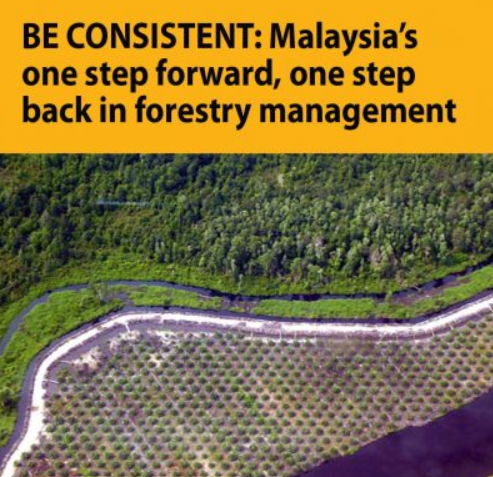
Source: Consumers\' Association of Penang , 2022
References
Anderegg, W. R. L., et al. (2020). “Climate-driven risks to the climate mitigation potential of forests.” Science, 368(6497).
Curtis, P. G., et al. (2018). “Classifying drivers of global forest loss.” Science, 361(6407), 1108–1111.
FAO. (2020). Global Forest Resources Assessment 2020. Food and Agriculture Organization of the United Nations.
FAO & FILAC. (2021). Forest Governance by Indigenous and Tribal Peoples. Food and Agriculture Organization & Fund for the Development of Indigenous Peoples of Latin America and the Caribbean.
IPCC. (2022). Climate Change 2022: Impacts, Adaptation and Vulnerability. Intergovernmental Panel on Climate Change.
Luyssaert, S., et al. (2022). “Forest carbon sinks and their management.” Nature Reviews Earth & Environment, 3, 448–463.
Putz, F. E., et al. (2012). “Sustaining conservation values in selectively logged tropical forests.” Conservation Biology, 26(4), 592–601.
West, T. A. P., et al. (2018). “Do timber concessions in the tropics deliver on forest conservation?” Environmental Research Letters, 13(10), 104001.
Anderegg, W. R. L., et al. (2020). “Climate-driven risks to the climate mitigation potential of forests.” Science, 368(6497).
Curtis, P. G., et al. (2018). “Classifying drivers of global forest loss.” Science, 361(6407), 1108–1111.
FAO. (2020). Global Forest Resources Assessment 2020. Food and Agriculture Organization of the United Nations.
FAO & FILAC. (2021). Forest Governance by Indigenous and Tribal Peoples. Food and Agriculture Organization & Fund for the Development of Indigenous Peoples of Latin America and the Caribbean.
IPCC. (2022). Climate Change 2022: Impacts, Adaptation and Vulnerability. Intergovernmental Panel on Climate Change.
Luyssaert, S., et al. (2022). “Forest carbon sinks and their management.” Nature Reviews Earth & Environment, 3, 448–463.
Putz, F. E., et al. (2012). “Sustaining conservation values in selectively logged tropical forests.” Conservation Biology, 26(4), 592–601.
West, T. A. P., et al. (2018). “Do timber concessions in the tropics deliver on forest conservation?” Environmental Research Letters, 13(10), 104001.
