

From Drought to Dirty Water: A Planet’s Environmental Warning
Introduction
In the city, I am used to unscrewing the faucet and seeing clear tap water, and I rarely think about where this water comes from or where it will flow. The guide was introduced to the concept of "water security" in this class, and I gradually realised that we are now living on a planet that is both "dry" and "polluted". The United Nations 2024 World Water Law Development Report highlights that water resource shortages and deteriorating water quality overlap across multiple regions, and that water security has become one of the key conditions affecting prosperity and peace (UNESCO WWAP, 2024). Wheater and Gober (2015) also point out that true water security is not only "how much water" there is, but also a combination of quantity, quality, risk and ecosystem maintenance (Wheater & Gober, 2015).
Water scarcity
Water scarcity is no longer just a problem in desert countries, but is becoming a daily reality in more and more places. Climate change has made rainfall more extreme, and long droughts are often followed by heavy rains, and the water either comes too much at once or does not come for a long time; At the same time, agricultural irrigation, industrial water, and urban expansion continue to drive up demand, with rivers and reservoirs bottoming out and groundwater being overexploited (UNESCO WWAP, 2024). For me, who lives in a big city and has a stable water system, "water shortage" may seem like a distant event in the occasional news, but for many rural and marginalised communities, queuing for water and rationing water a realities that they have to face every day. The spatial "concentration of water where there is power and a network of pipes" is an inequality in itself (Wutich, 2024).
If "drought" reminds us that water is scarce, then "sewage" questions whether this water can be drunk, even when water is available. WHO estimates that billions of people still do not have access to safely managed drinking water services, unsafe drinking water, sanitation, and hygiene (WASH) causes a large number of deaths from diarrhoea and other diseases each year, and children are among the most vulnerable groups (World Health Organization, 2023a, 2023b; Zeng et al., 2024)。 Lin et al.'s (2022) review pointed out that a large proportion of sewage generated by human activities is discharged directly into rivers and oceans without adequate treatment, and contaminated drinking water is significantly associated with various health risks such as diarrhoea, parasitic diseases, skin diseases, and even tumours (Lin et al., 2022). When I complained on campus that the drinking water in the cafeteria was "a bit strange", and on the other end of the spectrum was that hundreds of millions of people were not even guaranteed the most basic safe water source, this contrast made me re-examine my "pickiness".
Water pollution
What is even more disturbing is that water scarcity and water pollution are not two separate chapters, but a "twin crisis" that amplifies each other. When river flow decreases, the same amount of pollutants leads to higher concentrations. When the water body is severely polluted and loses its water-supply function, the total amount of available water is further reduced. For the vulnerable, this means choosing between "there is water, but it may be toxic" and "no water, can only make do". Environmental justice research shows that unstable water supply and substandard water quality are often concentrated in low-income communities and minority areas, which are both "downstream" of pollution and "absentees" of decision-making power (Cantor & Jepson, 2023). These groups are more likely to live near industrial facilities, landfills or polluted river sections, but are less likely to be included in water and wastewater treatment planning. In other words, "who feels the faucet getting smaller first and the river turning black" is never random.
In the process of learning and training in environmental management, many students tend to develop the belief that "technology can solve everything" early on. This technology-centric optimism is more likely to be reinforced after reading many stories about desalination projects, reclaimed water treatment projects, and smart water systems: it seems as if the current water crisis will be resolved naturally by building a few more water plants and installing more online monitoring equipment and automation systems.
However, it can be clearly seen from the relevant reports released by the UNESCO Water Resources Assessment Program and the World Health Organization and other institutions that many key problems are not simply the technical problem of "whether to build a factory", but more manifested as "lack of sustainable and stable funds for infrastructure construction, lack of sufficient capacity and personnel to carry out long-term operation and management work, and lack of effective mechanisms to speak out and fight for the interests of vulnerable groups" (UNESCO Water Resources Assessment Programme, 2024; World Health Organization, 2023b). Even if the relevant water treatment and water supply technologies are relatively mature and can be deployed, there are still a number of more difficult questions that need to be seriously addressed: For example, how can low-income households actually afford the resulting water bills? How can remote and marginalised villages be truly included in the overall planning of the water supply network, rather than staying in the "future planning" stage on paper for a long time? Compared with these social and institutional problems, "which membrane separation technology to use" may not be the core challenge.
Water insecurity
Wutich (2024) further points out that water insecurity is inherently the result of a series of social and political processes that shape it, not just natural hydrological conditions. If the analytical framework and awareness provided by the social science perspective are ignored in the research and practice of water resource security, then it is likely that the relevant work will gradually lose its direction and focus, and it will be difficult to truly respond to the actual situation of those on the front lines of the water crisis (Wutich, 2024).
World Environment Day is often filled with slogans and activities: posters are put up on campus, lectures are held, and riverbank cleanups are organised. I have also participated in such activities, taking "check-in photos" and forwarding promotional pictures of "water conservation". But as I write this reflection, I realised that if we only stop at "activities of the day" and "personal water-saving virtues" and do not question the institutional arrangements behind them, then we are actually enjoying a "sense of environment" rather than driving real change. The water crisis not only requires us to turn on the tap for a while, but also requires us to have the courage to challenge the decision-making logic of water as a marginal issue that can be sacrificed when we enter government, business, or research institutions in the future (Wheater & Gober, 2015; Wutich, 2024).
In the city, I am used to unscrewing the faucet and seeing clear tap water, and I rarely think about where this water comes from or where it will flow. The guide was introduced to the concept of "water security" in this class, and I gradually realised that we are now living on a planet that is both "dry" and "polluted". The United Nations 2024 World Water Law Development Report highlights that water resource shortages and deteriorating water quality overlap across multiple regions, and that water security has become one of the key conditions affecting prosperity and peace (UNESCO WWAP, 2024). Wheater and Gober (2015) also point out that true water security is not only "how much water" there is, but also a combination of quantity, quality, risk and ecosystem maintenance (Wheater & Gober, 2015).
Water scarcity
Water scarcity is no longer just a problem in desert countries, but is becoming a daily reality in more and more places. Climate change has made rainfall more extreme, and long droughts are often followed by heavy rains, and the water either comes too much at once or does not come for a long time; At the same time, agricultural irrigation, industrial water, and urban expansion continue to drive up demand, with rivers and reservoirs bottoming out and groundwater being overexploited (UNESCO WWAP, 2024). For me, who lives in a big city and has a stable water system, "water shortage" may seem like a distant event in the occasional news, but for many rural and marginalised communities, queuing for water and rationing water a realities that they have to face every day. The spatial "concentration of water where there is power and a network of pipes" is an inequality in itself (Wutich, 2024).
If "drought" reminds us that water is scarce, then "sewage" questions whether this water can be drunk, even when water is available. WHO estimates that billions of people still do not have access to safely managed drinking water services, unsafe drinking water, sanitation, and hygiene (WASH) causes a large number of deaths from diarrhoea and other diseases each year, and children are among the most vulnerable groups (World Health Organization, 2023a, 2023b; Zeng et al., 2024)。 Lin et al.'s (2022) review pointed out that a large proportion of sewage generated by human activities is discharged directly into rivers and oceans without adequate treatment, and contaminated drinking water is significantly associated with various health risks such as diarrhoea, parasitic diseases, skin diseases, and even tumours (Lin et al., 2022). When I complained on campus that the drinking water in the cafeteria was "a bit strange", and on the other end of the spectrum was that hundreds of millions of people were not even guaranteed the most basic safe water source, this contrast made me re-examine my "pickiness".
Water pollution
What is even more disturbing is that water scarcity and water pollution are not two separate chapters, but a "twin crisis" that amplifies each other. When river flow decreases, the same amount of pollutants leads to higher concentrations. When the water body is severely polluted and loses its water-supply function, the total amount of available water is further reduced. For the vulnerable, this means choosing between "there is water, but it may be toxic" and "no water, can only make do". Environmental justice research shows that unstable water supply and substandard water quality are often concentrated in low-income communities and minority areas, which are both "downstream" of pollution and "absentees" of decision-making power (Cantor & Jepson, 2023). These groups are more likely to live near industrial facilities, landfills or polluted river sections, but are less likely to be included in water and wastewater treatment planning. In other words, "who feels the faucet getting smaller first and the river turning black" is never random.
In the process of learning and training in environmental management, many students tend to develop the belief that "technology can solve everything" early on. This technology-centric optimism is more likely to be reinforced after reading many stories about desalination projects, reclaimed water treatment projects, and smart water systems: it seems as if the current water crisis will be resolved naturally by building a few more water plants and installing more online monitoring equipment and automation systems.
However, it can be clearly seen from the relevant reports released by the UNESCO Water Resources Assessment Program and the World Health Organization and other institutions that many key problems are not simply the technical problem of "whether to build a factory", but more manifested as "lack of sustainable and stable funds for infrastructure construction, lack of sufficient capacity and personnel to carry out long-term operation and management work, and lack of effective mechanisms to speak out and fight for the interests of vulnerable groups" (UNESCO Water Resources Assessment Programme, 2024; World Health Organization, 2023b). Even if the relevant water treatment and water supply technologies are relatively mature and can be deployed, there are still a number of more difficult questions that need to be seriously addressed: For example, how can low-income households actually afford the resulting water bills? How can remote and marginalised villages be truly included in the overall planning of the water supply network, rather than staying in the "future planning" stage on paper for a long time? Compared with these social and institutional problems, "which membrane separation technology to use" may not be the core challenge.
Water insecurity
Wutich (2024) further points out that water insecurity is inherently the result of a series of social and political processes that shape it, not just natural hydrological conditions. If the analytical framework and awareness provided by the social science perspective are ignored in the research and practice of water resource security, then it is likely that the relevant work will gradually lose its direction and focus, and it will be difficult to truly respond to the actual situation of those on the front lines of the water crisis (Wutich, 2024).
World Environment Day is often filled with slogans and activities: posters are put up on campus, lectures are held, and riverbank cleanups are organised. I have also participated in such activities, taking "check-in photos" and forwarding promotional pictures of "water conservation". But as I write this reflection, I realised that if we only stop at "activities of the day" and "personal water-saving virtues" and do not question the institutional arrangements behind them, then we are actually enjoying a "sense of environment" rather than driving real change. The water crisis not only requires us to turn on the tap for a while, but also requires us to have the courage to challenge the decision-making logic of water as a marginal issue that can be sacrificed when we enter government, business, or research institutions in the future (Wheater & Gober, 2015; Wutich, 2024).
Conclusion
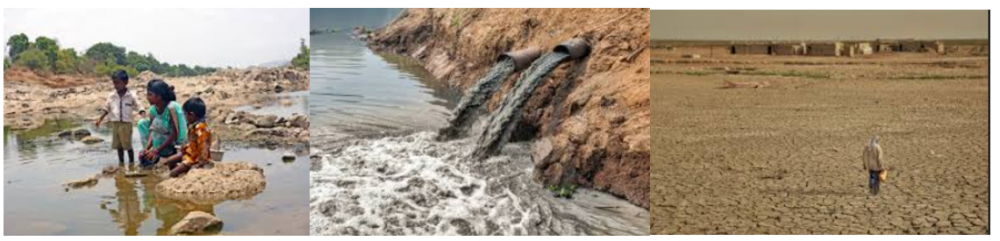
From drought to sewage, this waterway is both a signal from natural systems and a product of human decisions. It reminds me that I am not an “innocent observer,” but an active participant in the water cycle. My consumption, my vote, and my career choices all shape where water flows and who has access to clean, safe water. If the planet is issuing a “water warning,” then the defining challenge for my generation is not how much data we can memorise, but whether we are willing to take responsibility through our everyday actions and future professions for building waterways that are fairer, cleaner, and more resilient.
References
Cantor, A., & Jepson, W. (2023). Environmental justice and drinking water: A critical review of primary data studies. Wiley Interdisciplinary Reviews: Water, 10(4), e1653. https://doi.org/10.1002/wat2.1653
Lin, L., Yang, H., & Xu, X. (2022). Effects of water pollution on human health and disease heterogeneity: A review. Frontiers in Environmental Science, 10, 880246. https://doi.org/10.3389/fenvs.2022.880246
UNESCO World Water Assessment Programme. (2024). The United Nations world water development report 2024: Water for prosperity and peace. United Nations Educational, Scientific and Cultural Organization. https://www.unesco.org/reports/wwdr/2024
World Health Organization. (2023a). Drinking-water: Key facts. World Health Organization. https://www.who.int/news-room/fact-sheets/detail/drinking-water
World Health Organization. (2023b). Burden of disease attributable to unsafe drinking-water, sanitation and hygiene: 2019 update. World Health Organization. https://apps.who.int/iris/handle/10665/370026
Wheater, H. S., & Gober, P. (2015). Water security and the science agenda. Water Resources Research, 51(7), 5406–5424. https://doi.org/10.1002/2015WR016892
Wutich, A. (2024). Water insecurity is human: Why social science must be at the core of water security research and practice. Frontiers in Water, 6, 1539170. https://doi.org/10.3389/frwa.2024.1539170
Zeng, H., Yang, G., Wang, Y., Liu, J., & Murray, C. J. L. (2024). The global disease burden attributable to unsafe water, sanitation and hygiene: A systematic analysis based on GBD 2019. Global Health Research and Policy, 9(1), 23. https://doi.org/10.1186/s41256-024-00366-x
From drought to sewage, this waterway is both a signal from natural systems and a product of human decisions. It reminds me that I am not an “innocent observer,” but an active participant in the water cycle. My consumption, my vote, and my career choices all shape where water flows and who has access to clean, safe water. If the planet is issuing a “water warning,” then the defining challenge for my generation is not how much data we can memorise, but whether we are willing to take responsibility through our everyday actions and future professions for building waterways that are fairer, cleaner, and more resilient.
References
Cantor, A., & Jepson, W. (2023). Environmental justice and drinking water: A critical review of primary data studies. Wiley Interdisciplinary Reviews: Water, 10(4), e1653. https://doi.org/10.1002/wat2.1653
Lin, L., Yang, H., & Xu, X. (2022). Effects of water pollution on human health and disease heterogeneity: A review. Frontiers in Environmental Science, 10, 880246. https://doi.org/10.3389/fenvs.2022.880246
UNESCO World Water Assessment Programme. (2024). The United Nations world water development report 2024: Water for prosperity and peace. United Nations Educational, Scientific and Cultural Organization. https://www.unesco.org/reports/wwdr/2024
World Health Organization. (2023a). Drinking-water: Key facts. World Health Organization. https://www.who.int/news-room/fact-sheets/detail/drinking-water
World Health Organization. (2023b). Burden of disease attributable to unsafe drinking-water, sanitation and hygiene: 2019 update. World Health Organization. https://apps.who.int/iris/handle/10665/370026
Wheater, H. S., & Gober, P. (2015). Water security and the science agenda. Water Resources Research, 51(7), 5406–5424. https://doi.org/10.1002/2015WR016892
Wutich, A. (2024). Water insecurity is human: Why social science must be at the core of water security research and practice. Frontiers in Water, 6, 1539170. https://doi.org/10.3389/frwa.2024.1539170
Zeng, H., Yang, G., Wang, Y., Liu, J., & Murray, C. J. L. (2024). The global disease burden attributable to unsafe water, sanitation and hygiene: A systematic analysis based on GBD 2019. Global Health Research and Policy, 9(1), 23. https://doi.org/10.1186/s41256-024-00366-x
