

How Mangrove Loss Turned Cyclone Nargis into a Myanmar Catastrophe
Introduction
Cyclone Nargis is one of the most devastating natural disasters in Myanmar's history, and it was not the only one to inflict widespread devastation. The extinction of the mangrove forests that once secured the Ayeyarwady Delta was also a cause. The cyclone had left thousands of people exposed, with no defence between their homes and the severe storm surge, because a powerful natural barrier had been cleared away much earlier than the cyclone. Cyclone Nargis did not become a tragedy for the country by coincidence; it became a disaster due to human activities that weakened the environment and were used to protect the whole community. Mangrove destruction was a major factor in the effects of Cyclone Nargis, as it made people more vulnerable to change, accelerated environmental destruction, and reduced the delta's natural resilience.
Mangrove Loss and Increased Human Vulnerability
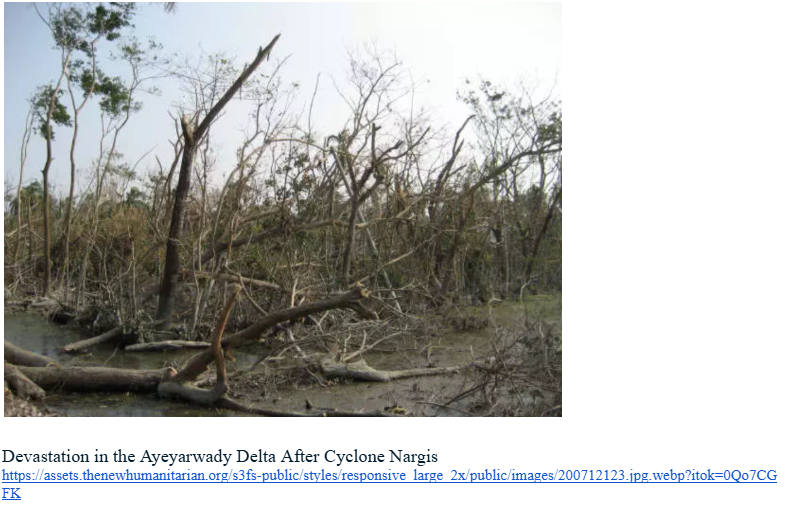
Prior to Cyclone Nargis, large portions of mangrove cover in the Ayeyarwady Delta were cleared to make way for agricultural land, fuelwood, shrimps, etc. These woods once served as natural buffers that reduced wind velocity and absorbed storm surges. It has been discovered that villages with an environment of mangroves were not destroyed to the same extent and locations that had been deforested had been the most devastated (Ya Min Thant et al., 2018). Observations made by foreign agencies also indicate that, in most cases, settlements have been constructed on bare coastlines following the clearing of mangroves, leaving communities in very vulnerable locations (UNEP, 2009). These results illustrate that the growth of human settlements, together with the high rate of deforestation of the mangrov,e had a direct impact on the magnitude of human suffering during the cyclone.
Cyclone Nargis is one of the most devastating natural disasters in Myanmar's history, and it was not the only one to inflict widespread devastation. The extinction of the mangrove forests that once secured the Ayeyarwady Delta was also a cause. The cyclone had left thousands of people exposed, with no defence between their homes and the severe storm surge, because a powerful natural barrier had been cleared away much earlier than the cyclone. Cyclone Nargis did not become a tragedy for the country by coincidence; it became a disaster due to human activities that weakened the environment and were used to protect the whole community. Mangrove destruction was a major factor in the effects of Cyclone Nargis, as it made people more vulnerable to change, accelerated environmental destruction, and reduced the delta's natural resilience.
Mangrove Loss and Increased Human Vulnerability
Prior to Cyclone Nargis, large portions of mangrove cover in the Ayeyarwady Delta were cleared to make way for agricultural land, fuelwood, shrimps, etc. These woods once served as natural buffers that reduced wind velocity and absorbed storm surges. It has been discovered that villages with an environment of mangroves were not destroyed to the same extent and locations that had been deforested had been the most devastated (Ya Min Thant et al., 2018). Observations made by foreign agencies also indicate that, in most cases, settlements have been constructed on bare coastlines following the clearing of mangroves, leaving communities in very vulnerable locations (UNEP, 2009). These results illustrate that the growth of human settlements, together with the high rate of deforestation of the mangrov,e had a direct impact on the magnitude of human suffering during the cyclone.
Environmental Degradation and Delta Fragility
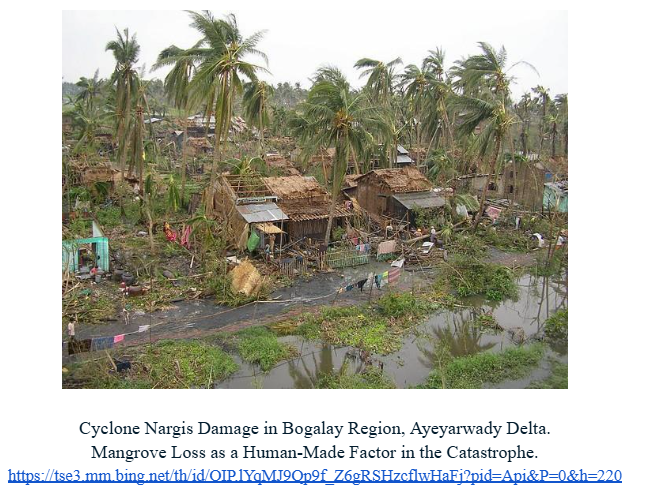
The destruction that Nargis caused was not only a humanitarian disaster but an indicator of a terrible environmental degradation in the delta. Research on the shoreline developments shows that the conversion of mangroves undermined the natural topography and diminished the stability of the coastline (ScienceDirect research, 2009). The absence of tree roots to hold the soil together led to erosion on an enormous scale, and hence the floodwaters reached deeper inland. The strong cyclone waves redefined the delta, sweeping away land, wiping out agricultural land, and leaving long-term ecological effects. It was stated that environmental reports indicated that years of mangrove exploitation had left a very weak, degraded delta system that could not withstand the storm's power (WRM, 2008). Once the protective green belt had been destroyed, the ecosystem's natural strength was gone, and a powerful cyclone became a catastrophe beyond redemption.
The destruction that Nargis caused was not only a humanitarian disaster but an indicator of a terrible environmental degradation in the delta. Research on the shoreline developments shows that the conversion of mangroves undermined the natural topography and diminished the stability of the coastline (ScienceDirect research, 2009). The absence of tree roots to hold the soil together led to erosion on an enormous scale, and hence the floodwaters reached deeper inland. The strong cyclone waves redefined the delta, sweeping away land, wiping out agricultural land, and leaving long-term ecological effects. It was stated that environmental reports indicated that years of mangrove exploitation had left a very weak, degraded delta system that could not withstand the storm's power (WRM, 2008). Once the protective green belt had been destroyed, the ecosystem's natural strength was gone, and a powerful cyclone became a catastrophe beyond redemption.
Social and Livelihood Impacts after the Storm
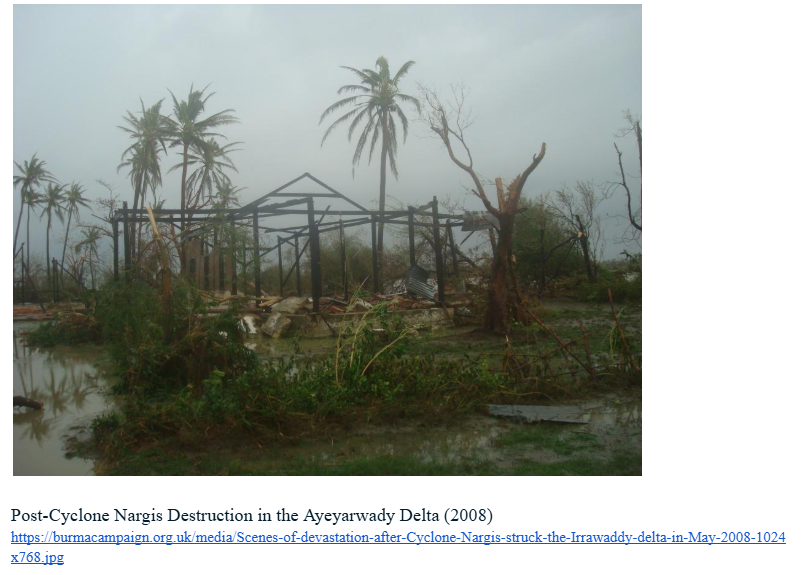
The disappearance of mangroves also exacerbated the long-term social and economic consequences that followed Nargis. Mangroves did not just serve as natural barriers but also provided a breeding ground for fish and crabs, sustaining the livelihood of fishing communities. The cyclone destroyed them beforehand, and the low-income opportunities were already low, and post-Nargis, many communities could hardly do without. Research conducted in the field reported massive destruction of settlements, agricultural land, and fisheries and revealed how environmental destruction led to human misery (Ya Min Thant et al., 2018). Cases cited in government and UN reports detail how families lost their homes, crops, and clean water, further demonstrating that mangrove degradation worsened the crisis (UNEP, 2009). The effects of the loss of healthy ecosystems are seen in individuals' inability to recover after a disaster.
Various organisations, researchers and environmental reporters share the opinion that Cyclone Nargis turned out to be a disaster due to human choices that cleared off mangroves. The tragedy also brought into focus, by science communicators, the harmful repercussions, the harmful effects of substituting natural ecosystems with economic development initiatives (ScienceBlogs, 2008). The power of development, instead of safeguarding the coastal forests, focused on short-term interests, undermined natural defences that had over the centuries safeguarded the delta. Therefore, anthropogenic environmental change was in the focus of converting a severe storm into a national disaster.
Conclusion
Cyclone Nargis was a natural disaster, and the magnitude of damage was mostly man-made. The damage to the mangroves led to the loss of natural protection that would otherwise have minimised the number of deaths and destruction of property. The affected environment, the deteriorated and weakened coastline, and the vulnerable settlements led to the disaster. There is clear scientific evidence, along with environmental reports and eyewitness testimonies, that show that the loss of mangrove forests transformed Cyclone Nargis into a humanitarian and environmental disaster. Mangrove is not only an ecological duty but also a necessity in ensuring that Myanmar can guard against future storms by restoring the mangroves.
The disappearance of mangroves also exacerbated the long-term social and economic consequences that followed Nargis. Mangroves did not just serve as natural barriers but also provided a breeding ground for fish and crabs, sustaining the livelihood of fishing communities. The cyclone destroyed them beforehand, and the low-income opportunities were already low, and post-Nargis, many communities could hardly do without. Research conducted in the field reported massive destruction of settlements, agricultural land, and fisheries and revealed how environmental destruction led to human misery (Ya Min Thant et al., 2018). Cases cited in government and UN reports detail how families lost their homes, crops, and clean water, further demonstrating that mangrove degradation worsened the crisis (UNEP, 2009). The effects of the loss of healthy ecosystems are seen in individuals' inability to recover after a disaster.
Various organisations, researchers and environmental reporters share the opinion that Cyclone Nargis turned out to be a disaster due to human choices that cleared off mangroves. The tragedy also brought into focus, by science communicators, the harmful repercussions, the harmful effects of substituting natural ecosystems with economic development initiatives (ScienceBlogs, 2008). The power of development, instead of safeguarding the coastal forests, focused on short-term interests, undermined natural defences that had over the centuries safeguarded the delta. Therefore, anthropogenic environmental change was in the focus of converting a severe storm into a national disaster.
Conclusion
Cyclone Nargis was a natural disaster, and the magnitude of damage was mostly man-made. The damage to the mangroves led to the loss of natural protection that would otherwise have minimised the number of deaths and destruction of property. The affected environment, the deteriorated and weakened coastline, and the vulnerable settlements led to the disaster. There is clear scientific evidence, along with environmental reports and eyewitness testimonies, that show that the loss of mangrove forests transformed Cyclone Nargis into a humanitarian and environmental disaster. Mangrove is not only an ecological duty but also a necessity in ensuring that Myanmar can guard against future storms by restoring the mangroves.
References
Ya Min Thant, Kanzaki, M., & Maung Maung Than. (2018). Impacts of Cyclone Nargis on mangrove forests and human settlement in the Ayeyarwady Delta, Myanmar. Forest Resources Environment & Conservation Association. J-STAGE.
https://www.jstage.jst.go.jp/article/jfsc/120/0/120_0_348/_pdf/-char/en?utm_source
Aung, T. T., Nelson, R., & Wright, T. (2009). The impact of Cyclone Nargis on the Ayeyarwady River delta shoreline and nearshore zone (Myanmar): Towards degraded delta resilience? ScienceDirect.
https://www.sciencedirect.com/science/article/pii/S1631071317301074?utm_source
United Nations Environment Programme (UNEP) & Ministry of Forestry, Myanmar. (2009). Learning from Cyclone Nargis. WeDocs.
https://wedocs.unep.org/rest/api/core/bitstreams/7b3299c3-40dd-467e-8720-5a9f13873c68/content
The New Humanitarian. (2008). Loss of mangrove forests exacerbates cyclone deaths.
https://www.thenewhumanitarian.org/feature/2008/05/16/loss-mangrove-forests-exacerbates-cyclone-deaths?
Inter Press Service (IPS). (2025). Mangrove loss exacerbated cyclone devastation.
https://www.ipsnews.net/2008/05/environment-burma-39mangrove-loss-exacerbated-cyclone-devastation39/?
Ya Min Thant, Kanzaki, M., & Maung Maung Than. (2018). Impacts of Cyclone Nargis on mangrove forests and human settlement in the Ayeyarwady Delta, Myanmar. Forest Resources Environment & Conservation Association. J-STAGE.
https://www.jstage.jst.go.jp/article/jfsc/120/0/120_0_348/_pdf/-char/en?utm_source
Aung, T. T., Nelson, R., & Wright, T. (2009). The impact of Cyclone Nargis on the Ayeyarwady River delta shoreline and nearshore zone (Myanmar): Towards degraded delta resilience? ScienceDirect.
https://www.sciencedirect.com/science/article/pii/S1631071317301074?utm_source
United Nations Environment Programme (UNEP) & Ministry of Forestry, Myanmar. (2009). Learning from Cyclone Nargis. WeDocs.
https://wedocs.unep.org/rest/api/core/bitstreams/7b3299c3-40dd-467e-8720-5a9f13873c68/content
The New Humanitarian. (2008). Loss of mangrove forests exacerbates cyclone deaths.
https://www.thenewhumanitarian.org/feature/2008/05/16/loss-mangrove-forests-exacerbates-cyclone-deaths?
Inter Press Service (IPS). (2025). Mangrove loss exacerbated cyclone devastation.
https://www.ipsnews.net/2008/05/environment-burma-39mangrove-loss-exacerbated-cyclone-devastation39/?
