

Tackling Marine Plastic Pollution Through Circular Change
Introduction
International Environment Day is not merely a ceremonial event; it is a global call to reflect on the state of our planet and to act decisively in protecting it. Each year, the day reminds us of the interconnectedness between human activities and environmental health. Among the many issues confronting us, marine plastic pollution has emerged as one of the most urgent. It is a crisis that transcends borders, affecting ecosystems, economies, and human well‑being. This paper critically examines the theme, examining what we have learned about marine plastic pollution, what changes are necessary, what solutions we can expect from circular economy practices, and the challenges that continue to hinder waste reduction efforts.
What We Know and Must Change
Marine plastic pollution is now recognised as one of the most pervasive environmental problems. Over 400 million tons of plastic are produced annually, with at least 14 million tons entering the ocean. Plastics account for 80% of all marine debris, ranging from surface waters to deep‑sea sediments (IUCN, 2024). The impacts are severe. Marine animals ingest or become entangled in plastic debris, leading to injury or death. Microplastics infiltrate food chains, threatening food safety and human health (UNEP, 2023). Economically, coastal communities dependent on fisheries and tourism suffer losses as polluted beaches deter visitors and declining fish stocks threaten livelihoods (BusinessMirror, 2025). Plastic pollution is not simply an environmental issue but a socio‑economic and ethical one. It reflects unsustainable consumption patterns, reliance on single‑use plastics, and weak waste management systems.
International Environment Day is not merely a ceremonial event; it is a global call to reflect on the state of our planet and to act decisively in protecting it. Each year, the day reminds us of the interconnectedness between human activities and environmental health. Among the many issues confronting us, marine plastic pollution has emerged as one of the most urgent. It is a crisis that transcends borders, affecting ecosystems, economies, and human well‑being. This paper critically examines the theme, examining what we have learned about marine plastic pollution, what changes are necessary, what solutions we can expect from circular economy practices, and the challenges that continue to hinder waste reduction efforts.
What We Know and Must Change
Marine plastic pollution is now recognised as one of the most pervasive environmental problems. Over 400 million tons of plastic are produced annually, with at least 14 million tons entering the ocean. Plastics account for 80% of all marine debris, ranging from surface waters to deep‑sea sediments (IUCN, 2024). The impacts are severe. Marine animals ingest or become entangled in plastic debris, leading to injury or death. Microplastics infiltrate food chains, threatening food safety and human health (UNEP, 2023). Economically, coastal communities dependent on fisheries and tourism suffer losses as polluted beaches deter visitors and declining fish stocks threaten livelihoods (BusinessMirror, 2025). Plastic pollution is not simply an environmental issue but a socio‑economic and ethical one. It reflects unsustainable consumption patterns, reliance on single‑use plastics, and weak waste management systems.
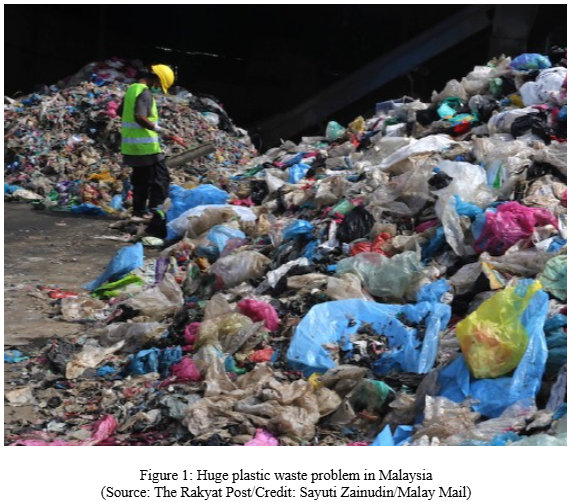
To address marine plastic pollution, fundamental changes in mindset and practice are required. First, societies must abandon the “throwaway culture” that normalises disposability. This means valuing durability, repair, and reuse rather than convenience. Second, governments and industries must strengthen policies and enforcement mechanisms. Regulations banning unnecessary single‑use plastics and extended producer responsibility schemes are essential (WWF Malaysia, 2024). Equally important is education and awareness. Communities must be empowered to understand the long‑term consequences of plastic pollution and adopt sustainable practices. Schools, universities, and media campaigns can play a pivotal role in shaping attitudes, especially among youth.
Circular Economy and Waste Separation
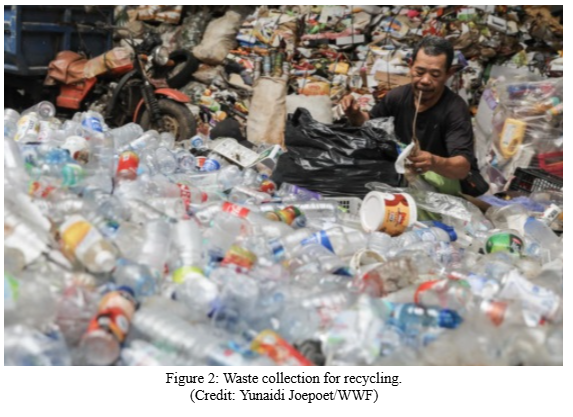
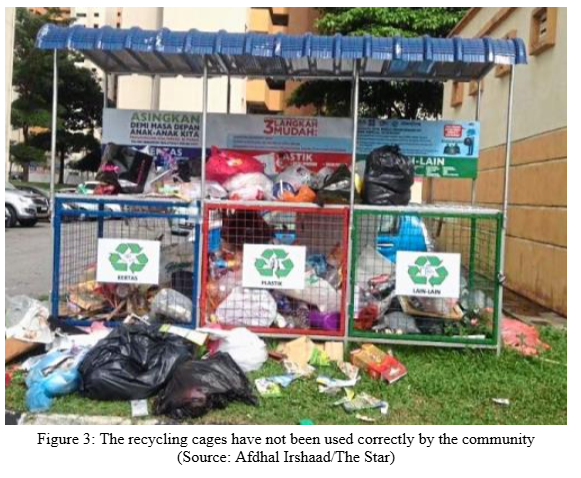
Effective solid waste management is crucial for achieving sustainable development in municipalities, and one key approach is the adoption of waste separation practices (Gamaralalage, n.d.). The most promising solutions lie in embracing circular economy principles, which challenge the traditional linear model of “take, make, dispose” by keeping resources in use for as long as possible, minimising waste, and continually reusing materials. Community‑level waste segregation is central to this vision, as household separation of organic, recyclable, and hazardous materials improves recycling efficiency. However, the reality is that waste is often poorly segregated, and cross‑contamination among materials prevents further recycling, undermining the goals of a circular economy. The success of household recycling programs depends heavily on citizens’ active participation in source separation. Similarly, Moh (2014) observed that many Malaysians still do not engage in this practice at home, while Razali et al. (2019) highlighted the need for further research to understand households' reluctance to adopt segregation practices. Waste separation has therefore become a widely discussed issue at both global and national levels, reflecting growing concern over sustainable waste management and the expectation that communities must play a more active role in achieving circular economy outcomes.
Effective solid waste management is crucial for achieving sustainable development in municipalities, and one key approach is the adoption of waste separation practices (Gamaralalage, n.d.). The most promising solutions lie in embracing circular economy principles, which challenge the traditional linear model of “take, make, dispose” by keeping resources in use for as long as possible, minimising waste, and continually reusing materials. Community‑level waste segregation is central to this vision, as household separation of organic, recyclable, and hazardous materials improves recycling efficiency. However, the reality is that waste is often poorly segregated, and cross‑contamination among materials prevents further recycling, undermining the goals of a circular economy. The success of household recycling programs depends heavily on citizens’ active participation in source separation. Similarly, Moh (2014) observed that many Malaysians still do not engage in this practice at home, while Razali et al. (2019) highlighted the need for further research to understand households' reluctance to adopt segregation practices. Waste separation has therefore become a widely discussed issue at both global and national levels, reflecting growing concern over sustainable waste management and the expectation that communities must play a more active role in achieving circular economy outcomes.
Challenges and Expectations
Despite growing awareness, tackling marine plastic pollution through circular change remains a significant challenge. Infrastructure gaps remain a major obstacle, as many municipalities lack adequate recycling facilities and collection systems to support large‑scale waste separation. Economic pressures also hinder progress, since conventional plastics are often cheaper than sustainable alternatives, discouraging industries from transitioning. Moreover, behavioural barriers persist, with convenience driving consumer choices and households reluctant to adopt consistent segregation practices. These realities highlight the gap between knowledge and action. Yet, expectations for the future remain hopeful. With more vigorous policy enforcement, investment in recycling infrastructure, and community‑driven education, circular economy practices can become mainstream. International Environment Day reminds us that solutions must be both systemic and participatory, requiring collaboration between governments, industries, and citizens. The expectation is clear: a collective shift toward responsibility and innovation to safeguard oceans for generations to come.
References
BusinessMirror Editorial. (2025, December 2). Turning plastic waste into valuable resources. BusinessMirror. https://businessmirror.com.ph/2025/12/02/turning-plastic-waste-into-valuable-resources
Gamaralalage, P. J. D. (2020). Solid Waste Management in Developing Asia: Prioritizing Waste Separation.
International Union for Conservation of Nature. (2024, April). Marine plastic pollution: Issues brief. IUCN. https://www.iucn.org/sites/default/files/2024-04/marine-plastic-pollution-issues-brief_nov21-april-2024-small-update_0.pdf
Moh, Y. C., & Abd Manaf, L. (2014). Overview of household solid waste recycling policy status and challenges in Malaysia. Resources, Conservation and Recycling, 82, 50–61. https://doi.org/10.1016/j.resconrec.2013.11.004
Razali, F., Weng Wai, C., & Daud, D. (2019). A review of Malaysia solid waste management policies to improve recycling practice and waste separation among households. International Journal of Built Environment and Sustainability, 6(1-2), 39–45. https://doi.org/10.11113/ijbes.v6.n1-2.381
United Nations Environment Programme. (2023, May 16). Turning off the tap: How the world can end plastic pollution and create a circular economy. UNEP. https://www.unep.org/resources/turning-off-tap-end-plastic-pollution-create-circular-economy
WWF Malaysia. (2022, June 24). Opinion piece: Circular economy for plastic in Malaysia – Are we on track? WWF Malaysia. https://www.wwf.org.my/?30585/Opinion-Piece-Circular-Economy-for-Plastic-in-Malaysia--Are-We-on-Track
Despite growing awareness, tackling marine plastic pollution through circular change remains a significant challenge. Infrastructure gaps remain a major obstacle, as many municipalities lack adequate recycling facilities and collection systems to support large‑scale waste separation. Economic pressures also hinder progress, since conventional plastics are often cheaper than sustainable alternatives, discouraging industries from transitioning. Moreover, behavioural barriers persist, with convenience driving consumer choices and households reluctant to adopt consistent segregation practices. These realities highlight the gap between knowledge and action. Yet, expectations for the future remain hopeful. With more vigorous policy enforcement, investment in recycling infrastructure, and community‑driven education, circular economy practices can become mainstream. International Environment Day reminds us that solutions must be both systemic and participatory, requiring collaboration between governments, industries, and citizens. The expectation is clear: a collective shift toward responsibility and innovation to safeguard oceans for generations to come.
References
BusinessMirror Editorial. (2025, December 2). Turning plastic waste into valuable resources. BusinessMirror. https://businessmirror.com.ph/2025/12/02/turning-plastic-waste-into-valuable-resources
Gamaralalage, P. J. D. (2020). Solid Waste Management in Developing Asia: Prioritizing Waste Separation.
International Union for Conservation of Nature. (2024, April). Marine plastic pollution: Issues brief. IUCN. https://www.iucn.org/sites/default/files/2024-04/marine-plastic-pollution-issues-brief_nov21-april-2024-small-update_0.pdf
Moh, Y. C., & Abd Manaf, L. (2014). Overview of household solid waste recycling policy status and challenges in Malaysia. Resources, Conservation and Recycling, 82, 50–61. https://doi.org/10.1016/j.resconrec.2013.11.004
Razali, F., Weng Wai, C., & Daud, D. (2019). A review of Malaysia solid waste management policies to improve recycling practice and waste separation among households. International Journal of Built Environment and Sustainability, 6(1-2), 39–45. https://doi.org/10.11113/ijbes.v6.n1-2.381
United Nations Environment Programme. (2023, May 16). Turning off the tap: How the world can end plastic pollution and create a circular economy. UNEP. https://www.unep.org/resources/turning-off-tap-end-plastic-pollution-create-circular-economy
WWF Malaysia. (2022, June 24). Opinion piece: Circular economy for plastic in Malaysia – Are we on track? WWF Malaysia. https://www.wwf.org.my/?30585/Opinion-Piece-Circular-Economy-for-Plastic-in-Malaysia--Are-We-on-Track
