

The Growing E-Waste Crisis in Malaysia
Introduction
The rapid pace of digitalisation in Malaysia has transformed everyday life, accelerating communication, education, and economic development. However, this technological progression has also produced an unintended consequence: a sharp rise in electronic waste (e-waste). The Malay Mail article “The Growing E-Waste Crisis in Malaysia: What You Need to Know and How to Act” underscores the urgency of the issue, noting that millions of electronic items are discarded annually, yet only a fraction reach authorised recycling centres. The growing volume of e-waste reflects broader concerns about consumer culture, policy enforcement, environmental governance, and public health. Understanding the severity of this issue is essential as Malaysia navigates the balance between digital advancement and ecological sustainability.
The rapid pace of digitalisation in Malaysia has transformed everyday life, accelerating communication, education, and economic development. However, this technological progression has also produced an unintended consequence: a sharp rise in electronic waste (e-waste). The Malay Mail article “The Growing E-Waste Crisis in Malaysia: What You Need to Know and How to Act” underscores the urgency of the issue, noting that millions of electronic items are discarded annually, yet only a fraction reach authorised recycling centres. The growing volume of e-waste reflects broader concerns about consumer culture, policy enforcement, environmental governance, and public health. Understanding the severity of this issue is essential as Malaysia navigates the balance between digital advancement and ecological sustainability.
Issues Surrounding the Growing E-Waste Crisis in Malaysia
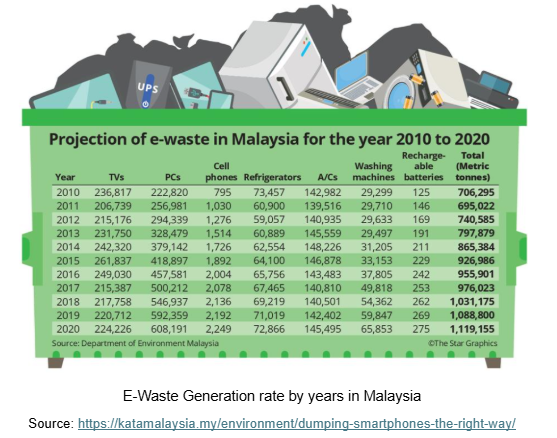
The recent article “The growing e-waste crisis in Malaysia: What you need to know and how to act” paints a stark picture of the scale and urgency of electronic waste (e-waste) in Malaysia. Reading it stirred concern not only because of the enormous volume of waste, but also because of persistent structural gaps that prevent the problem from being effectively tamed (Palansamy, 2025). The article’s data, e.g., 2,459 tonnes of household e-waste collected in 2021 (a tiny fraction of total generated), and a projected 24.5 million units of e-waste for this year, highlight how e-waste is a looming environmental headache. The article shows that although awareness of e-waste is rising, proper disposal remains extremely low due to limited access to collection points and inadequate communication about available services (Akhtar et al., 2014). This situation results in most electronic waste being discarded with regular household waste, ultimately ending up in landfills.
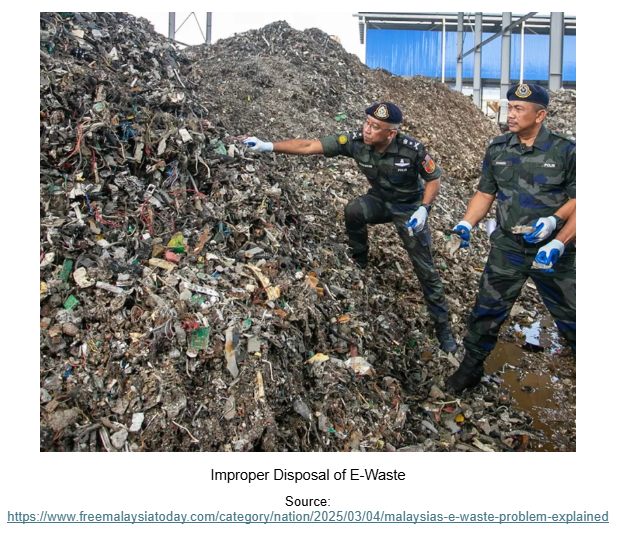
Another issue is the prevalence of informal and unsafe disposal practices. Without convenient or well-publicised recycling options, many Malaysians resort to burning e-waste or selling it to unlicensed recyclers. This informal handling exposes communities to hazardous substances such as lead, cadmium, and brominated flame retardants. Research in Johor reveals that improper disposal significantly contributes to soil and water contamination, threatening both ecosystem and human health (Shah et al., 2018). The environmental injustices associated with such practices tend to affect low-income communities, as illegal recycling activities are often located close to vulnerable residential areas.
The crisis is also intensified by weak policy enforcement and the absence of strong producer responsibility. Malaysia has introduced regulations and guidelines, but enforcement remains inconsistent. Many producers are not legally required to take back or manage the products they sell, placing most responsibility on local authorities and consumers. This contrasts with global best practices, where Extended Producer Responsibility (EPR) systems require manufacturers to manage e-waste throughout the product lifecycle. Research indicates that Malaysia’s slow adoption of mandatory EPR contributes to inefficient e-waste recovery and recycling (Kamaruddin & Marwan, 2021). Without stronger industry participation, the country continues to face an overwhelming volume of waste with limited resources for safe processing.
The crisis is also intensified by weak policy enforcement and the absence of strong producer responsibility. Malaysia has introduced regulations and guidelines, but enforcement remains inconsistent. Many producers are not legally required to take back or manage the products they sell, placing most responsibility on local authorities and consumers. This contrasts with global best practices, where Extended Producer Responsibility (EPR) systems require manufacturers to manage e-waste throughout the product lifecycle. Research indicates that Malaysia’s slow adoption of mandatory EPR contributes to inefficient e-waste recovery and recycling (Kamaruddin & Marwan, 2021). Without stronger industry participation, the country continues to face an overwhelming volume of waste with limited resources for safe processing.
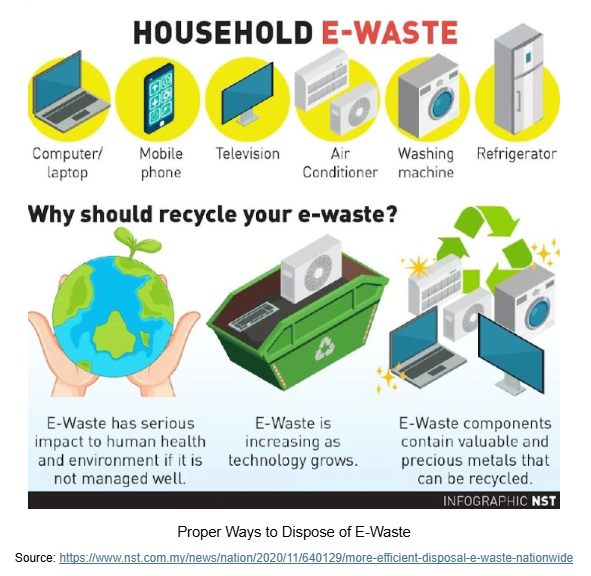
A closer look at the growing e-waste crisis reveals that the issue extends beyond disposal behaviour and reflects systemic weaknesses in Malaysia’s environmental governance. The information in the article, combined with findings from past studies, strengthens the view that addressing e-waste requires more than encouraging consumers to recycle demands a fundamental restructuring of the waste-management system (Mahat et al., 2019). There is a pressing need to expand recycling infrastructure, increase drop-off points, enhance public accessibility, and implement strict enforcement mechanisms against illegal recyclers.
From a personal standpoint, the current approach appears insufficient because it places too much responsibility on the public without providing the necessary support systems. Effective solutions require shared accountability. Producers should be held responsible for product take-back, retailers should provide convenient return services, local governments should improve collection logistics, and the public should be encouraged through awareness campaigns and incentives. There is strong belief that sustainable progress is achievable only when all stakeholders participate actively and consistently.
The e-waste crisis also highlights a larger cultural challenge: society’s growing dependence on short-lived electronic products. A more conscious and sustainable relationship with technology is necessary. This includes extending product use, repairing devices instead of replacing them, and choosing environmentally responsible brands. Without such behavioural shifts supported by strong national policies, Malaysia risks facing an environmental burden that will continue to grow beyond the capacity of existing systems.
Conclusion
Critically responding to the growing e-waste crisis means recognising that the problem is deeply embedded in Malaysia’s development model, economic priorities, and social behaviours. Effective solutions require collaboration between government agencies, producers, retailers, local councils, and citizens. The Malay Mail article provides a useful entry point into the issue, but a more transformative approach must confront the structural gaps that sustain the crisis. Malaysia’s future environmental health depends on whether current awareness efforts can evolve into long-term, system-wide reform. If the nation continues to rely on voluntary disposal and fragmented initiatives, the volume of e-waste will grow faster than the systems designed to manage it, ultimately undermining public well-being and the country’s overall sustainability goals.
References
Akhtar, R., Masud, M. M., & Afroz, R. (2014). Household Perception and Recycling Behaviour On Electronic Waste Management: A Case Study Of Kuala Lumpur, Malaysia. Malaysian Journal of Science, 33(1), 34–41. https://doi.org/10.22452/mjs.vol33no1.5
Mahat, H., Hashim, M., Nayan, N., Saleh, Y., & Norkhaidi, S. B. (2019). E-waste disposal awareness among the Malaysian community. Knowledge Management & E-Learning an International Journal, 393–408. https://doi.org/10.34105/j.kmel.2019.11.021
More efficient disposal of e-waste nationwide. (2025, August 9). NST Online. https://www.nst.com.my/news/nation/2020/11/640129/more-efficient-disposal-e-waste-nationwide
Palansamy, Y. (2025, February 6). The growing e-waste crisis in Malaysia: What you need to know and how to act. Malay Mail.
https://www.malaymail.com/news/malaysia/2025/02/07/the-growing-e-waste-crisis-in-malaysia-what-you-need-to-know-and-how-to-act/164970
Raja, N., & Today, F. M. (2025, March 4). Malaysia’s e-waste problem explained. Free Malaysia Today | FMT.
https://www.freemalaysiatoday.com/category/nation/2025/03/04/malaysias-e-waste-problem-explained
Shah, G. L., Yusof, M. B. M., & Ming, N. G. (2018). Material Flow Analysis and Awareness on E-Waste Management. Malaysian Journal of Civil Engineering, 27(2). https://doi.org/10.11113/mjce.v27.15925
From a personal standpoint, the current approach appears insufficient because it places too much responsibility on the public without providing the necessary support systems. Effective solutions require shared accountability. Producers should be held responsible for product take-back, retailers should provide convenient return services, local governments should improve collection logistics, and the public should be encouraged through awareness campaigns and incentives. There is strong belief that sustainable progress is achievable only when all stakeholders participate actively and consistently.
The e-waste crisis also highlights a larger cultural challenge: society’s growing dependence on short-lived electronic products. A more conscious and sustainable relationship with technology is necessary. This includes extending product use, repairing devices instead of replacing them, and choosing environmentally responsible brands. Without such behavioural shifts supported by strong national policies, Malaysia risks facing an environmental burden that will continue to grow beyond the capacity of existing systems.
Conclusion
Critically responding to the growing e-waste crisis means recognising that the problem is deeply embedded in Malaysia’s development model, economic priorities, and social behaviours. Effective solutions require collaboration between government agencies, producers, retailers, local councils, and citizens. The Malay Mail article provides a useful entry point into the issue, but a more transformative approach must confront the structural gaps that sustain the crisis. Malaysia’s future environmental health depends on whether current awareness efforts can evolve into long-term, system-wide reform. If the nation continues to rely on voluntary disposal and fragmented initiatives, the volume of e-waste will grow faster than the systems designed to manage it, ultimately undermining public well-being and the country’s overall sustainability goals.
References
Akhtar, R., Masud, M. M., & Afroz, R. (2014). Household Perception and Recycling Behaviour On Electronic Waste Management: A Case Study Of Kuala Lumpur, Malaysia. Malaysian Journal of Science, 33(1), 34–41. https://doi.org/10.22452/mjs.vol33no1.5
Mahat, H., Hashim, M., Nayan, N., Saleh, Y., & Norkhaidi, S. B. (2019). E-waste disposal awareness among the Malaysian community. Knowledge Management & E-Learning an International Journal, 393–408. https://doi.org/10.34105/j.kmel.2019.11.021
More efficient disposal of e-waste nationwide. (2025, August 9). NST Online. https://www.nst.com.my/news/nation/2020/11/640129/more-efficient-disposal-e-waste-nationwide
Palansamy, Y. (2025, February 6). The growing e-waste crisis in Malaysia: What you need to know and how to act. Malay Mail.
https://www.malaymail.com/news/malaysia/2025/02/07/the-growing-e-waste-crisis-in-malaysia-what-you-need-to-know-and-how-to-act/164970
Raja, N., & Today, F. M. (2025, March 4). Malaysia’s e-waste problem explained. Free Malaysia Today | FMT.
https://www.freemalaysiatoday.com/category/nation/2025/03/04/malaysias-e-waste-problem-explained
Shah, G. L., Yusof, M. B. M., & Ming, N. G. (2018). Material Flow Analysis and Awareness on E-Waste Management. Malaysian Journal of Civil Engineering, 27(2). https://doi.org/10.11113/mjce.v27.15925
