

When the Storm Arrives Early: Lessons from Ribut Tropika Senyar
Introduction
Climate change is no longer something we learn from textbooks or scientific reports, but it is now shaping our daily lives. In Malaysia, extreme weather events have become more frequent, more intense, and more unpredictable. This year, the sudden emergence of Ribut Tropika Senyar, the first-ever tropical storm recorded to form directly over the Selat Melaka, brought this reality into the spotlight. For many Malaysians, Senyar was more than a storm, but it was a warning that our climate has entered a new chapter, and we must be ready.
Ribut Tropika Senyar formed under unusual conditions. Meteorologists explained that high atmospheric moisture from a strong La Niña, unusually warm sea-surface temperatures, and interacting monsoon winds created the perfect environment for a storm to form in a place where storms historically do not originate. It brought heavy rainfall, strong winds, and rough seas to several states, including Selangor, Perak, Pahang, and parts of the west coast. Even after weakening to a low-pressure system, it continued to trigger continuous rain warnings throughout the peninsula. For a country that rarely experiences tropical storms on the west coast, Senyar felt like a turning point in the climate.
Climate-resilient infrastructure.
What this storm teaches us is that climate patterns are shifting. Areas once considered “safe” from tropical storms may no longer be protected. The Selat Melaka, previously considered a calm, non-cyclonic zone, has now produced a storm significant enough to attract international attention. This challenges old assumptions in weather forecasting, disaster planning, and national preparedness. In other words, Malaysia must expand its understanding of what “climate risks” truly mean today.
The event also highlights the importance of climate-resilient infrastructure. Many urban areas still experience flash floods simply because drainage systems were designed for a climate that existed decades ago. With rainfall intensity increasing, cities need better flood mitigation systems, updated drainage networks, and more responsible land use. Storms like Senyar show that our infrastructure must evolve or risk failing when we need it most.
Climate change is no longer something we learn from textbooks or scientific reports, but it is now shaping our daily lives. In Malaysia, extreme weather events have become more frequent, more intense, and more unpredictable. This year, the sudden emergence of Ribut Tropika Senyar, the first-ever tropical storm recorded to form directly over the Selat Melaka, brought this reality into the spotlight. For many Malaysians, Senyar was more than a storm, but it was a warning that our climate has entered a new chapter, and we must be ready.
Ribut Tropika Senyar formed under unusual conditions. Meteorologists explained that high atmospheric moisture from a strong La Niña, unusually warm sea-surface temperatures, and interacting monsoon winds created the perfect environment for a storm to form in a place where storms historically do not originate. It brought heavy rainfall, strong winds, and rough seas to several states, including Selangor, Perak, Pahang, and parts of the west coast. Even after weakening to a low-pressure system, it continued to trigger continuous rain warnings throughout the peninsula. For a country that rarely experiences tropical storms on the west coast, Senyar felt like a turning point in the climate.
Climate-resilient infrastructure.
What this storm teaches us is that climate patterns are shifting. Areas once considered “safe” from tropical storms may no longer be protected. The Selat Melaka, previously considered a calm, non-cyclonic zone, has now produced a storm significant enough to attract international attention. This challenges old assumptions in weather forecasting, disaster planning, and national preparedness. In other words, Malaysia must expand its understanding of what “climate risks” truly mean today.
The event also highlights the importance of climate-resilient infrastructure. Many urban areas still experience flash floods simply because drainage systems were designed for a climate that existed decades ago. With rainfall intensity increasing, cities need better flood mitigation systems, updated drainage networks, and more responsible land use. Storms like Senyar show that our infrastructure must evolve or risk failing when we need it most.
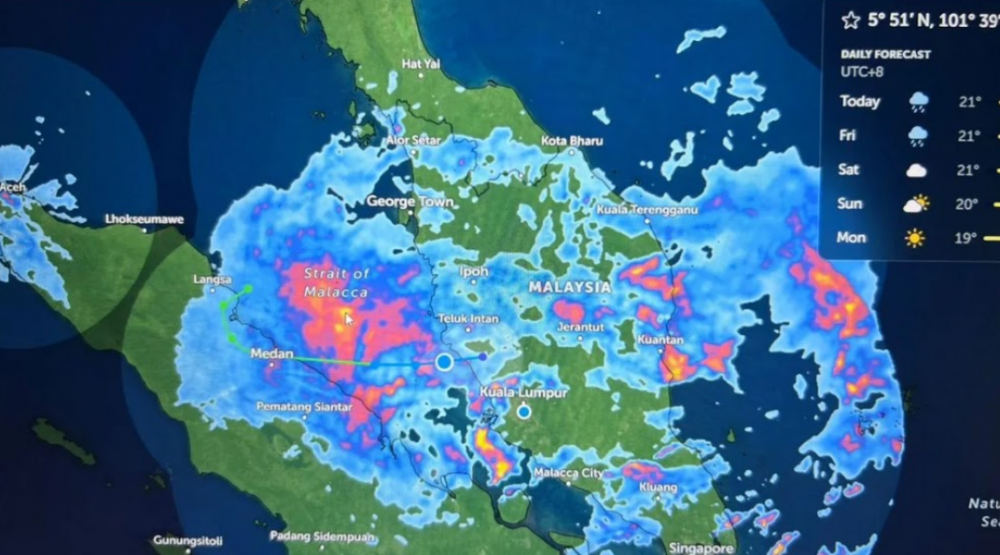
Tropical Storm Senyar brings heavy rain and strong winds to the west coast of Peninsular Malaysia, a rare phenomenon near the equator. – Zoom Earth photo (From Sina
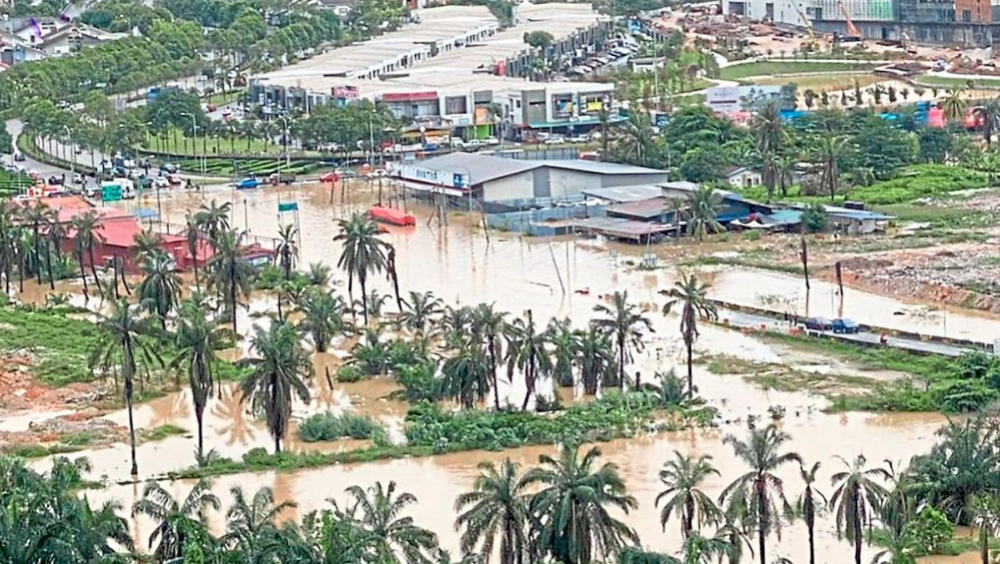
The roads and bridge cut off by floodwaters after heavy rain. (Photo from THE STAR)
Nature-based solutions
Nature-based solutions also emerge as a clear lesson. Forests, riverbanks, mangroves, and wetlands act as natural buffers during extreme weather. They reduce flood peaks, stabilise soil, filter water, and protect coastlines from strong winds. When these ecosystems are degraded or replaced with poorly planned development, communities become more exposed. Senyar reminds us that climate resilience isn’t only about building more infrastructure; it is about protecting the natural systems that already help defend us.
On a policy level, public expectations are rising. Malaysians want stronger early-warning systems, better coordination between agencies, and more transparent communication during disasters. During Senyar, MetMalaysia and national disaster agencies acted quickly to issue alerts, but long-term resilience requires more than emergency updates. We need climate-smart planning at all levels: from how cities expand, to how rivers are managed, to how coastal development is approved. Climate resilience must be a priority, not an afterthought.
At the same time, climate change also affects social systems. Heatwaves, heavy rain, and storms impact health, food production, electricity use, and household safety. Vulnerable groups such as low-income communities, elderly citizens, and rural populations often bear the heaviest burden. Strengthening resilience, therefore, includes improving community awareness, evacuation readiness, and public education. People must know how to read warnings, where to go in emergencies, and how to protect themselves.
Technological innovation can support this transition. Renewable energy, sustainable agriculture, climate modelling, urban green design, and early-warning apps all help reduce emissions and strengthen resilience. Instead of seeing climate action as a burden, Malaysians can treat it as an opportunity for green jobs, research development, and sustainable economic growth.
Senyar sends one more message: climate issues are global. Tropical storms forming outside their usual regions, shifting monsoon patterns, and rising temperatures are part of a larger climate system affected by global emissions. To protect ourselves, Malaysia must continue working with the international community through climate agreements, data sharing, cross-border disaster response, and collaborative research.
Nature-based solutions also emerge as a clear lesson. Forests, riverbanks, mangroves, and wetlands act as natural buffers during extreme weather. They reduce flood peaks, stabilise soil, filter water, and protect coastlines from strong winds. When these ecosystems are degraded or replaced with poorly planned development, communities become more exposed. Senyar reminds us that climate resilience isn’t only about building more infrastructure; it is about protecting the natural systems that already help defend us.
On a policy level, public expectations are rising. Malaysians want stronger early-warning systems, better coordination between agencies, and more transparent communication during disasters. During Senyar, MetMalaysia and national disaster agencies acted quickly to issue alerts, but long-term resilience requires more than emergency updates. We need climate-smart planning at all levels: from how cities expand, to how rivers are managed, to how coastal development is approved. Climate resilience must be a priority, not an afterthought.
At the same time, climate change also affects social systems. Heatwaves, heavy rain, and storms impact health, food production, electricity use, and household safety. Vulnerable groups such as low-income communities, elderly citizens, and rural populations often bear the heaviest burden. Strengthening resilience, therefore, includes improving community awareness, evacuation readiness, and public education. People must know how to read warnings, where to go in emergencies, and how to protect themselves.
Technological innovation can support this transition. Renewable energy, sustainable agriculture, climate modelling, urban green design, and early-warning apps all help reduce emissions and strengthen resilience. Instead of seeing climate action as a burden, Malaysians can treat it as an opportunity for green jobs, research development, and sustainable economic growth.
Senyar sends one more message: climate issues are global. Tropical storms forming outside their usual regions, shifting monsoon patterns, and rising temperatures are part of a larger climate system affected by global emissions. To protect ourselves, Malaysia must continue working with the international community through climate agreements, data sharing, cross-border disaster response, and collaborative research.
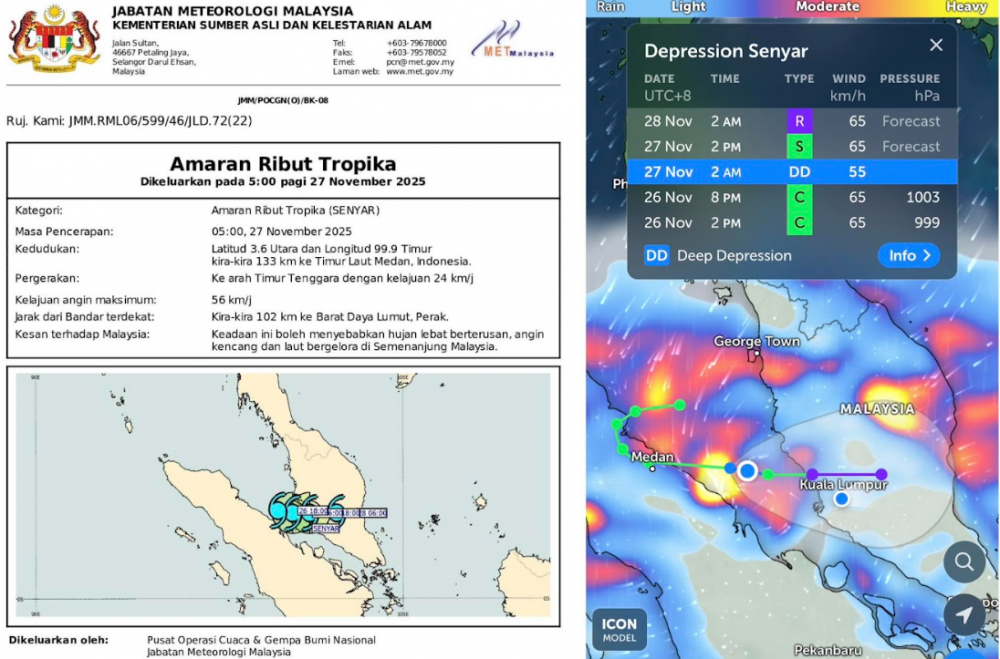
Weather alert map issued during an extreme weather event, illustrating the role of early-warning systems in climate resilience.
Conclusion
Ribut Tropika Senyar was not just a rare phenomenon, but it was a powerful reminder that climate change is already reshaping our environment. The storm taught us about vulnerability, but also about responsibility. As we face more extreme weather in the future, our expectations must rise: stronger policies, better planning, healthier ecosystems, and a well-prepared society. The climate is changing, but with proactive and informed action, Malaysia can build resilience and navigate this new reality with confidence.
References
Malaysian Meteorological Department. (2025). Ribut Tropika Senyar: Laporan rasmi dan amaran cuaca. MetMalaysia. https://www.met.gov.my
New Straits Times. (2025, November 27). Rare tropical storm Senyar forms in the Strait of Malacca. https://www.nst.com.my
National Disaster Management Agency Malaysia. (2025). Statement on Tropical Storm Senyar and associated weather warnings. NADMA Malaysia. https://www.nadma.gov.my
Intergovernmental Panel on Climate Change. (2022). Climate change 2022: Impacts, adaptation, and vulnerability. Cambridge University Press. https://doi.org/10.1017/9781009325844
World Bank. (2022). Climate-resilient infrastructure: A policy roadmap for developing countries. World Bank Publications.
United Nations Environment Programme. (2023). Extreme weather and global climate risks: Trends and outlook. UNEP.
Ribut Tropika Senyar was not just a rare phenomenon, but it was a powerful reminder that climate change is already reshaping our environment. The storm taught us about vulnerability, but also about responsibility. As we face more extreme weather in the future, our expectations must rise: stronger policies, better planning, healthier ecosystems, and a well-prepared society. The climate is changing, but with proactive and informed action, Malaysia can build resilience and navigate this new reality with confidence.
References
Malaysian Meteorological Department. (2025). Ribut Tropika Senyar: Laporan rasmi dan amaran cuaca. MetMalaysia. https://www.met.gov.my
New Straits Times. (2025, November 27). Rare tropical storm Senyar forms in the Strait of Malacca. https://www.nst.com.my
National Disaster Management Agency Malaysia. (2025). Statement on Tropical Storm Senyar and associated weather warnings. NADMA Malaysia. https://www.nadma.gov.my
Intergovernmental Panel on Climate Change. (2022). Climate change 2022: Impacts, adaptation, and vulnerability. Cambridge University Press. https://doi.org/10.1017/9781009325844
World Bank. (2022). Climate-resilient infrastructure: A policy roadmap for developing countries. World Bank Publications.
United Nations Environment Programme. (2023). Extreme weather and global climate risks: Trends and outlook. UNEP.
