

Environment Day 2025: From Lessons to Action in Malaysia
Introduction
International Environment Day is more than a calendar event. It is an annual mirror held up to our collective commitment. In 2025, its reflection for Malaysia reveals a nation at a crossroads. We have accumulated a wealth of hard-earned lessons from floods, haze, biodiversity loss, and climate threats. Therefore, the persistent gap between knowledge and implementation begs the critical question: how do we translate these lessons into unequivocal action? This paper argues that accurately measuring this year’s Environment Day will be a fundamental shift from planning and pledge-making to the execution of integrated, justice-centred policies that protect our natural capital as the non-negotiable foundation of our nation’s future.
Lesson Learned: The High Cost of Fragmented Governance
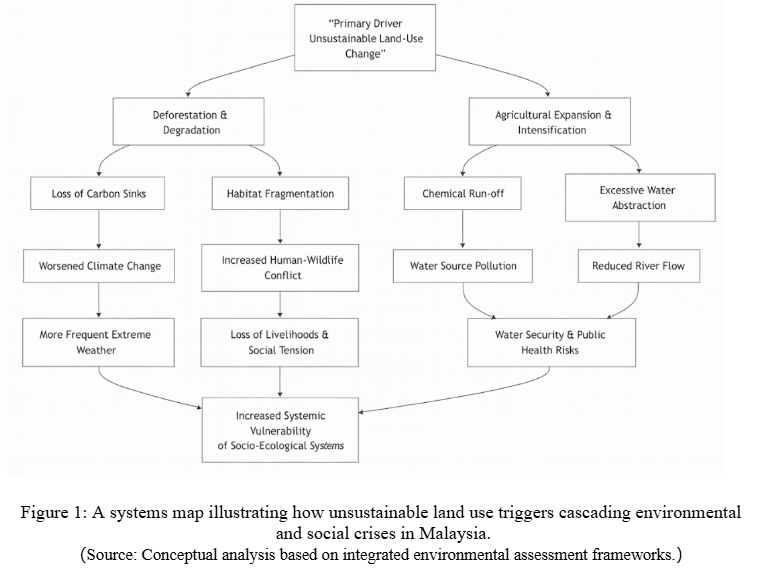
The most glaring lesson is the failure of siloed approaches. We now understand with painful clarity that environmental issues are inextricably linked. Deforestation in the Central Forest Spine is not just a wildlife crisis; it also disrupts hydrological cycles, amplifying floods in the east coast and droughts in the south, while releasing stored carbon. The transboundary haze has taught us that agricultural fires are a symptom of flawed land-use policies and weak regional enforcement. Figure 1 models this interconnectivity, showing how a single driver, like unsustainable land conversion, triggers cascading failures across climate, water security, and public health. We have learned that governing these elements separately is both inefficient and dangerous.
International Environment Day is more than a calendar event. It is an annual mirror held up to our collective commitment. In 2025, its reflection for Malaysia reveals a nation at a crossroads. We have accumulated a wealth of hard-earned lessons from floods, haze, biodiversity loss, and climate threats. Therefore, the persistent gap between knowledge and implementation begs the critical question: how do we translate these lessons into unequivocal action? This paper argues that accurately measuring this year’s Environment Day will be a fundamental shift from planning and pledge-making to the execution of integrated, justice-centred policies that protect our natural capital as the non-negotiable foundation of our nation’s future.
Lesson Learned: The High Cost of Fragmented Governance
The most glaring lesson is the failure of siloed approaches. We now understand with painful clarity that environmental issues are inextricably linked. Deforestation in the Central Forest Spine is not just a wildlife crisis; it also disrupts hydrological cycles, amplifying floods in the east coast and droughts in the south, while releasing stored carbon. The transboundary haze has taught us that agricultural fires are a symptom of flawed land-use policies and weak regional enforcement. Figure 1 models this interconnectivity, showing how a single driver, like unsustainable land conversion, triggers cascading failures across climate, water security, and public health. We have learned that governing these elements separately is both inefficient and dangerous.
Expectation: Integrate, Legislate, and Empower
Therefore, the primary expectation is a systemic overhaul of environmental governance. This requires:
Integrated Policy:
Legislating a National Ecological Security Act that legally binds land-use, water, forestry, and climate policies to a common goal of ecological integrity, preventing ministries from working at cross-purposes.
Data-Driven Transparency:
Mandating public, real-time access to environmental data (e.g., river quality, deforestation alerts, emissions) through a national dashboard, empowering citizens and researchers to hold decision-makers accountable.
Formalising Community Stewardship:
Moving beyond ad-hoc projects to legally recognising and funding Indigenous and Community Conserved Areas (ICCAs). The success of community patrols in reducing poaching in Royal Belum and river monitoring groups along the Klang River must be scaled from pilot projects to a national policy.
Case in Point: The Urban-Rural Water Nexus
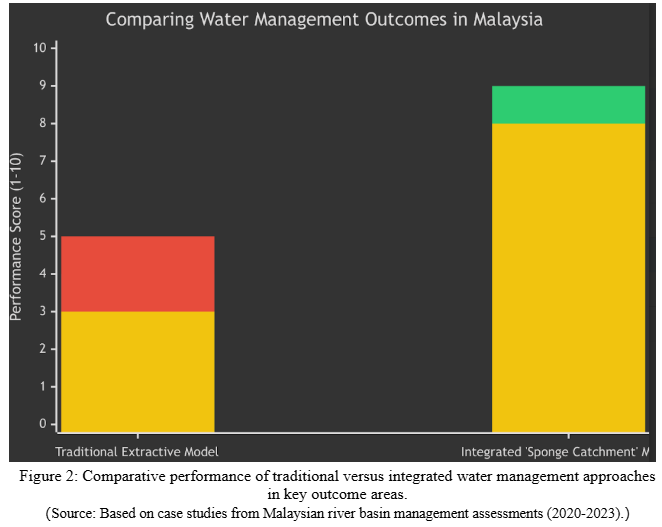
A concrete example lies in water management. We have learned that urban water security is purchased at the high cost of rural and ecological displacement. Kuala Lumpur’s reliance on distant dams impacts upstream communities and riverine ecosystems. The expectation is a turn towards Integrated Water Resources Management (IWRM) at the river basin scale. This means investing in natural water infrastructure, such as protecting and restoring upland forests as water catchment areas, alongside engineered solutions. Figure 2 conceptualises this “sponge city” and “sponge catchment” approach, where cities invest in upstream conservation, creating a virtuous cycle of water security, rural livelihoods, and biodiversity protection.
Therefore, the primary expectation is a systemic overhaul of environmental governance. This requires:
Integrated Policy:
Legislating a National Ecological Security Act that legally binds land-use, water, forestry, and climate policies to a common goal of ecological integrity, preventing ministries from working at cross-purposes.
Data-Driven Transparency:
Mandating public, real-time access to environmental data (e.g., river quality, deforestation alerts, emissions) through a national dashboard, empowering citizens and researchers to hold decision-makers accountable.
Formalising Community Stewardship:
Moving beyond ad-hoc projects to legally recognising and funding Indigenous and Community Conserved Areas (ICCAs). The success of community patrols in reducing poaching in Royal Belum and river monitoring groups along the Klang River must be scaled from pilot projects to a national policy.
Case in Point: The Urban-Rural Water Nexus
A concrete example lies in water management. We have learned that urban water security is purchased at the high cost of rural and ecological displacement. Kuala Lumpur’s reliance on distant dams impacts upstream communities and riverine ecosystems. The expectation is a turn towards Integrated Water Resources Management (IWRM) at the river basin scale. This means investing in natural water infrastructure, such as protecting and restoring upland forests as water catchment areas, alongside engineered solutions. Figure 2 conceptualises this “sponge city” and “sponge catchment” approach, where cities invest in upstream conservation, creating a virtuous cycle of water security, rural livelihoods, and biodiversity protection.
From Greenwashing to Genuine Green Growth
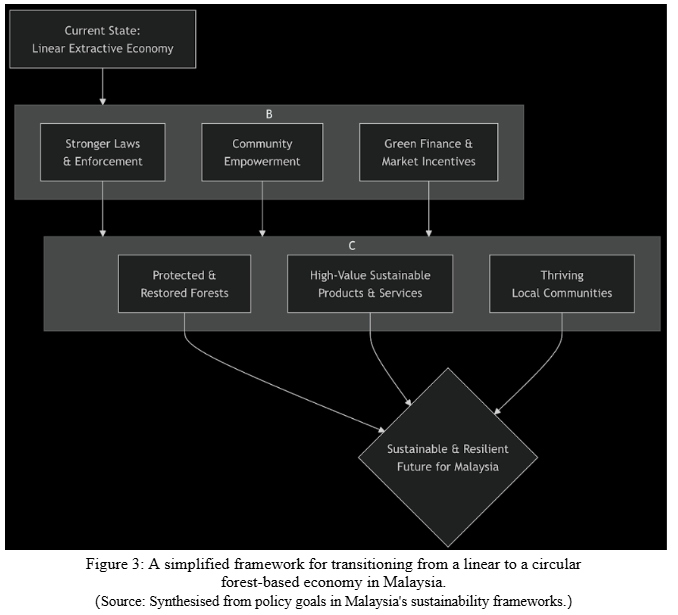
Another harsh lesson is the ease of “greenwashing.” We have seen tree-planting campaigns devolve into monoculture plantations and “sustainable” labels attached to products from contested landscapes. The expectation is for robust, mandatory standards. Malaysia must strengthen the Malaysian Sustainable Palm Oil (MSPO) scheme by requiring independent third-party auditing and traceability to the plantation level. Simultaneously, we must champion truly restorative projects, like the rehabilitation of degraded peatlands, which sequester carbon, reduce fire risk, and protect biodiversity. Figure 3 outlines a transition roadmap from current practices to a circular, high-value bioeconomy that values standing forests and sustainable production.
Another harsh lesson is the ease of “greenwashing.” We have seen tree-planting campaigns devolve into monoculture plantations and “sustainable” labels attached to products from contested landscapes. The expectation is for robust, mandatory standards. Malaysia must strengthen the Malaysian Sustainable Palm Oil (MSPO) scheme by requiring independent third-party auditing and traceability to the plantation level. Simultaneously, we must champion truly restorative projects, like the rehabilitation of degraded peatlands, which sequester carbon, reduce fire risk, and protect biodiversity. Figure 3 outlines a transition roadmap from current practices to a circular, high-value bioeconomy that values standing forests and sustainable production.
Conclusion
The legacy of Environment Day 2025 for Malaysia must be its role as a pivot point from awareness to accountability. We have learned enough. The expectations are now clear, including integrated governance, enforceable laws, empowered communities, and an economy that accounts for its environmental debts. This demands political courage to transcend short-term cycles and vested interests. It is time to act, not because it is easy, but because our water security, climate resilience, and unique natural heritage depend on it. Let this be the year we move beyond the hashtag and build the tangible, ecological foundations for a secure and prosperous Malaysia.
References
Aziz, A. A., Ghandimathi, S., & Mohamed, M. (2021). The effectiveness of the Malaysian Sustainable Palm Oil (MSPO) certification scheme in reducing deforestation. International Journal of Environmental Science and Development, 12(4), 1-5.
Chan, N. W., & Ghani, A. A. (2022). Integrated Water Resources Management in Malaysia: Challenges and future directions. Journal of Water and Climate Change, 13(5), 1897-1914.
Majid Cooke, F., & Toh, S. M. (2020). The oil palm complex: Smallholders and the state in Malaysia. Journal of Peasant Studies, 47(4), 804-823.
Saaban, S., et al. (2020). Human-elephant conflict in Peninsular Malaysia: Challenges and solutions. Journal of Wildlife and Parks, 35, 1-14.
Wong, C. T., & Goh, H. C. (2022). Ecotourism and its role in sustainable wildlife conservation: A case study of Mulu National Park, Sarawak. ASEAN Journal on Hospitality and Tourism, 20(1), 45-60.
Zainal Abidin, M. H., & Ahmad, A. H. (2023). Wildlife corridors and mitigation structures along the East Coast Expressway: A preliminary assessment of usage. Malaysian Applied Biology Journal, 52(2), 101-112.
The legacy of Environment Day 2025 for Malaysia must be its role as a pivot point from awareness to accountability. We have learned enough. The expectations are now clear, including integrated governance, enforceable laws, empowered communities, and an economy that accounts for its environmental debts. This demands political courage to transcend short-term cycles and vested interests. It is time to act, not because it is easy, but because our water security, climate resilience, and unique natural heritage depend on it. Let this be the year we move beyond the hashtag and build the tangible, ecological foundations for a secure and prosperous Malaysia.
References
Aziz, A. A., Ghandimathi, S., & Mohamed, M. (2021). The effectiveness of the Malaysian Sustainable Palm Oil (MSPO) certification scheme in reducing deforestation. International Journal of Environmental Science and Development, 12(4), 1-5.
Chan, N. W., & Ghani, A. A. (2022). Integrated Water Resources Management in Malaysia: Challenges and future directions. Journal of Water and Climate Change, 13(5), 1897-1914.
Majid Cooke, F., & Toh, S. M. (2020). The oil palm complex: Smallholders and the state in Malaysia. Journal of Peasant Studies, 47(4), 804-823.
Saaban, S., et al. (2020). Human-elephant conflict in Peninsular Malaysia: Challenges and solutions. Journal of Wildlife and Parks, 35, 1-14.
Wong, C. T., & Goh, H. C. (2022). Ecotourism and its role in sustainable wildlife conservation: A case study of Mulu National Park, Sarawak. ASEAN Journal on Hospitality and Tourism, 20(1), 45-60.
Zainal Abidin, M. H., & Ahmad, A. H. (2023). Wildlife corridors and mitigation structures along the East Coast Expressway: A preliminary assessment of usage. Malaysian Applied Biology Journal, 52(2), 101-112.
