

Living With Our Waste: What We Learn, What We Expect?
Introduction
The Reality of Pollution
World Environment Day, held annually on June 5, is a crucial reminder that environmental protection is not just a global concept but a daily responsibility shaped by individual habits, community initiatives, and national policies. Solid waste management is a critical environmental challenge, as ineffective urban waste management contributes to persistent pollution and threatens human health and ecosystem sustainability (Abubakar et al., 2022). Improper waste disposal of various types, including industrial, municipal, and agricultural waste, has caused air, water, and soil pollution, increased greenhouse gas emissions, and serious public health and environmental impacts, transforming unmanaged waste from plastic-filled rivers into urban smog (Raphela, Manqele, & Erasmus, 2024). In line with this theme, the
pollution that occurs offers lessons about consumption patterns, governance gaps, and the urgent need to transition to resilient economies, while setting expectations for stronger policies and empowered communities.
How Everyday Choices Shape Environmental Reality
Plastic pollution and disposable products dominate Malaysian households, creating ongoing environmental problems. A 2021 study stated that the Klang River is the second-highest contributor of plastic entering the ocean at 1.33%, and this finding is consistent with the reality that the Klang River is clearly clogged with floating plastic, highlighting the dangers of poor individual waste disposal habits that collectively contribute to pollution across the country (Team, 2024). This clearly shows that environmental degradation is not only caused by industrial activities but also by daily routines that emphasise the need for personal responsibility and public awareness in reducing waste.
The Reality of Pollution
World Environment Day, held annually on June 5, is a crucial reminder that environmental protection is not just a global concept but a daily responsibility shaped by individual habits, community initiatives, and national policies. Solid waste management is a critical environmental challenge, as ineffective urban waste management contributes to persistent pollution and threatens human health and ecosystem sustainability (Abubakar et al., 2022). Improper waste disposal of various types, including industrial, municipal, and agricultural waste, has caused air, water, and soil pollution, increased greenhouse gas emissions, and serious public health and environmental impacts, transforming unmanaged waste from plastic-filled rivers into urban smog (Raphela, Manqele, & Erasmus, 2024). In line with this theme, the
pollution that occurs offers lessons about consumption patterns, governance gaps, and the urgent need to transition to resilient economies, while setting expectations for stronger policies and empowered communities.
How Everyday Choices Shape Environmental Reality
Plastic pollution and disposable products dominate Malaysian households, creating ongoing environmental problems. A 2021 study stated that the Klang River is the second-highest contributor of plastic entering the ocean at 1.33%, and this finding is consistent with the reality that the Klang River is clearly clogged with floating plastic, highlighting the dangers of poor individual waste disposal habits that collectively contribute to pollution across the country (Team, 2024). This clearly shows that environmental degradation is not only caused by industrial activities but also by daily routines that emphasise the need for personal responsibility and public awareness in reducing waste.
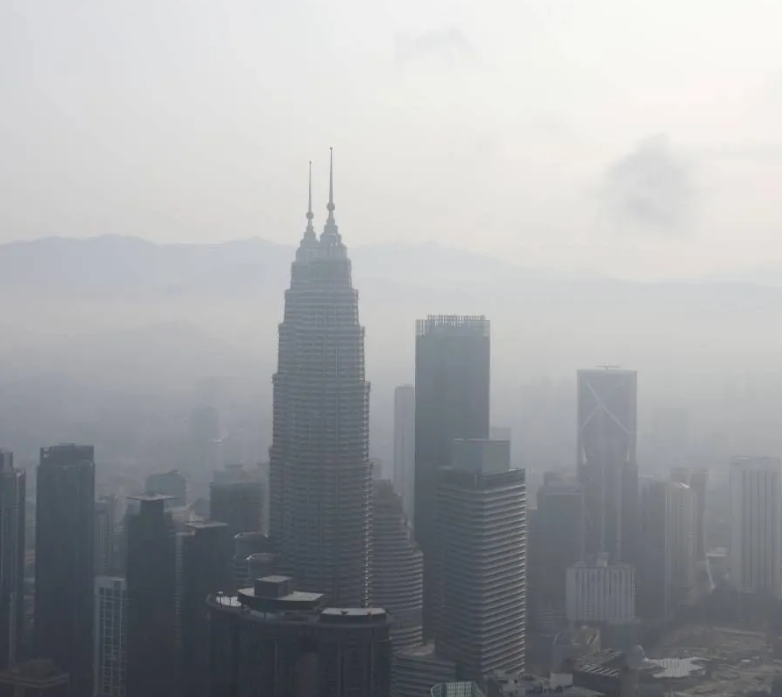
Kuala Lumpur skyline, featuring Petronas Twin Towers, shrouded in haze
Pollution Without Borders: Haze and E-Waste Risks
The Indonesian government, which has been involved in burning forests for plantations without regard for environmental protection, has caused haze to spread to Malaysia and contribute to urban air pollution, demonstrating that such pollution is transboundary and requires strict enforcement in urban planning (Wen et al., 2016). The rapid proliferation of electronic products has increased the generation of electronic waste, which is improperly managed through burning or illegal dumping, exposing communities to toxic metals and soil contamination, posing serious environmental and health risks (Bhardwaj, Rath & Tokas, 2023). These challenges clearly demonstrate the need for technological, Infrastructure and public education solutions.
Raising the Bar for Environmental Governance
Moving forward, Malaysians expect stricter and more consistent environmental policies. The Malaysian government has introduced a strategy, the Malaysia Roadmap to Zero Single-Use Plastics 2018-2030, to reduce the use of single-use plastics, but despite this progress, implementation remains inconsistent across the country (Goh et al., 2024). Clearer penalties, standardisation across states in Malaysia, and The integration of waste management into urban planning is essential to reduce pollution, improve governance, and foster public confidence and engagement in sustainability efforts.
The Indonesian government, which has been involved in burning forests for plantations without regard for environmental protection, has caused haze to spread to Malaysia and contribute to urban air pollution, demonstrating that such pollution is transboundary and requires strict enforcement in urban planning (Wen et al., 2016). The rapid proliferation of electronic products has increased the generation of electronic waste, which is improperly managed through burning or illegal dumping, exposing communities to toxic metals and soil contamination, posing serious environmental and health risks (Bhardwaj, Rath & Tokas, 2023). These challenges clearly demonstrate the need for technological, Infrastructure and public education solutions.
Raising the Bar for Environmental Governance
Moving forward, Malaysians expect stricter and more consistent environmental policies. The Malaysian government has introduced a strategy, the Malaysia Roadmap to Zero Single-Use Plastics 2018-2030, to reduce the use of single-use plastics, but despite this progress, implementation remains inconsistent across the country (Goh et al., 2024). Clearer penalties, standardisation across states in Malaysia, and The integration of waste management into urban planning is essential to reduce pollution, improve governance, and foster public confidence and engagement in sustainability efforts.
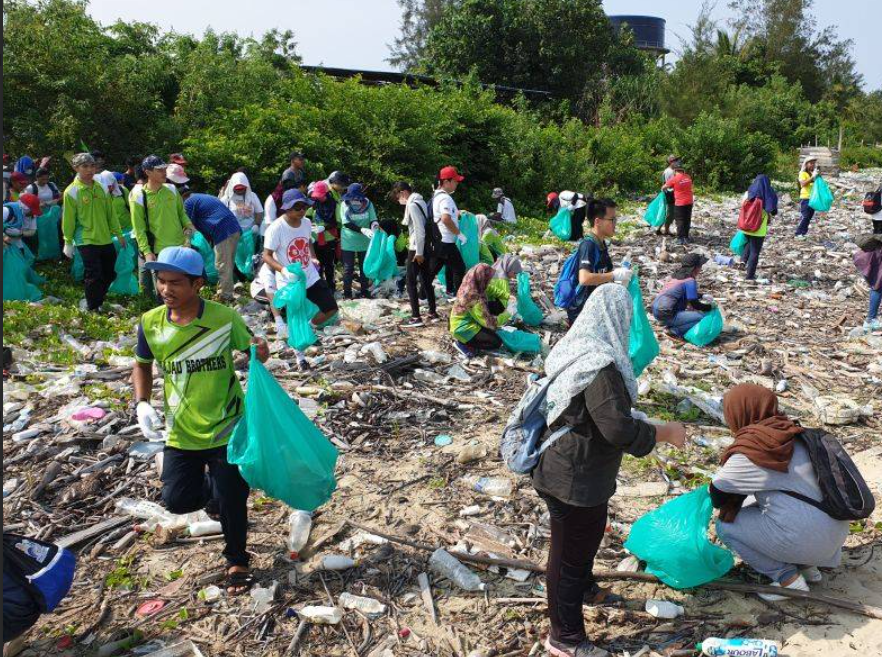
Dedicated volunteers making a tangible difference for a cleaner coastline in Sabah
Designing Sustainability: Circular Solutions and Community Power
Circular economy principles promote the use of sustainable materials, modular design and low-impact production while maintaining product use through repair, reuse, remanufacturing and recycling, in line with the circular economy expectation that goods should be designed to be reused, repaired or recycled rather than discarded (Eelager et al., 2025). The Extended Producer Scheme (EPR) obliges manufacturers to manage end-of-life products and encourages sustainable design. Community engagement also plays a key role through clean-ups, recycling programmes and youth engagement
initiatives. Clean-up programmes and monitoring initiatives that actively involve community members and municipal staff have been shown to reduce plastic leakage into the environment, demonstrating that empowered and engaged communities are essential for effective waste management and environmental monitoring (Willis et al., 2022).
Conclusion
Pollution management must be integrated with climate resilience strategies, as it impacts greenhouse gas emissions, biodiversity loss and public health. Open landfills release methane, clogged drains cause flash floods and polluted wetlands lose their natural buffer capacity. This connection will highlight the importance of a holistic and climate-smart approach. In conclusion, what we learn from pollution is a reflection of our own societies. At the same time, what we hope for is a future of cleaner technologies, strong policies and empowered communities, ensuring that World Environment Day becomes a call to action for a sustainable environment.
References
Abubakar, I. R., Maniruzzaman, K. M., Dano, U. L., AlShihri, F. S., AlShammari, M. S., Ahmed, S. M. S., Al-Gehlani, W. A. G., & Alrawaf, T. I. (2022). Environmental sustainability: Impacts of solid waste management practices in the global South. International Journal of Environmental Research and Public Health, 19(19), 12717. https://doi.org/10.3390/ijerph191912717
Bhardwaj, L. K., Rath, P., & Tokas, R. (2023). E-Waste Management in Developing Countries: Current Practices, Challenges, Disposal, and Impact on Human Health & Environment. Preprints.org. https://doi.org/10.20944/preprints202312.0582.v1
Eelager, M. P., Dalbanjan, N. P., Madihalli, S., Madar, M., Agadi, N. P., Korganokar, K., & Kiran, B. (2025). Pathways to a sustainable future: Exploring the synergy between sustainability and circular economy. Sustainable Futures, 10, 101208. https://doi.org/10.1016/j.sftr.2025.101208
Goh, K. C., Kurniawan, T. A., Sarpin, N., Masrom, M. A. N., Othman, M. H. D., Anouzla, A., Aziz, F., Ali, I., Casila, J. C., Khan, M. I., Zhang, D., Mahmoud, M., & Onn, C. W. (2024). Combating microplastic pollution in Malaysia’s marine ecosystems using technological solutions, policy instruments, and public participation: A review. Journal of Hazardous Materials Advances, 17, 100542. https://doi.org/10.1016/j.hazadv.2024.100542
Raphela, T., Manqele, N., & Erasmus, M. (2024). The impact of improper waste disposal on human health and the environment: a case of Umgungundlovu District in KwaZulu-Natal Province, South Africa. Frontiers in Sustainability, 5. https://doi.org/10.3389/frsus.2024.1386047
Team, W. I. (2024). From pristine to polluted: The history of the Klang River and shared efforts to restore it. Wiki Impact. htpps://www.wikiimpact.com/from-pristine-to-polluted-the-history-of-the-klang-river-and-shared-efforts-to-restore-
it/#:~:text=In%20fact%2C%20before%202016%2C%20because,plastic%20and%20o
Willis, K., Hardesty, B. D., Vince, J., & Wilcox, C. (2022). Local waste management successfully reduces coastal plastic pollution. One Earth, 5(6), 666–676. https://doi.org/10.1016/j.oneear.2022.05.008
Circular economy principles promote the use of sustainable materials, modular design and low-impact production while maintaining product use through repair, reuse, remanufacturing and recycling, in line with the circular economy expectation that goods should be designed to be reused, repaired or recycled rather than discarded (Eelager et al., 2025). The Extended Producer Scheme (EPR) obliges manufacturers to manage end-of-life products and encourages sustainable design. Community engagement also plays a key role through clean-ups, recycling programmes and youth engagement
initiatives. Clean-up programmes and monitoring initiatives that actively involve community members and municipal staff have been shown to reduce plastic leakage into the environment, demonstrating that empowered and engaged communities are essential for effective waste management and environmental monitoring (Willis et al., 2022).
Conclusion
Pollution management must be integrated with climate resilience strategies, as it impacts greenhouse gas emissions, biodiversity loss and public health. Open landfills release methane, clogged drains cause flash floods and polluted wetlands lose their natural buffer capacity. This connection will highlight the importance of a holistic and climate-smart approach. In conclusion, what we learn from pollution is a reflection of our own societies. At the same time, what we hope for is a future of cleaner technologies, strong policies and empowered communities, ensuring that World Environment Day becomes a call to action for a sustainable environment.
References
Abubakar, I. R., Maniruzzaman, K. M., Dano, U. L., AlShihri, F. S., AlShammari, M. S., Ahmed, S. M. S., Al-Gehlani, W. A. G., & Alrawaf, T. I. (2022). Environmental sustainability: Impacts of solid waste management practices in the global South. International Journal of Environmental Research and Public Health, 19(19), 12717. https://doi.org/10.3390/ijerph191912717
Bhardwaj, L. K., Rath, P., & Tokas, R. (2023). E-Waste Management in Developing Countries: Current Practices, Challenges, Disposal, and Impact on Human Health & Environment. Preprints.org. https://doi.org/10.20944/preprints202312.0582.v1
Eelager, M. P., Dalbanjan, N. P., Madihalli, S., Madar, M., Agadi, N. P., Korganokar, K., & Kiran, B. (2025). Pathways to a sustainable future: Exploring the synergy between sustainability and circular economy. Sustainable Futures, 10, 101208. https://doi.org/10.1016/j.sftr.2025.101208
Goh, K. C., Kurniawan, T. A., Sarpin, N., Masrom, M. A. N., Othman, M. H. D., Anouzla, A., Aziz, F., Ali, I., Casila, J. C., Khan, M. I., Zhang, D., Mahmoud, M., & Onn, C. W. (2024). Combating microplastic pollution in Malaysia’s marine ecosystems using technological solutions, policy instruments, and public participation: A review. Journal of Hazardous Materials Advances, 17, 100542. https://doi.org/10.1016/j.hazadv.2024.100542
Raphela, T., Manqele, N., & Erasmus, M. (2024). The impact of improper waste disposal on human health and the environment: a case of Umgungundlovu District in KwaZulu-Natal Province, South Africa. Frontiers in Sustainability, 5. https://doi.org/10.3389/frsus.2024.1386047
Team, W. I. (2024). From pristine to polluted: The history of the Klang River and shared efforts to restore it. Wiki Impact. htpps://www.wikiimpact.com/from-pristine-to-polluted-the-history-of-the-klang-river-and-shared-efforts-to-restore-
it/#:~:text=In%20fact%2C%20before%202016%2C%20because,plastic%20and%20o
Willis, K., Hardesty, B. D., Vince, J., & Wilcox, C. (2022). Local waste management successfully reduces coastal plastic pollution. One Earth, 5(6), 666–676. https://doi.org/10.1016/j.oneear.2022.05.008
