

Forests, Floods & Future Duty: Malaysia’s Environment at a Crossroads
Introduction
Forests remain Malaysia’s single most important natural climate regulator, for example, tropical forests and mangroves sequester large stocks of carbon in biomass and soils, help stabilise regional rainfall and buffer communities from storms. Recent field- and modelling-based assessments show that Malaysian forests store substantial carbon in biomass and remain a critical carbon sink. Yet, the value of that service is often weighed against short-term land-use gains, such as plantation expansion and logging concessions (Raihan et al., 2021).
Southeast Asia’s deforestation trajectory offers mixed lessons. At the same time, decade-to-decade tree-cover loss remains a concern. Comprehensive monitoring (e.g., Global Forest Watch) indicates that Malaysia has reduced some recent rates of primary forest loss compared with earlier decades. Still, tree-cover loss in commodity supply chains and peatland conversion persist, creating reputational and health costs (haze, fires) as well as biodiversity loss. The EU’s new anti-deforestation regulation and associated country risk ratings have already prompted Malaysia to strengthen traceability and policy responses (Global Forest Watch, 2023).
Expectations for sustainable forest management
Expectations for sustainable forest management should therefore emphasise stronger protection and restoration of peatlands and mangroves, given their disproportionate carbon and coastal-protection value (ASEAN, 2024). Second, legally binding no-net-loss/no-deforestation policies for natural forests. Third, payment-for-ecosystem-services mechanisms that reach smallholders and local communities, making conservation economically viable at the regional scale (Ministry of Energy and Natural Resources, 2021).
Community involvement and ecotourism must move from tokenism to partnerships. Community forestry models and community-based ecotourism can provide livelihoods while conserving biodiversity. Mangrove conservation, in particular, will need active restoration plus legal protection as sea-level rise and coastal development increase exposure for coastal communities. Recent reviews highlight both restoration successes and ongoing loss, so a mixed approach (protection + nature-based restoration) is needed (Ramli et al., 2023).
Forests remain Malaysia’s single most important natural climate regulator, for example, tropical forests and mangroves sequester large stocks of carbon in biomass and soils, help stabilise regional rainfall and buffer communities from storms. Recent field- and modelling-based assessments show that Malaysian forests store substantial carbon in biomass and remain a critical carbon sink. Yet, the value of that service is often weighed against short-term land-use gains, such as plantation expansion and logging concessions (Raihan et al., 2021).
Southeast Asia’s deforestation trajectory offers mixed lessons. At the same time, decade-to-decade tree-cover loss remains a concern. Comprehensive monitoring (e.g., Global Forest Watch) indicates that Malaysia has reduced some recent rates of primary forest loss compared with earlier decades. Still, tree-cover loss in commodity supply chains and peatland conversion persist, creating reputational and health costs (haze, fires) as well as biodiversity loss. The EU’s new anti-deforestation regulation and associated country risk ratings have already prompted Malaysia to strengthen traceability and policy responses (Global Forest Watch, 2023).
Expectations for sustainable forest management
Expectations for sustainable forest management should therefore emphasise stronger protection and restoration of peatlands and mangroves, given their disproportionate carbon and coastal-protection value (ASEAN, 2024). Second, legally binding no-net-loss/no-deforestation policies for natural forests. Third, payment-for-ecosystem-services mechanisms that reach smallholders and local communities, making conservation economically viable at the regional scale (Ministry of Energy and Natural Resources, 2021).
Community involvement and ecotourism must move from tokenism to partnerships. Community forestry models and community-based ecotourism can provide livelihoods while conserving biodiversity. Mangrove conservation, in particular, will need active restoration plus legal protection as sea-level rise and coastal development increase exposure for coastal communities. Recent reviews highlight both restoration successes and ongoing loss, so a mixed approach (protection + nature-based restoration) is needed (Ramli et al., 2023).
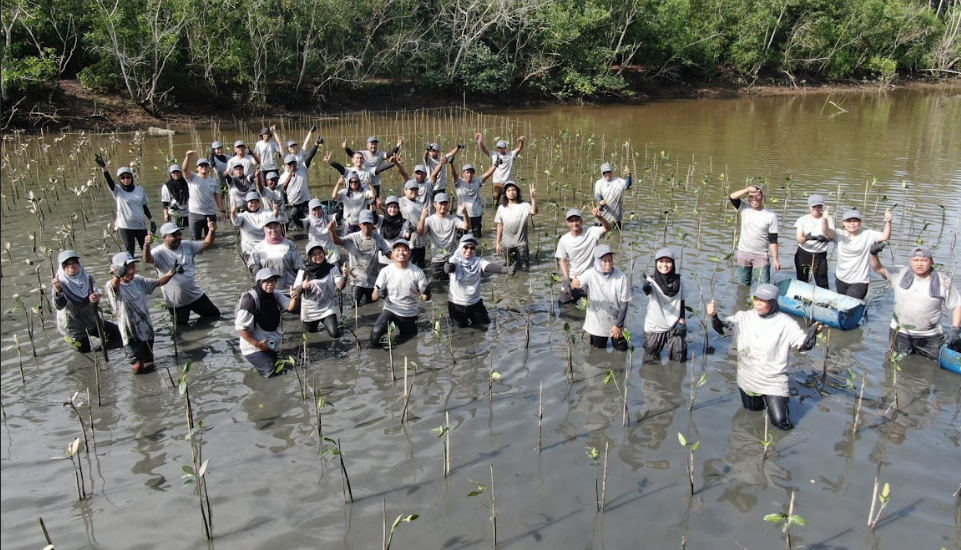
Community_based Mangrove Conservation and Sustainable Livelihoods Programme In Pulau Tanjung Surat, Johor
Climate-smart policy
Extreme weather events in Malaysia include the 2021–2022 widespread floods, which exposed systemic vulnerabilities in urban drainage, watershed management, and emergency preparedness. Those floods illustrated how heavy precipitation, land-cover change in uplands and urban expansion compound impacts on downstream communities. National statistics and disaster reports document heavy human, economic and social costs and support calls for integrated catchment planning and nature-based solutions to reduce flood risk (Department of Statistics Malaysia, 2021).
Expectations for climate-smart policy include more substantial alignment of Malaysia’s NDC commitments with sectoral plans (land use, energy, transport), and quicker deployment of green technologies combined with capacity building for local governments. Malaysia’s updated NDC (2021) provides the national mitigation and adaptation framework, but translating it into financeable local projects, resilient infrastructure standards and community adaptation requires stronger coordination across ministries and subnational actors (UNFCCC, 2021).
Resilient cities - green infrastructure
Building resilient cities means integrating green infrastructure (wetlands, urban forests), implementing stricter land-use zoning in floodplains, and implementing community preparedness programs. International cooperation remains essential for carbon reduction: domestic action must be paired with trade-policy engagement (e.g., responding to EU deforestation regulations) and regional approaches to transboundary haze and peat management (ASEAN, 2024).
Malaysia has a solid legal base, for example, the Environmental Quality Act 1974 and the National Forestry Policy. However, enforcement gaps, overlapping jurisdictional issues (federal vs. state control of forests), and inconsistent corporate reporting weaken governance. Recent policy proposals (EQA amendments, national reporting frameworks) signal intent to tighten standards and penalties, but effectiveness will depend on sustained political will and capacity (Department of Environment, Ministry of Natural Resources and Environmental Sustainability, 2025)
Corporate responsibility and ESG initiatives, such as Bursa Malaysia and the Securities Commission, have rolled out sustainability reporting guides and a National Sustainability Reporting Framework to enhance corporate disclosure quality. For ESG to matter on the ground, corporate supply-chain due diligence must be backed by verifiable data and smallholder support programs; otherwise, disclosures remain window dressing (Bursa Malaysia, 2022)
Conclusion
Looking ahead, Malaysia’s environmental legislation, public participation, and international cooperation must converge with stronger statutory safeguards for high-value ecosystems (mangroves, peatlands, primary forests), transparent corporate traceability, community benefit-sharing, and cross-border collaboration on haze and climate finance. Whether commitments post-2030 translate into resilient landscapes and societies will be determined by these factors.
References
ASEAN. (2024). APMS-2 April Web [Report]. https://asean.org/wp-content/uploads/2024/04/APMS-2-Apr-Web.pdf
Bursa Malaysia. (2022). Sustainability Reporting Guide (3rd ed). https://www.bursamalaysia.com/sites/5d809dcf39fba22790cad230/assets/6768e301e6414a4c4beb9f49/Sustainability_Reporting_Guide_2022_FINAL__1_.pdf
Department of Environment Ministry Of Natural Resources And Environmental Sustainability. (2025). Environmental Quality Act 1974 – ACT 127 – Department of Environment. Doe.gov.my. https://www.doe.gov.my/en/environmental-quality-act-1974-act-127-2/
Department of Statistics Malaysia. (2001). [Flood Impact]. https://www.statistics.gov.my/portal-main/release-archive/ec56bd6b-8b85-11ed-96a6-1866daa77ef9
Global Forest Watch. (2023). Malaysia Deforestation Rates & Statistics by Country | GFW. Www.globalforestwatch.org. https://www.globalforestwatch.org/dashboards/country/MYS/
Ministry of Energy and Natural Resources. (2021). Malaysia Policy on Forestry (Version 2.0). https://www.mybis.gov.my/pb/4825
Raihan, A., Begum, R. A., Mohd Said, M. N., & Pereira, J. J. (2021). Assessment of Carbon Stock in Forest Biomass and Emission Reduction Potential in Malaysia. Forests, 12(10), 1294. https://doi.org/10.3390/f12101294 Cheah, C. F. (2025). Forests as our cornerstone of CO₂ storage in RMK13. Malay Mail. https://www.malaymail.com/news/what-you-think/2025/09/29/forests-as-our-cornerstone-of-co2-storage-in-rmk13-cheah-chan-fatt/192750
Ramli, N. A., Krishna, G., & Aiman, N. (2023). Review of the mangrove conservation behaviour from environmental psychological perspectives. Malaysian Journal of Sustainable Environment, Special Issue, 193–215. https://doi.org/10.24191/myse.v0iJune.22680
United Nations Framework Convention on Climate Change. (2021). Malaysia’s update of its first nationally determined contribution to UNFCCC: Updated submission (July 2021). https://unfccc.int/sites/default/files/NDC/2022-06/Malaysia%20NDC%20Updated%20Submission%20to%20UNFCCC%20July%202021%20final.pdf
Extreme weather events in Malaysia include the 2021–2022 widespread floods, which exposed systemic vulnerabilities in urban drainage, watershed management, and emergency preparedness. Those floods illustrated how heavy precipitation, land-cover change in uplands and urban expansion compound impacts on downstream communities. National statistics and disaster reports document heavy human, economic and social costs and support calls for integrated catchment planning and nature-based solutions to reduce flood risk (Department of Statistics Malaysia, 2021).
Expectations for climate-smart policy include more substantial alignment of Malaysia’s NDC commitments with sectoral plans (land use, energy, transport), and quicker deployment of green technologies combined with capacity building for local governments. Malaysia’s updated NDC (2021) provides the national mitigation and adaptation framework, but translating it into financeable local projects, resilient infrastructure standards and community adaptation requires stronger coordination across ministries and subnational actors (UNFCCC, 2021).
Resilient cities - green infrastructure
Building resilient cities means integrating green infrastructure (wetlands, urban forests), implementing stricter land-use zoning in floodplains, and implementing community preparedness programs. International cooperation remains essential for carbon reduction: domestic action must be paired with trade-policy engagement (e.g., responding to EU deforestation regulations) and regional approaches to transboundary haze and peat management (ASEAN, 2024).
Malaysia has a solid legal base, for example, the Environmental Quality Act 1974 and the National Forestry Policy. However, enforcement gaps, overlapping jurisdictional issues (federal vs. state control of forests), and inconsistent corporate reporting weaken governance. Recent policy proposals (EQA amendments, national reporting frameworks) signal intent to tighten standards and penalties, but effectiveness will depend on sustained political will and capacity (Department of Environment, Ministry of Natural Resources and Environmental Sustainability, 2025)
Corporate responsibility and ESG initiatives, such as Bursa Malaysia and the Securities Commission, have rolled out sustainability reporting guides and a National Sustainability Reporting Framework to enhance corporate disclosure quality. For ESG to matter on the ground, corporate supply-chain due diligence must be backed by verifiable data and smallholder support programs; otherwise, disclosures remain window dressing (Bursa Malaysia, 2022)
Conclusion
Looking ahead, Malaysia’s environmental legislation, public participation, and international cooperation must converge with stronger statutory safeguards for high-value ecosystems (mangroves, peatlands, primary forests), transparent corporate traceability, community benefit-sharing, and cross-border collaboration on haze and climate finance. Whether commitments post-2030 translate into resilient landscapes and societies will be determined by these factors.
References
ASEAN. (2024). APMS-2 April Web [Report]. https://asean.org/wp-content/uploads/2024/04/APMS-2-Apr-Web.pdf
Bursa Malaysia. (2022). Sustainability Reporting Guide (3rd ed). https://www.bursamalaysia.com/sites/5d809dcf39fba22790cad230/assets/6768e301e6414a4c4beb9f49/Sustainability_Reporting_Guide_2022_FINAL__1_.pdf
Department of Environment Ministry Of Natural Resources And Environmental Sustainability. (2025). Environmental Quality Act 1974 – ACT 127 – Department of Environment. Doe.gov.my. https://www.doe.gov.my/en/environmental-quality-act-1974-act-127-2/
Department of Statistics Malaysia. (2001). [Flood Impact]. https://www.statistics.gov.my/portal-main/release-archive/ec56bd6b-8b85-11ed-96a6-1866daa77ef9
Global Forest Watch. (2023). Malaysia Deforestation Rates & Statistics by Country | GFW. Www.globalforestwatch.org. https://www.globalforestwatch.org/dashboards/country/MYS/
Ministry of Energy and Natural Resources. (2021). Malaysia Policy on Forestry (Version 2.0). https://www.mybis.gov.my/pb/4825
Raihan, A., Begum, R. A., Mohd Said, M. N., & Pereira, J. J. (2021). Assessment of Carbon Stock in Forest Biomass and Emission Reduction Potential in Malaysia. Forests, 12(10), 1294. https://doi.org/10.3390/f12101294 Cheah, C. F. (2025). Forests as our cornerstone of CO₂ storage in RMK13. Malay Mail. https://www.malaymail.com/news/what-you-think/2025/09/29/forests-as-our-cornerstone-of-co2-storage-in-rmk13-cheah-chan-fatt/192750
Ramli, N. A., Krishna, G., & Aiman, N. (2023). Review of the mangrove conservation behaviour from environmental psychological perspectives. Malaysian Journal of Sustainable Environment, Special Issue, 193–215. https://doi.org/10.24191/myse.v0iJune.22680
United Nations Framework Convention on Climate Change. (2021). Malaysia’s update of its first nationally determined contribution to UNFCCC: Updated submission (July 2021). https://unfccc.int/sites/default/files/NDC/2022-06/Malaysia%20NDC%20Updated%20Submission%20to%20UNFCCC%20July%202021%20final.pdf
