

Forests or Facades? The Reality of Our Environmental Resilience
Introduction
International Environment Day serves as a global audit of our relationship with nature. It is a moment to pause and ask a difficult question: Are we really managing our ecosystems, or are we simply delaying their collapse? As a forester, looking at the state of our natural world, I find the answer unsettling. We have learned that nature is not waiting for our policies to catch up. From the recurring floods devastating our local communities to the silent loss of biodiversity in our rainforests, the environment is sending us urgent signals that our current "sustainable" methods are insufficient. The gap between what we promise in international treaties and what actually happens on the forest floor remains dangerously wide. This reaction paper critiques that disconnect, exploring how recent global events reveal that we are often prioritising economic convenience over ecological survival.
The Paperwork Paradox in Forestry
The first major lesson comes from the forestry sector itself. We have learned that international forest governance is increasingly about managing bureaucracy rather than saving trees. A prime example is the chaos surrounding the EU Deforestation Regulation (EUDR). For years, we were told December 2025 would be the deadline for strict compliance. Instead, the recent delay to 2026 has left the industry in limbo.
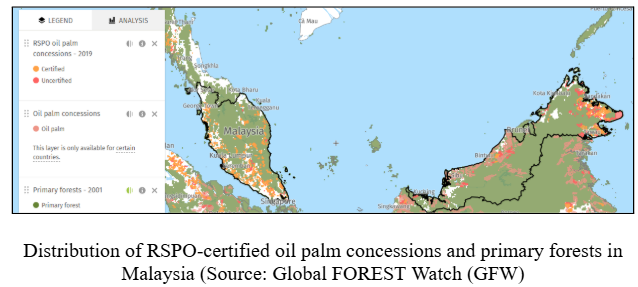
This delay teaches us that "command and control" policies from the West often fail to account for the reality on the ground in Southeast Asia. There is a clear spatial distinction between certified oil palm concessions and our remaining primary forests. While instruments such as the Malaysian Sustainable Palm Oil (MSPO) and RSPO have successfully demarcated these zones, we are still faced with shifting goalposts from international regulators. I expect that future forest management must move beyond "paperwork protection." We cannot save biodiversity simply by filling out Due Diligence forms; we need genuine partnerships that recognise the data shown in our own maps rather than imposing new, redundant hurdles.
International Environment Day serves as a global audit of our relationship with nature. It is a moment to pause and ask a difficult question: Are we really managing our ecosystems, or are we simply delaying their collapse? As a forester, looking at the state of our natural world, I find the answer unsettling. We have learned that nature is not waiting for our policies to catch up. From the recurring floods devastating our local communities to the silent loss of biodiversity in our rainforests, the environment is sending us urgent signals that our current "sustainable" methods are insufficient. The gap between what we promise in international treaties and what actually happens on the forest floor remains dangerously wide. This reaction paper critiques that disconnect, exploring how recent global events reveal that we are often prioritising economic convenience over ecological survival.
The Paperwork Paradox in Forestry
The first major lesson comes from the forestry sector itself. We have learned that international forest governance is increasingly about managing bureaucracy rather than saving trees. A prime example is the chaos surrounding the EU Deforestation Regulation (EUDR). For years, we were told December 2025 would be the deadline for strict compliance. Instead, the recent delay to 2026 has left the industry in limbo.
This delay teaches us that "command and control" policies from the West often fail to account for the reality on the ground in Southeast Asia. There is a clear spatial distinction between certified oil palm concessions and our remaining primary forests. While instruments such as the Malaysian Sustainable Palm Oil (MSPO) and RSPO have successfully demarcated these zones, we are still faced with shifting goalposts from international regulators. I expect that future forest management must move beyond "paperwork protection." We cannot save biodiversity simply by filling out Due Diligence forms; we need genuine partnerships that recognise the data shown in our own maps rather than imposing new, redundant hurdles.
The Myth of Resilience (Climate & Floods)
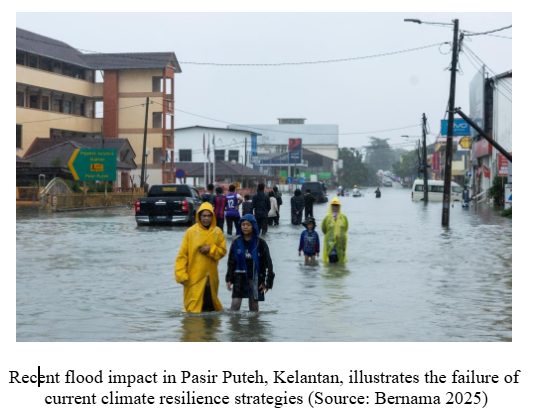
Issues of late 2025 have shattered the myth of our climate resilience. We talk about "sponge cities" and "flood mitigation," yet every year, the waters rise higher. The reality of this failure is visible, as seen recently in Pasir Puteh, Kelantan. The image of citizens wading through thigh-high water in an urban district illustrates that our drainage and adaptation strategies are overwhelmed.
What we learn here is that we are reactive, not proactive. We treat these floods as "natural disasters" rather than the predictable consequences of land-use change and climate inaction. The loss of wetlands and the degradation of river basins have stripped away our natural buffers. My expectation is for a radical shift in urban and rural planning. We need to stop fighting water with concrete and start restoring natural river corridors. If we do not respect the water's need for space, scenes like the one in Pasir Puteh will become our permanent reality.
Issues of late 2025 have shattered the myth of our climate resilience. We talk about "sponge cities" and "flood mitigation," yet every year, the waters rise higher. The reality of this failure is visible, as seen recently in Pasir Puteh, Kelantan. The image of citizens wading through thigh-high water in an urban district illustrates that our drainage and adaptation strategies are overwhelmed.
What we learn here is that we are reactive, not proactive. We treat these floods as "natural disasters" rather than the predictable consequences of land-use change and climate inaction. The loss of wetlands and the degradation of river basins have stripped away our natural buffers. My expectation is for a radical shift in urban and rural planning. We need to stop fighting water with concrete and start restoring natural river corridors. If we do not respect the water's need for space, scenes like the one in Pasir Puteh will become our permanent reality.
The Governance Gap
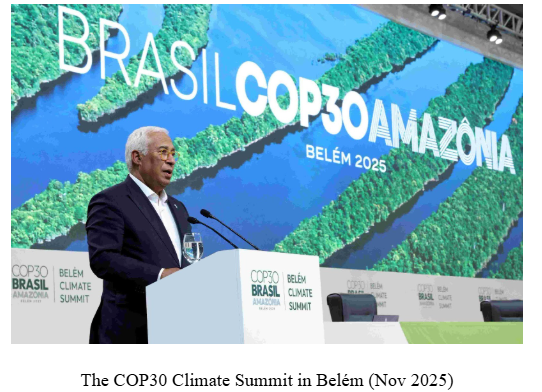
Looking at the broader picture of governance, the recent COP30 Summit in Belém (November 2025) highlighted a painful truth: the world loves to pledge money but hates to spend it. While the launch of the "Tropical Forest Forever Facility" at the summit 2025 sounded promising with its initial billions in funding, it is a fraction of what is actually needed to protect our biomes. This "governance gap" breeds cynicism. We see leaders flying to summits to sign non-binding agreements while enforcement agencies back home are underfunded. As a student entering this field, I expect more than just "targets" for 2030 or 2050. I expect accountability. We need governance structures that empower local communities and youth, the people who will actually inherit these ecosystems, rather than leaving decisions solely in the hands of policymakers who may not be around to see the consequences of their inaction.
Looking at the broader picture of governance, the recent COP30 Summit in Belém (November 2025) highlighted a painful truth: the world loves to pledge money but hates to spend it. While the launch of the "Tropical Forest Forever Facility" at the summit 2025 sounded promising with its initial billions in funding, it is a fraction of what is actually needed to protect our biomes. This "governance gap" breeds cynicism. We see leaders flying to summits to sign non-binding agreements while enforcement agencies back home are underfunded. As a student entering this field, I expect more than just "targets" for 2030 or 2050. I expect accountability. We need governance structures that empower local communities and youth, the people who will actually inherit these ecosystems, rather than leaving decisions solely in the hands of policymakers who may not be around to see the consequences of their inaction.
Conclusion
The events of 2025, from trade policy delays to climate-induced floods, teach us that our current approach is fragile. We have built a facade of sustainability, propped up by delayed regulations and insufficient funding. To move forward, we must align our expectations with reality. We need fair trade policies, infrastructure that respects nature, and governance that delivers action. Until we value the resilience of our planet more than the convenience of our economy, we will continue to learn these hard lessons the hard way.
References
Abid, S. K., Sulaiman, N., Al-Wathinani, A. M., & Goniewicz, K. (2024). Community-based flood mitigation in Malaysia: Enhancing public participation and policy effectiveness for sustainable resilience. Journal of Global Health, 14, 04290. https://doi.org/10.7189/jogh.14.04290
Global Forest Watch. (2023). Malaysia Deforestation Rates & Statistics by Country | GFW. Www.globalforestwatch.org. https://www.globalforestwatch.org/dashboards/country/MYS/
Mail, M. (2024, November 30). Malaysia’s flood evacuees soar to 140,000 as nine states battle rising waters. Malay Mail ; Malay Mail.
https://www.malaymail.com/news/malaysia/2024/11/30/malaysias-flood-evacuees-soar-to-140000-as-eight-states-battle-rising-waters/158503#google_vignette
MPOC. (2025, September 25). MPOC Welcomes EU Decision to Delay EUDR, Questions Regulation’s Cost And Viability Without Clear Implementation Path. Mpoc.org.my. http://mpoc.org.my/mpoc-welcomes-eu-decision-to-delay-eudr-questions-regulations-cost-and-viability-without-clear-implementation-path/
Nadras, S., & Mazlan, R. (2024). The European Union Deforestation-free Regulation (EUDR): Assessing impacts and strategies for Malaysian and the global oil palm industry. Journal of Sustainability Science and Management, 19(6), 54–74. https://doi.org/10.46754/jssm.2024.06.005
Segal, M. (2025, December 5). EU Parliament, Council Agree to Simplify, Delay Supply Chain Deforestation Law. ESG Today. https://www.esgtoday.com/eu-parliament-council-agree-to-simplify-delay-supply-chain-deforestation-law/
Staff, C. B. (2025, November 23). COP30: Key outcomes agreed at the UN climate talks in Belém - Carbon Brief. Carbon Brief. https://www.carbonbrief.org/cop30-key-outcomes-agreed-at-the-un-climate-talks-in-belem/
Waskow, D., Garcia, M., Srouji, J., Swaby, G., Larsen, G., Cogswell, N., Alayza, N., Oliveira, M., Robinson, M., Barber, C. C., Mirela Sandrini, & Silverwood-Cope, K. (2025). Beyond the Headlines: COP30’s Outcomes and Disappointments. World Resources Institute. https://www.wri.org/insights/cop30-outcomes-next-steps
The events of 2025, from trade policy delays to climate-induced floods, teach us that our current approach is fragile. We have built a facade of sustainability, propped up by delayed regulations and insufficient funding. To move forward, we must align our expectations with reality. We need fair trade policies, infrastructure that respects nature, and governance that delivers action. Until we value the resilience of our planet more than the convenience of our economy, we will continue to learn these hard lessons the hard way.
References
Abid, S. K., Sulaiman, N., Al-Wathinani, A. M., & Goniewicz, K. (2024). Community-based flood mitigation in Malaysia: Enhancing public participation and policy effectiveness for sustainable resilience. Journal of Global Health, 14, 04290. https://doi.org/10.7189/jogh.14.04290
Global Forest Watch. (2023). Malaysia Deforestation Rates & Statistics by Country | GFW. Www.globalforestwatch.org. https://www.globalforestwatch.org/dashboards/country/MYS/
Mail, M. (2024, November 30). Malaysia’s flood evacuees soar to 140,000 as nine states battle rising waters. Malay Mail ; Malay Mail.
https://www.malaymail.com/news/malaysia/2024/11/30/malaysias-flood-evacuees-soar-to-140000-as-eight-states-battle-rising-waters/158503#google_vignette
MPOC. (2025, September 25). MPOC Welcomes EU Decision to Delay EUDR, Questions Regulation’s Cost And Viability Without Clear Implementation Path. Mpoc.org.my. http://mpoc.org.my/mpoc-welcomes-eu-decision-to-delay-eudr-questions-regulations-cost-and-viability-without-clear-implementation-path/
Nadras, S., & Mazlan, R. (2024). The European Union Deforestation-free Regulation (EUDR): Assessing impacts and strategies for Malaysian and the global oil palm industry. Journal of Sustainability Science and Management, 19(6), 54–74. https://doi.org/10.46754/jssm.2024.06.005
Segal, M. (2025, December 5). EU Parliament, Council Agree to Simplify, Delay Supply Chain Deforestation Law. ESG Today. https://www.esgtoday.com/eu-parliament-council-agree-to-simplify-delay-supply-chain-deforestation-law/
Staff, C. B. (2025, November 23). COP30: Key outcomes agreed at the UN climate talks in Belém - Carbon Brief. Carbon Brief. https://www.carbonbrief.org/cop30-key-outcomes-agreed-at-the-un-climate-talks-in-belem/
Waskow, D., Garcia, M., Srouji, J., Swaby, G., Larsen, G., Cogswell, N., Alayza, N., Oliveira, M., Robinson, M., Barber, C. C., Mirela Sandrini, & Silverwood-Cope, K. (2025). Beyond the Headlines: COP30’s Outcomes and Disappointments. World Resources Institute. https://www.wri.org/insights/cop30-outcomes-next-steps
