

Protecting Wetlands as Natural Flood Buffers
Introduction
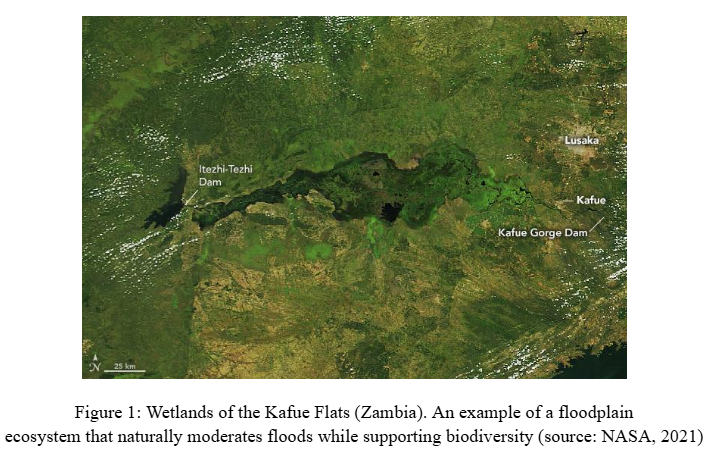
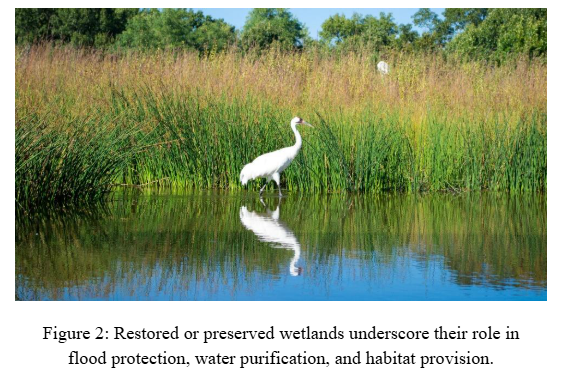
The growing attention toward wetlands as natural flood buffers seems long overdue. For years, these ecosystems have been dismissed as “unused” or “empty” land, yet research consistently shows that wetlands are among the most effective natural systems for absorbing excess water. When looking at how societies respond to climate-driven flooding today, one can’t help but feel that wetlands represent a solution hiding in plain sight. They slow down runoff, store floodwater, and ease pressure on drainage systems. All while supporting biodiversity and livelihoods. Yet, despite these well-documented benefits, wetlands continue to be degraded faster than they can recover.
A significant point highlighted in past studies is the incredible water-retention capacity wetlands possess. Mitsch and Gosselink (2015) describe wetlands as “natural sponges,” capable of temporarily holding floodwater and releasing it slowly, reducing downstream flood peaks. This mechanism is particularly valuable in dense urban settings, where impermeable surfaces dominate. When considering cities like Kuala Lumpur, Jakarta, or Bangkok, the frequent victims of flash floods, the ecological logic behind protecting wetlands seems almost self-explanatory. However, the recurring pattern of wetland destruction shows that simple ecological logic often loses to economic or political priorities.
The growing attention toward wetlands as natural flood buffers seems long overdue. For years, these ecosystems have been dismissed as “unused” or “empty” land, yet research consistently shows that wetlands are among the most effective natural systems for absorbing excess water. When looking at how societies respond to climate-driven flooding today, one can’t help but feel that wetlands represent a solution hiding in plain sight. They slow down runoff, store floodwater, and ease pressure on drainage systems. All while supporting biodiversity and livelihoods. Yet, despite these well-documented benefits, wetlands continue to be degraded faster than they can recover.
A significant point highlighted in past studies is the incredible water-retention capacity wetlands possess. Mitsch and Gosselink (2015) describe wetlands as “natural sponges,” capable of temporarily holding floodwater and releasing it slowly, reducing downstream flood peaks. This mechanism is particularly valuable in dense urban settings, where impermeable surfaces dominate. When considering cities like Kuala Lumpur, Jakarta, or Bangkok, the frequent victims of flash floods, the ecological logic behind protecting wetlands seems almost self-explanatory. However, the recurring pattern of wetland destruction shows that simple ecological logic often loses to economic or political priorities.
Cost-effectiveness of natural flood mitigation
The conflict between development interests and ecological protection is evident throughout the literature. Costanza et al. (2014) estimate that wetlands provide global flood-protection services valued at billions of dollars annually. Yet, wetlands are still drained for real estate expansion, aquaculture, and infrastructure projects. This reveals a troubling paradox in which societies repeatedly choose short-term financial gain over long-term environmental security. It is not that people are unaware of wetlands’ benefits; somewhat, these benefits are undervalued because they do not appear as tangible profit. Flood damage, on the other hand, becomes painfully visible only after wetlands have been sacrificed.
Another strong point made by past research is the cost-effectiveness of natural flood mitigation. Jenkins et al. (2010) argue that restoring wetlands often costs far less than constructing engineered flood-control structures, particularly when maintenance and repair are factored in. Yet governments tend to favour concrete interventions like levees and storm drains. The reaction from an observer is that political systems frequently reward “visible” infrastructure projects that can be publicised, while quiet, self-sustaining ecosystems do not carry the same appeal. Wetlands do their job without billboards, ribbon-cuttings, or large contracts, making them less attractive to decision-makers who prioritise immediate visibility.
The conflict between development interests and ecological protection is evident throughout the literature. Costanza et al. (2014) estimate that wetlands provide global flood-protection services valued at billions of dollars annually. Yet, wetlands are still drained for real estate expansion, aquaculture, and infrastructure projects. This reveals a troubling paradox in which societies repeatedly choose short-term financial gain over long-term environmental security. It is not that people are unaware of wetlands’ benefits; somewhat, these benefits are undervalued because they do not appear as tangible profit. Flood damage, on the other hand, becomes painfully visible only after wetlands have been sacrificed.
Another strong point made by past research is the cost-effectiveness of natural flood mitigation. Jenkins et al. (2010) argue that restoring wetlands often costs far less than constructing engineered flood-control structures, particularly when maintenance and repair are factored in. Yet governments tend to favour concrete interventions like levees and storm drains. The reaction from an observer is that political systems frequently reward “visible” infrastructure projects that can be publicised, while quiet, self-sustaining ecosystems do not carry the same appeal. Wetlands do their job without billboards, ribbon-cuttings, or large contracts, making them less attractive to decision-makers who prioritise immediate visibility.
Communities in conservation decision-making
There is also a social dimension that cannot be ignored. In many regions, communities living near wetlands rely on them for small-scale fishing, water harvesting, or firewood. However, these same communities are seldom included in conservation decision-making. Studies on community-based management, such as those by Armitage et al. (2012), show that conservation is most successful when local people share ownership of the process. Wetland protection cannot be imposed from the top down. Without addressing livelihood concerns, conservation rules become sources of tension rather than cooperation.
Observing the way modern societies relate to wetlands also reveals a more profound disconnect. People often treat floods as random natural disasters rather than outcomes of land-use choices. When wetlands are intact, floodwaters spread slowly and predictably. When they are paved over, the same rainfall becomes destructive. This disconnect is noted by Acreman (2020), who argues that flood risks often rise not because rainfall increases but because landscapes lose their natural storage capacity. From the outside looking in, it becomes clear that the issue is not simply climate change; it is also a refusal to treat ecosystems as infrastructure.
At the same time, it would be naïve to view wetlands as flawless solutions. Even fully functional wetlands cannot eliminate flooding under severe climate scenarios. However, what they offer is resilience. They lower flood peaks, protect property, and strengthen ecological stability. They give engineered systems time to cope with stormwater. They act as buffers rather than barriers. Studies such as those by Narayan et al. (2017) show that wetlands reduce the severity of flood damage, even if they cannot prevent flooding entirely.
What stands out most, from a neutral perspective, is the persistent gap between scientific knowledge and societal action. The research is not ambiguous. Wetlands are cost-effective, ecologically essential, and socially beneficial. Yet global wetland loss continues at an alarming rate. This disconnect suggests that the real challenge is not scientific uncertainty but institutional hesitation and competing economic interests. If wetlands continue to be undervalued, the floods that societies fear will inevitably grow worse.
Conclusion
The topic of protecting wetlands as natural flood buffers invites admiration for how remarkably these ecosystems function and frustration over how poorly they are treated. Wetlands are not just scenic landscapes or ecological side characters; they are frontline natural defences. It reveals a simple truth: societies know wetlands protect them, but act as if they don’t. Effective flood resilience will require more than acknowledging wetlands’ value; it requires placing that value above short-term gain.
References
Acreman, M. (2020). The role of wetlands in the water cycle. WIREs Water, 7(1), e1391. https://doi.org/10.1002/wat2.1391
Armitage, D., Berkes, F., & Doubleday, N. (2012). Adaptive co-management: Collaboration, learning, and multi-level governance. UBC Press.
Costanza, R., de Groot, R., Sutton, P., van der Ploeg, S., Anderson, S. J., Kubiszewski, I., Farber, S., & Turner, R. K. (2014). Changes in the global value of ecosystem services. Global Environmental Change, 26, 152–158. https://doi.org/10.1016/j.gloenvcha.2014.04.002
Jenkins, W. A., Murray, B. C., Kramer, R. A., & Faulkner, S. P. (2010). Valuing ecosystem services from wetlands restoration in the Mississippi Alluvial Valley. Ecological Economics, 69(5), 1051–1061. https://doi.org/10.1016/j.ecolecon.2009.11.022
Mitsch, W. J., & Gosselink, J. G. (2015). Wetlands (5th ed.). Wiley.
Narayan, S., Beck, M. W., Reguero, B. G., Losada, I. J., van Wesenbeeck, B., Pontee, N., Sanchirico, J. N., Ingram, J. C., Lange, G.-M., & Burks-Copes, K. A. (2017). The effectiveness of natural and nature-based coastal defenses in reducing flood risk. Scientific Reports, 6, 1–11. https://doi.org/10.1038/srep39801
NASA Earth Observatory. (2021). Zambia’s Kafue Flats. https://earthobservatory.nasa.gov/images/148154/zambias-kafue-flats
There is also a social dimension that cannot be ignored. In many regions, communities living near wetlands rely on them for small-scale fishing, water harvesting, or firewood. However, these same communities are seldom included in conservation decision-making. Studies on community-based management, such as those by Armitage et al. (2012), show that conservation is most successful when local people share ownership of the process. Wetland protection cannot be imposed from the top down. Without addressing livelihood concerns, conservation rules become sources of tension rather than cooperation.
Observing the way modern societies relate to wetlands also reveals a more profound disconnect. People often treat floods as random natural disasters rather than outcomes of land-use choices. When wetlands are intact, floodwaters spread slowly and predictably. When they are paved over, the same rainfall becomes destructive. This disconnect is noted by Acreman (2020), who argues that flood risks often rise not because rainfall increases but because landscapes lose their natural storage capacity. From the outside looking in, it becomes clear that the issue is not simply climate change; it is also a refusal to treat ecosystems as infrastructure.
At the same time, it would be naïve to view wetlands as flawless solutions. Even fully functional wetlands cannot eliminate flooding under severe climate scenarios. However, what they offer is resilience. They lower flood peaks, protect property, and strengthen ecological stability. They give engineered systems time to cope with stormwater. They act as buffers rather than barriers. Studies such as those by Narayan et al. (2017) show that wetlands reduce the severity of flood damage, even if they cannot prevent flooding entirely.
What stands out most, from a neutral perspective, is the persistent gap between scientific knowledge and societal action. The research is not ambiguous. Wetlands are cost-effective, ecologically essential, and socially beneficial. Yet global wetland loss continues at an alarming rate. This disconnect suggests that the real challenge is not scientific uncertainty but institutional hesitation and competing economic interests. If wetlands continue to be undervalued, the floods that societies fear will inevitably grow worse.
Conclusion
The topic of protecting wetlands as natural flood buffers invites admiration for how remarkably these ecosystems function and frustration over how poorly they are treated. Wetlands are not just scenic landscapes or ecological side characters; they are frontline natural defences. It reveals a simple truth: societies know wetlands protect them, but act as if they don’t. Effective flood resilience will require more than acknowledging wetlands’ value; it requires placing that value above short-term gain.
References
Acreman, M. (2020). The role of wetlands in the water cycle. WIREs Water, 7(1), e1391. https://doi.org/10.1002/wat2.1391
Armitage, D., Berkes, F., & Doubleday, N. (2012). Adaptive co-management: Collaboration, learning, and multi-level governance. UBC Press.
Costanza, R., de Groot, R., Sutton, P., van der Ploeg, S., Anderson, S. J., Kubiszewski, I., Farber, S., & Turner, R. K. (2014). Changes in the global value of ecosystem services. Global Environmental Change, 26, 152–158. https://doi.org/10.1016/j.gloenvcha.2014.04.002
Jenkins, W. A., Murray, B. C., Kramer, R. A., & Faulkner, S. P. (2010). Valuing ecosystem services from wetlands restoration in the Mississippi Alluvial Valley. Ecological Economics, 69(5), 1051–1061. https://doi.org/10.1016/j.ecolecon.2009.11.022
Mitsch, W. J., & Gosselink, J. G. (2015). Wetlands (5th ed.). Wiley.
Narayan, S., Beck, M. W., Reguero, B. G., Losada, I. J., van Wesenbeeck, B., Pontee, N., Sanchirico, J. N., Ingram, J. C., Lange, G.-M., & Burks-Copes, K. A. (2017). The effectiveness of natural and nature-based coastal defenses in reducing flood risk. Scientific Reports, 6, 1–11. https://doi.org/10.1038/srep39801
NASA Earth Observatory. (2021). Zambia’s Kafue Flats. https://earthobservatory.nasa.gov/images/148154/zambias-kafue-flats
