

Green Jobs: Unlocking Economic Growth through Sustainable Employment
Introduction
What is a Green Job?
At the most basic level, green jobs include roles that directly reduce pollution, cut greenhouse gas emissions, or improve resource use (Stanef-Puică et al., 2022). This covers areas like renewable energy, sustainable agriculture, energy-efficient construction, waste management, public transport, and environmental services. Many organisations also link green jobs to the idea of “decent work” under the UN Sustainable Development Goals, where jobs must not only be environmentally friendly but also fair, safe, and productive. Importantly, green jobs are not limited to “eco” companies or NGOs. Traditional sectors such as manufacturing, building, and even tourism can generate green jobs when they adopt cleaner technologies, improve resource efficiency, or comply with higher environmental standards. This makes the green economy more about transforming how existing industries operate rather than replacing everything with something completely new.
How Green Jobs Drive Economic Growth
Green jobs unlock economic growth by opening new markets and stimulating innovation. As governments and businesses invest in renewable energy, cleaner production, and sustainable infrastructure, they create demand for new technologies, services, and skills, which in turn drives business expansion and new enterprises (Mahmood et al., 2024). This process supports local value chains because many green projects, such as retrofitting buildings or installing solar panels, rely on regional labour and suppliers. Global institutions highlight that the shift to a green economy can generate millions of jobs worldwide in the coming decade. For example, estimates suggest that the green transition could add tens of millions of jobs globally by 2030, especially in renewable energy and related sectors. When economies add jobs in future-oriented industries, they broaden their tax base, keep workers employed, and become more resilient to shocks such as fossil-fuel price spikes (Hughes et al., 2025).
Beyond Growth: Quality, Stability, and Resilience
One key argument for green jobs is that they do not just create “any” work, but often better-quality work. Many green roles are associated with decent wages, higher skill requirements, and safer working conditions compared to jobs in highly polluting sectors like coal mining or dirty heavy industry. This directly supports SDG 8, which emphasises productive employment and decent work as part of sustainable economic growth. Green jobs can also make economies more stable over the long term. By reducing dependence on imported fossil fuels through domestic renewables, countries minimise exposure to volatile oil and gas prices, helping keep inflation and business costs more predictable. At the same time, protecting ecosystems and natural capital reduces the risk of climate-related disasters that can wipe out infrastructure, livelihoods, and government budgets.
What is a Green Job?
At the most basic level, green jobs include roles that directly reduce pollution, cut greenhouse gas emissions, or improve resource use (Stanef-Puică et al., 2022). This covers areas like renewable energy, sustainable agriculture, energy-efficient construction, waste management, public transport, and environmental services. Many organisations also link green jobs to the idea of “decent work” under the UN Sustainable Development Goals, where jobs must not only be environmentally friendly but also fair, safe, and productive. Importantly, green jobs are not limited to “eco” companies or NGOs. Traditional sectors such as manufacturing, building, and even tourism can generate green jobs when they adopt cleaner technologies, improve resource efficiency, or comply with higher environmental standards. This makes the green economy more about transforming how existing industries operate rather than replacing everything with something completely new.
How Green Jobs Drive Economic Growth
Green jobs unlock economic growth by opening new markets and stimulating innovation. As governments and businesses invest in renewable energy, cleaner production, and sustainable infrastructure, they create demand for new technologies, services, and skills, which in turn drives business expansion and new enterprises (Mahmood et al., 2024). This process supports local value chains because many green projects, such as retrofitting buildings or installing solar panels, rely on regional labour and suppliers. Global institutions highlight that the shift to a green economy can generate millions of jobs worldwide in the coming decade. For example, estimates suggest that the green transition could add tens of millions of jobs globally by 2030, especially in renewable energy and related sectors. When economies add jobs in future-oriented industries, they broaden their tax base, keep workers employed, and become more resilient to shocks such as fossil-fuel price spikes (Hughes et al., 2025).
Beyond Growth: Quality, Stability, and Resilience
One key argument for green jobs is that they do not just create “any” work, but often better-quality work. Many green roles are associated with decent wages, higher skill requirements, and safer working conditions compared to jobs in highly polluting sectors like coal mining or dirty heavy industry. This directly supports SDG 8, which emphasises productive employment and decent work as part of sustainable economic growth. Green jobs can also make economies more stable over the long term. By reducing dependence on imported fossil fuels through domestic renewables, countries minimise exposure to volatile oil and gas prices, helping keep inflation and business costs more predictable. At the same time, protecting ecosystems and natural capital reduces the risk of climate-related disasters that can wipe out infrastructure, livelihoods, and government budgets.
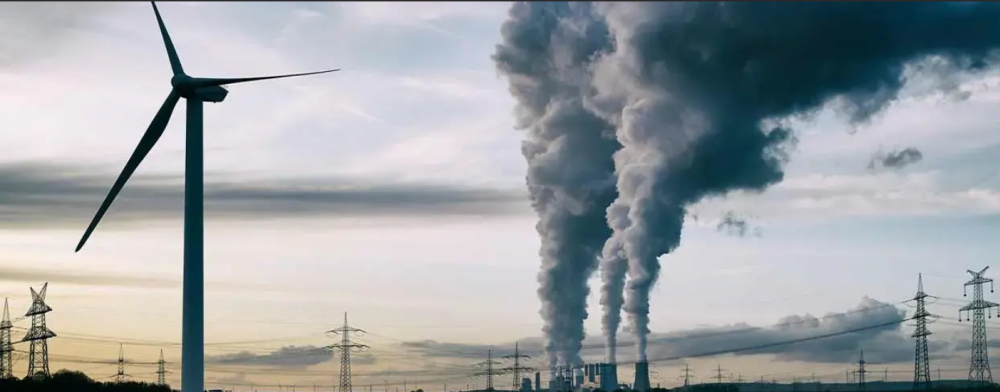
The trade-offs of green energy measures
Challenges and Trade-offs in the Green Transition
Despite the optimistic narrative, the expansion of green jobs is not automatic or painless. As cleaner industries grow, more polluting “brown jobs” in fossil fuel extraction, high-emission manufacturing, or inefficient buildings may shrink or disappear, leading to job losses and social tensions if the transition is not managed fairly. This is why many reports stress the need for a “just transition” that supports workers and communities affected by structural change.
Another challenge is the skills gap. Many workers do not yet have the technical, digital, or environmental skills needed for new roles in areas like renewable energy, green construction, or circular economy logistics (Guerreschi et al., 2023). Without strong policies for training, upskilling, and lifelong learning, there is a risk that green jobs will remain concentrated in specific regions or among already advantaged groups, which could increase inequality rather than reduce it.
Policies to Unlock Sustainable Employment
To really use green jobs as a lever for sustainable growth, governments and institutions must align economic, labour, and environmental policies. Common strategies include providing tax incentives or grants for companies that invest in clean technologies, supporting green entrepreneurship, and integrating sustainability criteria into public procurement (Yan et al., 2023). When public money rewards low-carbon and resource-efficient projects, it encourages the private sector to innovate and hire more workers into green roles.
Active labour market policies are just as important. These can include subsidised training programmes, partnerships between universities, training centres, and industry, and targeted support for workers transitioning out of declining sectors (While & Eadson, 2021). International organisations also encourage social dialogue between governments, employers, and unions to design transition plans that protect workers’ rights while still pushing industries to decarbonise.
Personal and Societal Implications
At a personal level, green jobs signal a shift in how people think about careers and purpose. Many younger workers want jobs that align with their values, especially around climate and social justice, and green sectors offer roles where professional skills can contribute directly to environmental protection. This can improve job satisfaction and engagement, which in turn benefits productivity and organisational performance.
At the societal level, green jobs connect environmental sustainability, social equity, and economic prosperity. By focusing on decent, environmentally responsible work, societies can reduce poverty and vulnerability while also addressing climate change and biodiversity loss. In this sense, green jobs are not just a labour market trend but a core strategy for building economies that are competitive, fair, and capable of thriving within planetary boundaries.
Conclusion
Green jobs show that it is possible to grow the economy without sacrificing the environment. By expanding work in renewable energy, efficient buildings, sustainable transport, and circular waste systems, countries can cut emissions while creating decent, future-proof employment. At the same time, the transition must be fair, with reskilling and support for workers leaving high-carbon sectors. If that balance is managed well, green jobs become a practical way to unlock economic growth through sustainable, inclusive employment.
References
Guerreschi, A., Piras, L., & Heck, F. (2023). Barriers to Efficient Knowledge Transfer for a Holistic Circular Economy: Insights towards Green Job Developments and Training for Young Professionals. Youth, 3(2), 553–578. https://doi.org/10.3390/youth3020038
Hughes, K., Sanchez, N., Josol, J. C., & Cubos, A. F. (2025). Supporting a just transition to a Low-Carbon and Climate-Resilient future in Asia and the Pacific. https://doi.org/10.22617/wps250273-2
Mahmood, S., Misra, P., Sun, H., Luqman, A., & Papa, A. (2024). Sustainable infrastructure, energy projects, and economic growth: mediating role of sustainable supply chain management. Annals of Operations Research. https://doi.org/10.1007/s10479-023-05777-6
Stanef-Puică, M., Badea, L., Șerban-Oprescu, G., Șerban-Oprescu, A., Frâncu, L., & Crețu, A. (2022). Green Jobs—A Literature Review. International Journal of Environmental Research and Public Health, 19(13), 7998. https://doi.org/10.3390/ijerph19137998
While, A., & Eadson, W. (2021). Zero carbon as economic restructuring: spatial divisions of labour and just transition. New Political Economy, 27(3), 385–402. https://doi.org/10.1080/13563467.2021.1967909
Yan, H., Qamruzzaman, M., & Kor, S. (2023). Nexus between Green Investment, Fiscal Policy, Environmental Tax, Energy Price, Natural Resources, and Clean Energy—A Step towards Sustainable Development by Fostering Clean Energy Inclusion. Sustainability, 15(18), 13591. https://doi.org/10.3390/su151813591
Despite the optimistic narrative, the expansion of green jobs is not automatic or painless. As cleaner industries grow, more polluting “brown jobs” in fossil fuel extraction, high-emission manufacturing, or inefficient buildings may shrink or disappear, leading to job losses and social tensions if the transition is not managed fairly. This is why many reports stress the need for a “just transition” that supports workers and communities affected by structural change.
Another challenge is the skills gap. Many workers do not yet have the technical, digital, or environmental skills needed for new roles in areas like renewable energy, green construction, or circular economy logistics (Guerreschi et al., 2023). Without strong policies for training, upskilling, and lifelong learning, there is a risk that green jobs will remain concentrated in specific regions or among already advantaged groups, which could increase inequality rather than reduce it.
Policies to Unlock Sustainable Employment
To really use green jobs as a lever for sustainable growth, governments and institutions must align economic, labour, and environmental policies. Common strategies include providing tax incentives or grants for companies that invest in clean technologies, supporting green entrepreneurship, and integrating sustainability criteria into public procurement (Yan et al., 2023). When public money rewards low-carbon and resource-efficient projects, it encourages the private sector to innovate and hire more workers into green roles.
Active labour market policies are just as important. These can include subsidised training programmes, partnerships between universities, training centres, and industry, and targeted support for workers transitioning out of declining sectors (While & Eadson, 2021). International organisations also encourage social dialogue between governments, employers, and unions to design transition plans that protect workers’ rights while still pushing industries to decarbonise.
Personal and Societal Implications
At a personal level, green jobs signal a shift in how people think about careers and purpose. Many younger workers want jobs that align with their values, especially around climate and social justice, and green sectors offer roles where professional skills can contribute directly to environmental protection. This can improve job satisfaction and engagement, which in turn benefits productivity and organisational performance.
At the societal level, green jobs connect environmental sustainability, social equity, and economic prosperity. By focusing on decent, environmentally responsible work, societies can reduce poverty and vulnerability while also addressing climate change and biodiversity loss. In this sense, green jobs are not just a labour market trend but a core strategy for building economies that are competitive, fair, and capable of thriving within planetary boundaries.
Conclusion
Green jobs show that it is possible to grow the economy without sacrificing the environment. By expanding work in renewable energy, efficient buildings, sustainable transport, and circular waste systems, countries can cut emissions while creating decent, future-proof employment. At the same time, the transition must be fair, with reskilling and support for workers leaving high-carbon sectors. If that balance is managed well, green jobs become a practical way to unlock economic growth through sustainable, inclusive employment.
References
Guerreschi, A., Piras, L., & Heck, F. (2023). Barriers to Efficient Knowledge Transfer for a Holistic Circular Economy: Insights towards Green Job Developments and Training for Young Professionals. Youth, 3(2), 553–578. https://doi.org/10.3390/youth3020038
Hughes, K., Sanchez, N., Josol, J. C., & Cubos, A. F. (2025). Supporting a just transition to a Low-Carbon and Climate-Resilient future in Asia and the Pacific. https://doi.org/10.22617/wps250273-2
Mahmood, S., Misra, P., Sun, H., Luqman, A., & Papa, A. (2024). Sustainable infrastructure, energy projects, and economic growth: mediating role of sustainable supply chain management. Annals of Operations Research. https://doi.org/10.1007/s10479-023-05777-6
Stanef-Puică, M., Badea, L., Șerban-Oprescu, G., Șerban-Oprescu, A., Frâncu, L., & Crețu, A. (2022). Green Jobs—A Literature Review. International Journal of Environmental Research and Public Health, 19(13), 7998. https://doi.org/10.3390/ijerph19137998
While, A., & Eadson, W. (2021). Zero carbon as economic restructuring: spatial divisions of labour and just transition. New Political Economy, 27(3), 385–402. https://doi.org/10.1080/13563467.2021.1967909
Yan, H., Qamruzzaman, M., & Kor, S. (2023). Nexus between Green Investment, Fiscal Policy, Environmental Tax, Energy Price, Natural Resources, and Clean Energy—A Step towards Sustainable Development by Fostering Clean Energy Inclusion. Sustainability, 15(18), 13591. https://doi.org/10.3390/su151813591
