

Circular Economy: Transforming Waste into Sustainable Opportunities
Introduction
The traditional linear economic model of “take, make, dispose” has created enormous challenges for waste management and environmental sustainability. As consumption grows globally, the volume of waste generated continues to rise, putting immense pressure on landfills, polluting waterways, and increasing greenhouse gas emissions. The concept of a circular economy offers a solution by emphasising resource efficiency, waste reduction, and the continuous use of materials. International Environment Day provides an opportunity to reflect on lessons learned from pollution trends and to set expectations for systemic change. This reaction paper explores the importance of circular economy practices in addressing waste challenges, highlighting practical examples, stakeholder responsibilities, and future expectations.
The Circular Economy Concept
At its core, a circular economy seeks to minimise waste by designing products, systems, and processes that keep materials in use for as long as possible. Instead of discarding products at the end of their life cycle, circular principles advocate for recycling, repairing, refurbishing, and reusing (Kirchherr, Reike, & Hekkert, 2017). This approach not only reduces the pressure on natural resources but also mitigates environmental pollution and creates new economic opportunities. For instance, companies that design packaging for recyclability or implement take-back schemes contribute directly to a cleaner environment while fostering consumer trust.
The traditional linear economic model of “take, make, dispose” has created enormous challenges for waste management and environmental sustainability. As consumption grows globally, the volume of waste generated continues to rise, putting immense pressure on landfills, polluting waterways, and increasing greenhouse gas emissions. The concept of a circular economy offers a solution by emphasising resource efficiency, waste reduction, and the continuous use of materials. International Environment Day provides an opportunity to reflect on lessons learned from pollution trends and to set expectations for systemic change. This reaction paper explores the importance of circular economy practices in addressing waste challenges, highlighting practical examples, stakeholder responsibilities, and future expectations.
The Circular Economy Concept
At its core, a circular economy seeks to minimise waste by designing products, systems, and processes that keep materials in use for as long as possible. Instead of discarding products at the end of their life cycle, circular principles advocate for recycling, repairing, refurbishing, and reusing (Kirchherr, Reike, & Hekkert, 2017). This approach not only reduces the pressure on natural resources but also mitigates environmental pollution and creates new economic opportunities. For instance, companies that design packaging for recyclability or implement take-back schemes contribute directly to a cleaner environment while fostering consumer trust.
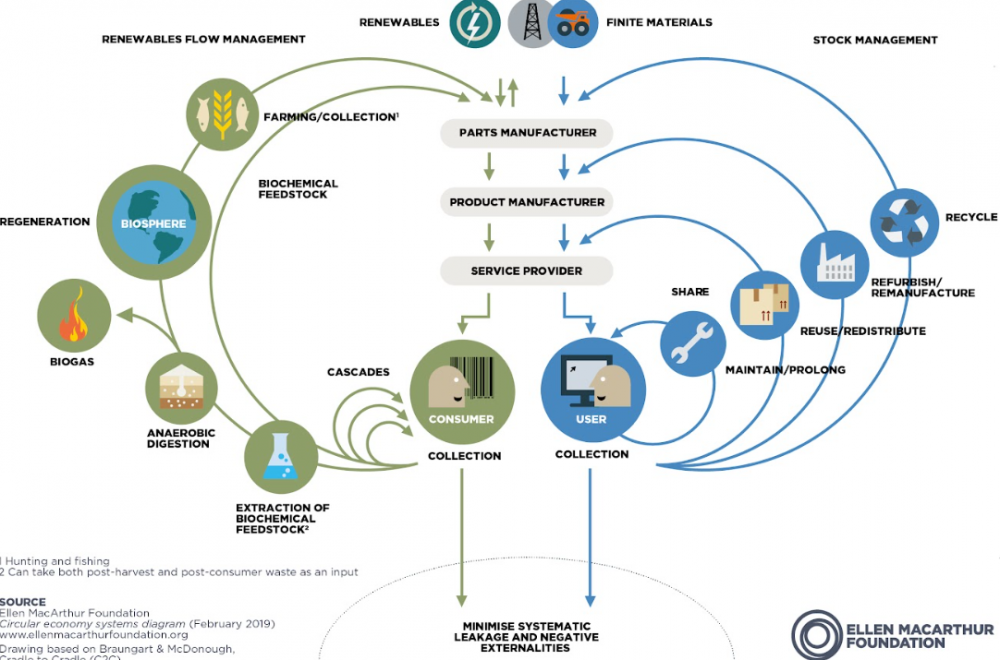
Circular economy diagram / “Butterfly Diagram”
Lessons from Pollution and Waste Trends
Recent environmental crises emphasise the need for circular approaches. Marine plastic pollution, urban smog, and rising e-waste demonstrate the limitations of linear consumption. For example, Southeast Asia accounts for a significant share of global plastic leakage into the oceans due to insufficient waste management and overreliance on single-use plastics (UNEP, 2023). E-waste is another growing concern, as electronics become obsolete rapidly and release toxic substances like lead and mercury when improperly handled (Forti, Baldé, Kuehr, & Bel, 2020). These trends highlight the importance of not only reducing waste generation but also rethinking production and consumption patterns through circular economy strategies.
Benefits of the Circular Economy
Circular economy practices provide multiple advantages beyond environmental protection. Economically, they stimulate green innovation, new business models, and employment opportunities. Countries that adopt circular strategies can reduce dependence on imported raw materials, stabilise supply chains, and encourage local entrepreneurship (Kirchherr et al., 2017). Environmentally, circular systems reduce landfill usage, lower greenhouse gas emissions, and protect biodiversity. Socially, community-driven initiatives enhance environmental literacy, strengthen civic engagement, and promote equitable access to sustainable services.
Challenges and Future Directions
Despite its benefits, implementing circular economy practices faces several challenges. One key barrier is infrastructure limitations, particularly in developing regions, where recycling facilities and collection systems are often inadequate. Another challenge is consumer behaviour; without consistent participation in recycling or waste reduction, circular initiatives cannot achieve full impact. Finally, financial and technical constraints can limit the adoption of sustainable production methods by small and medium enterprises (SMEs). Future expectations involve comprehensive policies, investments in recycling technologies, and public–private partnerships. Emphasis on eco-design, extended producer responsibility, and digital tracking of materials can enhance circularity. Education and awareness campaigns must also cultivate long-term behavioural change, encouraging citizens to participate actively in waste reduction and recycling.
References
European Environment Agency. (2022). Waste prevention and circular economy in Europe. https://www.eea.europa.eu/themes/waste/waste-prevention
Forti, V., Baldé, C. P., Kuehr, R., & Bel, G. (2020). The global e-waste monitor 2020. United Nations University. https://ewastemonitor.info
Kirchherr, J., Reike, D., & Hekkert, M. (2017). Conceptualizing the circular economy: An analysis of 114 definitions. Resources, Conservation and Recycling, 127, 221–232. https://doi.org/10.1016/j.resconrec.2017.09.005
Lee, S., & Ng, W. (2021). Community-based environmental initiatives and behavioural change. Sustainability, 13(4), 2125. https://doi.org/10.3390/su13042125
United Nations Environment Programme (UNEP). (2023). Turning off the tap: How the world can end plastic pollution and create a circular economy. https://www.unep.org
Widmer, R., Oswald-Krapf, H., Sinha-Khetriwal, D., Schnellmann, M., & Böni, H. (2005). Global perspectives on e-waste. Environmental Impact Assessment Review, 25(5), 436–458. https://doi.org/10.1016/j.eiar.2005.04.001
Recent environmental crises emphasise the need for circular approaches. Marine plastic pollution, urban smog, and rising e-waste demonstrate the limitations of linear consumption. For example, Southeast Asia accounts for a significant share of global plastic leakage into the oceans due to insufficient waste management and overreliance on single-use plastics (UNEP, 2023). E-waste is another growing concern, as electronics become obsolete rapidly and release toxic substances like lead and mercury when improperly handled (Forti, Baldé, Kuehr, & Bel, 2020). These trends highlight the importance of not only reducing waste generation but also rethinking production and consumption patterns through circular economy strategies.
Benefits of the Circular Economy
Circular economy practices provide multiple advantages beyond environmental protection. Economically, they stimulate green innovation, new business models, and employment opportunities. Countries that adopt circular strategies can reduce dependence on imported raw materials, stabilise supply chains, and encourage local entrepreneurship (Kirchherr et al., 2017). Environmentally, circular systems reduce landfill usage, lower greenhouse gas emissions, and protect biodiversity. Socially, community-driven initiatives enhance environmental literacy, strengthen civic engagement, and promote equitable access to sustainable services.
Challenges and Future Directions
Despite its benefits, implementing circular economy practices faces several challenges. One key barrier is infrastructure limitations, particularly in developing regions, where recycling facilities and collection systems are often inadequate. Another challenge is consumer behaviour; without consistent participation in recycling or waste reduction, circular initiatives cannot achieve full impact. Finally, financial and technical constraints can limit the adoption of sustainable production methods by small and medium enterprises (SMEs). Future expectations involve comprehensive policies, investments in recycling technologies, and public–private partnerships. Emphasis on eco-design, extended producer responsibility, and digital tracking of materials can enhance circularity. Education and awareness campaigns must also cultivate long-term behavioural change, encouraging citizens to participate actively in waste reduction and recycling.
References
European Environment Agency. (2022). Waste prevention and circular economy in Europe. https://www.eea.europa.eu/themes/waste/waste-prevention
Forti, V., Baldé, C. P., Kuehr, R., & Bel, G. (2020). The global e-waste monitor 2020. United Nations University. https://ewastemonitor.info
Kirchherr, J., Reike, D., & Hekkert, M. (2017). Conceptualizing the circular economy: An analysis of 114 definitions. Resources, Conservation and Recycling, 127, 221–232. https://doi.org/10.1016/j.resconrec.2017.09.005
Lee, S., & Ng, W. (2021). Community-based environmental initiatives and behavioural change. Sustainability, 13(4), 2125. https://doi.org/10.3390/su13042125
United Nations Environment Programme (UNEP). (2023). Turning off the tap: How the world can end plastic pollution and create a circular economy. https://www.unep.org
Widmer, R., Oswald-Krapf, H., Sinha-Khetriwal, D., Schnellmann, M., & Böni, H. (2005). Global perspectives on e-waste. Environmental Impact Assessment Review, 25(5), 436–458. https://doi.org/10.1016/j.eiar.2005.04.001
