Climate Change: A Permanent Reality for Myanmar
Introduction
Climate change is not a future projection for Myanmar; it is a permanent, structural reality. Myanmar has consistently ranked among the most climate-exposed countries in global rankings (Germanwatch, 2021). That acute vulnerability is only enhanced by longer-standing internal crises. Myanmar is caught in a vicious cycle in which exacerbating physical hazards such as cyclones, increased sea level rise, and prolonged droughts intersect with severely depleted environmental defences and a paralysing socio-political crisis. This triple threat of extreme weather, environmental degradation and institutional fragility acts as a devastating risk multiplier, ensuring that localised climate stress quickly translates into widespread humanitarian and economic instability. This essay examines the structural factors that have entrenched climate vulnerability in Myanmar, arguing that resilience hinges fundamentally on addressing systemic environmental management failures and achieving political stability.
Hydro-Meteorological Exposure and Food Insecurity
Various hydro-meteorological hazards greatly affect Myanmar. These include an increasing intensity and frequency of tropical cyclones, which pose existential threats to coastal settings in Myanmar, particularly the Ayeyarwady Delta. This crucial agricultural region is also at risk of accelerated sea-level rise and saltwater intrusion, directly impacting food security by reducing arable land and drinking water supplies (Mekong Eye, 2019; World Bank, 2023). Meanwhile, the central Dry Zone faces prolonged droughts and rising temperatures, which disrupt rain-fed agriculture and rural livelihoods. The changing timing of the monsoon also affects the reliability of traditional agricultural cycles sustainably.
Depletion of Natural Capital and Loss of Ecological Defence.
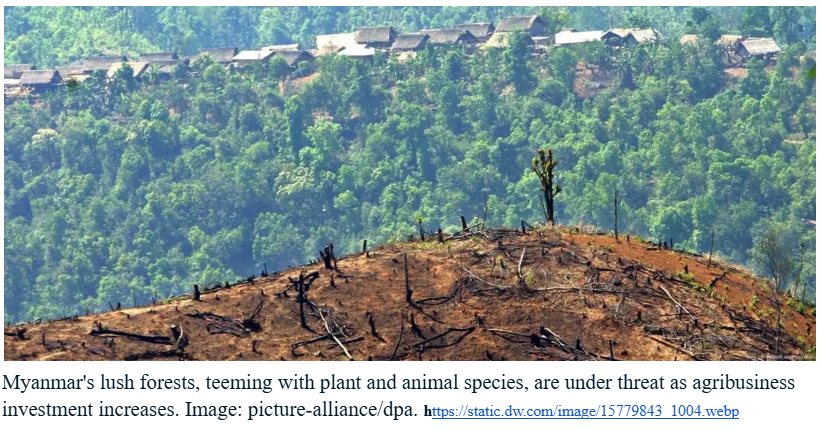
One major factor exacerbating climate vulnerability is the significant reduction in natural capital that provides ecological protection. Critical coastal defence systems, namely mangrove forests, have been significantly lost due to unsustainable logging and aquaculture expansion (MIMU, 2022; ResearchGate, 2018). The loss of mangroves was significantly linked to the destructive effects of Cyclone Mocha in 2023, one of the strongest storms on record in the area (Centre for Disaster Philanthropy, 2023). In addition, large-scale deforestation in the interior, driven by extractive developments and conflict, also increases surface runoff, which aggravates the frequency and magnitude of flash floods and landslides (DIIS, 2023). The degradation of such ecological buffers diminishes the environment's natural resilience.
Climate change is not a future projection for Myanmar; it is a permanent, structural reality. Myanmar has consistently ranked among the most climate-exposed countries in global rankings (Germanwatch, 2021). That acute vulnerability is only enhanced by longer-standing internal crises. Myanmar is caught in a vicious cycle in which exacerbating physical hazards such as cyclones, increased sea level rise, and prolonged droughts intersect with severely depleted environmental defences and a paralysing socio-political crisis. This triple threat of extreme weather, environmental degradation and institutional fragility acts as a devastating risk multiplier, ensuring that localised climate stress quickly translates into widespread humanitarian and economic instability. This essay examines the structural factors that have entrenched climate vulnerability in Myanmar, arguing that resilience hinges fundamentally on addressing systemic environmental management failures and achieving political stability.
Hydro-Meteorological Exposure and Food Insecurity
Various hydro-meteorological hazards greatly affect Myanmar. These include an increasing intensity and frequency of tropical cyclones, which pose existential threats to coastal settings in Myanmar, particularly the Ayeyarwady Delta. This crucial agricultural region is also at risk of accelerated sea-level rise and saltwater intrusion, directly impacting food security by reducing arable land and drinking water supplies (Mekong Eye, 2019; World Bank, 2023). Meanwhile, the central Dry Zone faces prolonged droughts and rising temperatures, which disrupt rain-fed agriculture and rural livelihoods. The changing timing of the monsoon also affects the reliability of traditional agricultural cycles sustainably.
Depletion of Natural Capital and Loss of Ecological Defence.
One major factor exacerbating climate vulnerability is the significant reduction in natural capital that provides ecological protection. Critical coastal defence systems, namely mangrove forests, have been significantly lost due to unsustainable logging and aquaculture expansion (MIMU, 2022; ResearchGate, 2018). The loss of mangroves was significantly linked to the destructive effects of Cyclone Mocha in 2023, one of the strongest storms on record in the area (Centre for Disaster Philanthropy, 2023). In addition, large-scale deforestation in the interior, driven by extractive developments and conflict, also increases surface runoff, which aggravates the frequency and magnitude of flash floods and landslides (DIIS, 2023). The degradation of such ecological buffers diminishes the environment's natural resilience.
Institutional Fragility and Conflict as a Threat Multiplier
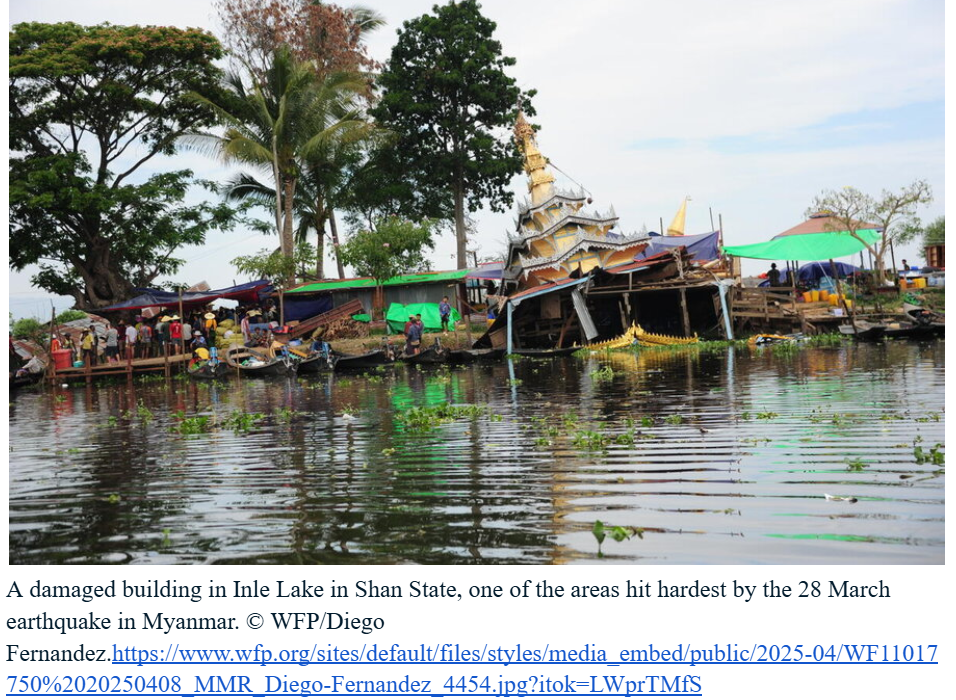
The primary barrier to climate resilience is the current state of institutional fragility and protracted armed conflict. Climate change is often viewed as a threat multiplier that exacerbates violence and instability when combined with social and political issues (DIIS, 2023; GJIA, 2024). Successful adaptation requires coordinated long-term planning, widespread community buy-in, and effective utilisation of resources, all of which are severely challenged by continuing political instability. The conflict has also dismantled existing local institutional capacity and disrupted the ability of civil society organisations to facilitate community-based climate responses. As a result of the conflict, there are now large populations of Internally Displaced Persons (IDPs) living in informal settlements using self-built structures, increasing their vulnerability to climatic hazards like flooding and extreme heat (NUPI, 2024). Their limited assets and coping strategies add a layer of risk.
Conclusion
The issue of environmental management in Myanmar is not simply a question of adopting technical adaptation approaches. Nature-based solutions such as large-scale mangrove restoration and improved water resource management represent both necessary and effective ecological interventions. However, these approaches will only be viable once the sociopolitical crisis is addressed. The challenge of whatever climate risk profile Myanmar faces is inherently dependent on peace, stability, and governance, allowing for institutional and community adaptive capacity. Therefore, this situation implies a fundamental proposition in environmental policy: we cannot separate climate resilience and sustainable development from sociopolitical stability.
References
Center for Disaster Philanthropy. (2023). Cyclone Mocha. [Informational page]. Retrieved from https://disasterphilanthropy.org/disasters/cyclone-mocha/
Danish Institute for International Studies (DIIS). (2023). Climate change actions in conflict affected contexts: Insights from Myanmar after the military coup. [Policy Brief]. ReliefWeb.
Germanwatch. (2021). Global Climate Risk Index 2021: Long-Term Climate Risk Index (2000–2019). [Report]. DevelopmentAid.
Georgetown Journal of International Affairs (GJIA). (2024). The challenges of conflict and climate change in Myanmar. Retrieved from https://gjia.georgetown.edu/2024/06/09/concurrent-challenges-of-conflict-and-climate-change-in-myanmar/
Mekong Eye. (2019, September 6). The salty taste of climate change in Myanmar. Retrieved from https://www.mekongeye.com/2019/09/06/the-salty-taste-of-climate-change-in-myanmar
Myanmar Information Management Unit (MIMU). (2022). Climate, environmental degradation and disaster risk in Myanmar. [Analytical Brief].
Norwegian Institute of International Affairs (NUPI). (2024). Climate, peace and security fact sheet: Myanmar. https://www.nupi.no/en/news/climate-peace-and-security-fact-sheet-myanmar
ResearchGate. (2018). Assessing environmental impacts and change in Myanmar’s mangrove ecosystem service value due to deforestation (2000–2014). Global Change Biology Bioenergy.
SciDev.Net. (2020, March 14). Myanmar’s mangroves depleting faster than thought. https://www.scidev.net/asia-pacific/news/myanmar-s-mangroves-depleting-faster-than-thought/
World Bank. (2023). Extremely severe cyclonic storm Mocha, May 2023, Myanmar: Global rapid post-disaster damage estimation (GRADE) report.. World Bank Group.
The primary barrier to climate resilience is the current state of institutional fragility and protracted armed conflict. Climate change is often viewed as a threat multiplier that exacerbates violence and instability when combined with social and political issues (DIIS, 2023; GJIA, 2024). Successful adaptation requires coordinated long-term planning, widespread community buy-in, and effective utilisation of resources, all of which are severely challenged by continuing political instability. The conflict has also dismantled existing local institutional capacity and disrupted the ability of civil society organisations to facilitate community-based climate responses. As a result of the conflict, there are now large populations of Internally Displaced Persons (IDPs) living in informal settlements using self-built structures, increasing their vulnerability to climatic hazards like flooding and extreme heat (NUPI, 2024). Their limited assets and coping strategies add a layer of risk.
Conclusion
The issue of environmental management in Myanmar is not simply a question of adopting technical adaptation approaches. Nature-based solutions such as large-scale mangrove restoration and improved water resource management represent both necessary and effective ecological interventions. However, these approaches will only be viable once the sociopolitical crisis is addressed. The challenge of whatever climate risk profile Myanmar faces is inherently dependent on peace, stability, and governance, allowing for institutional and community adaptive capacity. Therefore, this situation implies a fundamental proposition in environmental policy: we cannot separate climate resilience and sustainable development from sociopolitical stability.
References
Center for Disaster Philanthropy. (2023). Cyclone Mocha. [Informational page]. Retrieved from https://disasterphilanthropy.org/disasters/cyclone-mocha/
Danish Institute for International Studies (DIIS). (2023). Climate change actions in conflict affected contexts: Insights from Myanmar after the military coup. [Policy Brief]. ReliefWeb.
Germanwatch. (2021). Global Climate Risk Index 2021: Long-Term Climate Risk Index (2000–2019). [Report]. DevelopmentAid.
Georgetown Journal of International Affairs (GJIA). (2024). The challenges of conflict and climate change in Myanmar. Retrieved from https://gjia.georgetown.edu/2024/06/09/concurrent-challenges-of-conflict-and-climate-change-in-myanmar/
Mekong Eye. (2019, September 6). The salty taste of climate change in Myanmar. Retrieved from https://www.mekongeye.com/2019/09/06/the-salty-taste-of-climate-change-in-myanmar
Myanmar Information Management Unit (MIMU). (2022). Climate, environmental degradation and disaster risk in Myanmar. [Analytical Brief].
Norwegian Institute of International Affairs (NUPI). (2024). Climate, peace and security fact sheet: Myanmar. https://www.nupi.no/en/news/climate-peace-and-security-fact-sheet-myanmar
ResearchGate. (2018). Assessing environmental impacts and change in Myanmar’s mangrove ecosystem service value due to deforestation (2000–2014). Global Change Biology Bioenergy.
SciDev.Net. (2020, March 14). Myanmar’s mangroves depleting faster than thought. https://www.scidev.net/asia-pacific/news/myanmar-s-mangroves-depleting-faster-than-thought/
World Bank. (2023). Extremely severe cyclonic storm Mocha, May 2023, Myanmar: Global rapid post-disaster damage estimation (GRADE) report.. World Bank Group.