

Promised Neverland: Uncertainty of Kelantan Forest Plantation
Introduction
A broken promise is the harsh reality of what Kelantan’s forest plantation ambitious project has become. In 2007, the Kelantan State Forestry Department (JPNK) authorised 118,088 hectares of its forest reserves into this so-called “transformation,” making it among the earliest state governments to do so (Kelantan State Forestry Department (JPNK, 2007). Unfortunately, the goal of achieving a sustainable and uniform harvesting cycle while obtaining an economic return remains unfulfilled to this day.
The state government, which had set an ambitious goal for a sustainable forest plantation initiative, is now seen to be retracting or slowing down such projects. The problem arises from establishing new schemes for forest stands and converting them into sustainably managed forests for the upcoming cycle. Utilising fast-growing species, expectations were high for a quick first harvest cycle. A successful initial stage of establishment and harvesting would have provided valuable insights for replanting new stands. Nevertheless, plantation private concessionaires entrusted with developing these plantations have often been accused of being primarily interested in clearing forest reserves without replanting or considering long-term forestry goals (Ng & Chan, 2022).
Stakeholders’ Reasons of Action
From the state government’s perspective, forest plantations were intended to provide an alternative timber source, thereby easing the logging burden on natural forests (Forest Research Institute Malaysia [FRIM], 2018). However, inefficiencies in monitoring and limited private interest in long-term forest management have undermined this objective. As for planters, the plantations lie outside their comfort zone. Many logging companies and forestry operators, accustomed to exploiting natural forests, find replanting efforts costly and less profitable (Abdullah & Awang, 2020). As a result, much of the forest—now turned into bare land—has been cleared without a proper regeneration plan beforehand.
Academic and Scholar Perspective
From an academic perspective, the Kelantan forest plantation program highlights a notable disparity between policy intentions and on-ground implementation. Researchers observe that while the conversion of logged-over areas into productive plantations aligns with sustainable forest management principles, its execution neglects essential ecological and socio-economic dimensions (Abdullah & Awang, 2020). A more comprehensive and well-structured policy approach—one that integrates both environmental safeguards and socio-economic priorities—could have ensured more balanced outcomes for authorities and concessionaires alike. Moreover, the establishment of clear, enforceable guidelines and continuous monitoring mechanisms would have been crucial to maintaining accountability and ensuring consistent progress throughout the implementation process.
Forest policy analysts point out that the heavy reliance on private concessionaires has weakened both oversight and accountability. This situation indicates the need for more substantial on-site and off-site monitoring efforts to ensure that the intended objectives are effectively achieved. Findings from the Forest Research Institute Malaysia (FRIM) and Universiti Putra Malaysia (UPM) reveal that successful plantation management requires not only sound silvicultural practices but also transparent land-use planning and active involvement of local communities—factors that were largely missing in Kelantan’s case (Shamsudin et al., 2019; UPM, 2021). Furthermore, ongoing tensions with indigenous communities have further hindered these collaborative efforts, and in the absence of clear negotiation frameworks, meaningful local participation remains highly challenging (Rahman et al., 2020).
What the Future Holds
The future of Kelantan’s forest plantations depends mainly on how the state redefines its priorities between economic gains and environmental stewardship. With increasing national attention on climate resilience and carbon accounting, reforestation and plantation rehabilitation could become key drivers for future sustainability (Ministry of Energy and Natural Resources [KeTSA], 2021). Restoring degraded plantation areas with mixed native species could help recover ecological functions and support carbon sequestration goals (FRIM, 2018).
However, without political will and strict enforcement, the cycle of “clear without care” is likely to continue. Scholars recommend that the state adopt a landscape-level management approach—integrating plantation forests, natural reserves, and local communities under a unified sustainability framework (Ng & Chan, 2022). If implemented effectively, Kelantan could transform its “promised neverland” into a model for responsible forest recovery rather than a reminder of lost potential.
References
Abdullah, R., & Awang, S. A. (2020). Forest plantation development and sustainability challenges in Peninsular Malaysia. Journal of Tropical Forest Science, 32(4), 465–478.
Forest Research Institute Malaysia. (2018). Forest plantation performance and environmental assessment report. Kepong: FRIM Press.
Kelantan State Forestry Department. (2007). Kelantan forest plantation master plan 2007–2020. Kota Bharu: JPNK.
Ministry of Energy and Natural Resources (KeTSA). (2021). Malaysia’s National Forestry Policy (Revised 2021). Putrajaya: KeTSA.
Ng, C. H., & Chan, Y. L. (2022). Forest governance and accountability in Malaysia: Lessons from state-level management. Environmental Policy Review, 14(2), 85–102.
Rahman, N. H. A., Nor, N. M., & Shamsudin, I. (2020). Community conflicts and participation in forest plantation areas of Peninsular Malaysia. Malaysian Forester, 83(1), 55–68.
Shamsudin, I., Zakaria, Z., & Nor, N. M. (2019). Sustainable forest management practices in Malaysia: Issues and implementation gaps. Malaysian Forester, 82(2), 113–126.
Universiti Putra Malaysia. (2021). Community engagement in forest plantation management: Policy implications for Malaysia. Serdang: Faculty of Forestry and Environment, UPM.
A broken promise is the harsh reality of what Kelantan’s forest plantation ambitious project has become. In 2007, the Kelantan State Forestry Department (JPNK) authorised 118,088 hectares of its forest reserves into this so-called “transformation,” making it among the earliest state governments to do so (Kelantan State Forestry Department (JPNK, 2007). Unfortunately, the goal of achieving a sustainable and uniform harvesting cycle while obtaining an economic return remains unfulfilled to this day.
The state government, which had set an ambitious goal for a sustainable forest plantation initiative, is now seen to be retracting or slowing down such projects. The problem arises from establishing new schemes for forest stands and converting them into sustainably managed forests for the upcoming cycle. Utilising fast-growing species, expectations were high for a quick first harvest cycle. A successful initial stage of establishment and harvesting would have provided valuable insights for replanting new stands. Nevertheless, plantation private concessionaires entrusted with developing these plantations have often been accused of being primarily interested in clearing forest reserves without replanting or considering long-term forestry goals (Ng & Chan, 2022).
Stakeholders’ Reasons of Action
From the state government’s perspective, forest plantations were intended to provide an alternative timber source, thereby easing the logging burden on natural forests (Forest Research Institute Malaysia [FRIM], 2018). However, inefficiencies in monitoring and limited private interest in long-term forest management have undermined this objective. As for planters, the plantations lie outside their comfort zone. Many logging companies and forestry operators, accustomed to exploiting natural forests, find replanting efforts costly and less profitable (Abdullah & Awang, 2020). As a result, much of the forest—now turned into bare land—has been cleared without a proper regeneration plan beforehand.
Academic and Scholar Perspective
From an academic perspective, the Kelantan forest plantation program highlights a notable disparity between policy intentions and on-ground implementation. Researchers observe that while the conversion of logged-over areas into productive plantations aligns with sustainable forest management principles, its execution neglects essential ecological and socio-economic dimensions (Abdullah & Awang, 2020). A more comprehensive and well-structured policy approach—one that integrates both environmental safeguards and socio-economic priorities—could have ensured more balanced outcomes for authorities and concessionaires alike. Moreover, the establishment of clear, enforceable guidelines and continuous monitoring mechanisms would have been crucial to maintaining accountability and ensuring consistent progress throughout the implementation process.
Forest policy analysts point out that the heavy reliance on private concessionaires has weakened both oversight and accountability. This situation indicates the need for more substantial on-site and off-site monitoring efforts to ensure that the intended objectives are effectively achieved. Findings from the Forest Research Institute Malaysia (FRIM) and Universiti Putra Malaysia (UPM) reveal that successful plantation management requires not only sound silvicultural practices but also transparent land-use planning and active involvement of local communities—factors that were largely missing in Kelantan’s case (Shamsudin et al., 2019; UPM, 2021). Furthermore, ongoing tensions with indigenous communities have further hindered these collaborative efforts, and in the absence of clear negotiation frameworks, meaningful local participation remains highly challenging (Rahman et al., 2020).
What the Future Holds
The future of Kelantan’s forest plantations depends mainly on how the state redefines its priorities between economic gains and environmental stewardship. With increasing national attention on climate resilience and carbon accounting, reforestation and plantation rehabilitation could become key drivers for future sustainability (Ministry of Energy and Natural Resources [KeTSA], 2021). Restoring degraded plantation areas with mixed native species could help recover ecological functions and support carbon sequestration goals (FRIM, 2018).
However, without political will and strict enforcement, the cycle of “clear without care” is likely to continue. Scholars recommend that the state adopt a landscape-level management approach—integrating plantation forests, natural reserves, and local communities under a unified sustainability framework (Ng & Chan, 2022). If implemented effectively, Kelantan could transform its “promised neverland” into a model for responsible forest recovery rather than a reminder of lost potential.
References
Abdullah, R., & Awang, S. A. (2020). Forest plantation development and sustainability challenges in Peninsular Malaysia. Journal of Tropical Forest Science, 32(4), 465–478.
Forest Research Institute Malaysia. (2018). Forest plantation performance and environmental assessment report. Kepong: FRIM Press.
Kelantan State Forestry Department. (2007). Kelantan forest plantation master plan 2007–2020. Kota Bharu: JPNK.
Ministry of Energy and Natural Resources (KeTSA). (2021). Malaysia’s National Forestry Policy (Revised 2021). Putrajaya: KeTSA.
Ng, C. H., & Chan, Y. L. (2022). Forest governance and accountability in Malaysia: Lessons from state-level management. Environmental Policy Review, 14(2), 85–102.
Rahman, N. H. A., Nor, N. M., & Shamsudin, I. (2020). Community conflicts and participation in forest plantation areas of Peninsular Malaysia. Malaysian Forester, 83(1), 55–68.
Shamsudin, I., Zakaria, Z., & Nor, N. M. (2019). Sustainable forest management practices in Malaysia: Issues and implementation gaps. Malaysian Forester, 82(2), 113–126.
Universiti Putra Malaysia. (2021). Community engagement in forest plantation management: Policy implications for Malaysia. Serdang: Faculty of Forestry and Environment, UPM.
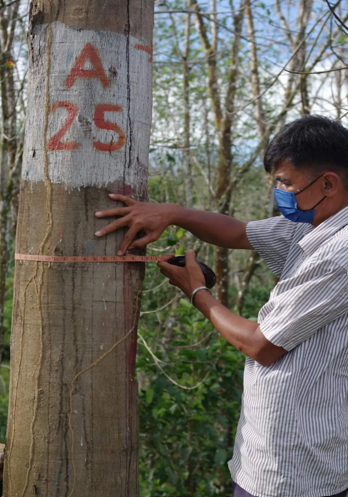
TLC variety measured at 35 cm (11 years)
