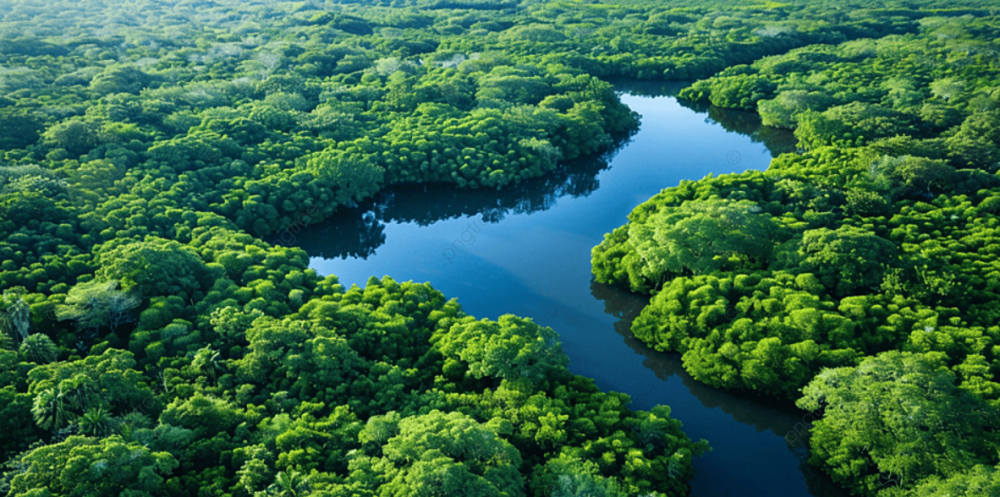
Rivers as Mirrors of the Forest
Introduction
A clear river is often born from a healthy forest. Every tree, root, and fallen leaf plays a vital role in maintaining the quality of the water that flows beneath. A river does not exist on its own; it lives through the breath of the surrounding forest. When forests thrive, rivers become sources of life and prosperity. But when forests are cut down, the water turns murky, the riverbed fills with silt, and the river loses its soul. In truth, rivers are mirrors of forests; whatever happens in the jungle is reflected in their waters.
The Relationship Between Rivers, Forests, Wildlife, and Communities
The connection between forests and rivers is not just an ecological concept; it is a visible reality. Forests serve as natural water catchments that stabilise the hydrological cycle and prevent flooding. Tree roots bind the soil, while fallen leaves absorb and filter rainwater before it reaches the river. The Forestry Department of Peninsular Malaysia (2022) reported that forested areas maintain water quality up to 60% better than deforested zones.
Rivers and forests also form the backbone of wildlife habitats. Gibbons, tapirs, and hornbills depend on rivers for water and as natural movement corridors. Hashim and Nor (2020) emphasise that riparian forest conservation is crucial for maintaining fauna populations and microhabitat stability. The relationship extends to human society as well. Local communities rely on rivers for agriculture, recreation, and daily needs. When forests are destroyed, people suffer from floods, water shortages, and the loss of natural food sources.
Unfortunately, this delicate balance is under threat in many parts of Malaysia. Deforestation and hillside development have led to siltation and pollution in major rivers. In Hulu Langat, for instance, increased development near the Sungai Tekala Recreational Forest has caused higher sedimentation and turbidity levels (Yusoff et al., 2021). The Department of Environment (2023) reported that only 47% of Malaysia’s rivers are classified as clean, with the rest categorised as polluted or heavily polluted due to industrial, agricultural, and domestic waste. This condition turns rivers into “cloudy mirrors” of weakened forests.
Forest Resources and Their Contribution to River Ecosystems
Forests are not only protectors of rivers but also suppliers of resources that sustain surrounding ecosystems. Decomposing leaves, branches, and organic matter from the forest floor enrich the river with nutrients essential for aquatic life. According to the UN Environment Programme (2020), tropical forests contribute natural organic carbon that stabilises freshwater food webs.
Non-timber forest products such as rattan, medicinal herbs, and wild fruits also provide income for local communities living near rivers (Ng & Tan, 2021). However, excessive exploitation of forest resources can have unintended consequences. Uncontrolled logging increases soil erosion, while deforestation in catchment areas alters water temperature and oxygen levels, endangering sensitive fish species such as kelah and sebarau. Sustainable forest management is therefore vital to ensure that forest harvesting does not disrupt the natural functions of rivers.
Conclusion
Rivers and forests are inseparable, like the veins and blood of a living body. A clear river signifies a healthy forest; a muddy river reveals a wounded one. Both also reflect society’s environmental values. When people realise that protecting forests means protecting water, balance can be restored. Rehabilitation projects, such as the River of Life and the Central Forest Spine, demonstrate that positive change is possible when humans and nature collaborate. Ultimately, the reflection in the river’s surface is a reflection of ourselves. When the jungle breathes, the water runs clear and within that clarity lies the promise of a sustainable future for all.
References
Rosli, N., Gerusu, G. J., & Kueh, R. J. H. (2021). Tropical rehabilitation forest control on water chemistry pattern in Bintulu, Sarawak, Malaysia. Jurnal Teknologi (Science & Engineering), 84(1), 57–75. https://doi.org/10.11113/jurnalteknologi.v84.17102
Khor, J. F., Lim, S., & Ling, L. (2023). Evaluating the effect of deforestation on decadal runoffs in Malaysia using the Revised Curve Number rainfall-runoff approach. Water, 15(7), 1392. https://doi.org/10.3390/w15071392
A clear river is often born from a healthy forest. Every tree, root, and fallen leaf plays a vital role in maintaining the quality of the water that flows beneath. A river does not exist on its own; it lives through the breath of the surrounding forest. When forests thrive, rivers become sources of life and prosperity. But when forests are cut down, the water turns murky, the riverbed fills with silt, and the river loses its soul. In truth, rivers are mirrors of forests; whatever happens in the jungle is reflected in their waters.
The Relationship Between Rivers, Forests, Wildlife, and Communities
The connection between forests and rivers is not just an ecological concept; it is a visible reality. Forests serve as natural water catchments that stabilise the hydrological cycle and prevent flooding. Tree roots bind the soil, while fallen leaves absorb and filter rainwater before it reaches the river. The Forestry Department of Peninsular Malaysia (2022) reported that forested areas maintain water quality up to 60% better than deforested zones.
Rivers and forests also form the backbone of wildlife habitats. Gibbons, tapirs, and hornbills depend on rivers for water and as natural movement corridors. Hashim and Nor (2020) emphasise that riparian forest conservation is crucial for maintaining fauna populations and microhabitat stability. The relationship extends to human society as well. Local communities rely on rivers for agriculture, recreation, and daily needs. When forests are destroyed, people suffer from floods, water shortages, and the loss of natural food sources.
Unfortunately, this delicate balance is under threat in many parts of Malaysia. Deforestation and hillside development have led to siltation and pollution in major rivers. In Hulu Langat, for instance, increased development near the Sungai Tekala Recreational Forest has caused higher sedimentation and turbidity levels (Yusoff et al., 2021). The Department of Environment (2023) reported that only 47% of Malaysia’s rivers are classified as clean, with the rest categorised as polluted or heavily polluted due to industrial, agricultural, and domestic waste. This condition turns rivers into “cloudy mirrors” of weakened forests.
Forest Resources and Their Contribution to River Ecosystems
Forests are not only protectors of rivers but also suppliers of resources that sustain surrounding ecosystems. Decomposing leaves, branches, and organic matter from the forest floor enrich the river with nutrients essential for aquatic life. According to the UN Environment Programme (2020), tropical forests contribute natural organic carbon that stabilises freshwater food webs.
Non-timber forest products such as rattan, medicinal herbs, and wild fruits also provide income for local communities living near rivers (Ng & Tan, 2021). However, excessive exploitation of forest resources can have unintended consequences. Uncontrolled logging increases soil erosion, while deforestation in catchment areas alters water temperature and oxygen levels, endangering sensitive fish species such as kelah and sebarau. Sustainable forest management is therefore vital to ensure that forest harvesting does not disrupt the natural functions of rivers.
Conclusion
Rivers and forests are inseparable, like the veins and blood of a living body. A clear river signifies a healthy forest; a muddy river reveals a wounded one. Both also reflect society’s environmental values. When people realise that protecting forests means protecting water, balance can be restored. Rehabilitation projects, such as the River of Life and the Central Forest Spine, demonstrate that positive change is possible when humans and nature collaborate. Ultimately, the reflection in the river’s surface is a reflection of ourselves. When the jungle breathes, the water runs clear and within that clarity lies the promise of a sustainable future for all.
References
Rosli, N., Gerusu, G. J., & Kueh, R. J. H. (2021). Tropical rehabilitation forest control on water chemistry pattern in Bintulu, Sarawak, Malaysia. Jurnal Teknologi (Science & Engineering), 84(1), 57–75. https://doi.org/10.11113/jurnalteknologi.v84.17102
Khor, J. F., Lim, S., & Ling, L. (2023). Evaluating the effect of deforestation on decadal runoffs in Malaysia using the Revised Curve Number rainfall-runoff approach. Water, 15(7), 1392. https://doi.org/10.3390/w15071392