Saving Our Forests Without Sacrificing Our Future
Introduction
The forests are the lungs of our planet, a treasure trove of biodiversity, and a lifeline for millions. For decades, we have been told that we face a brutal choice: protect these vital ecosystems or exploit them for economic growth. But what if this is a false choice? The real challenge of international forestry is not choosing between conservation and development, but forging a path that secures both.
The old conflict is apparent. International agreements, such as the Paris Accord, and frameworks like REDD+ rightly champion forests as indispensable carbon sinks in the fight against climate change (Seymour & Harris, 2019). Yet, the powerful economic engines of agribusiness, logging, and mining continue to drive deforestation, treating forests as a short-term resource. This creates a policy deadlock where environmental goals are constantly pitted against economic ones.
Deforestation is visible from space.
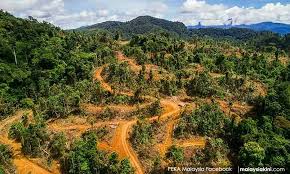
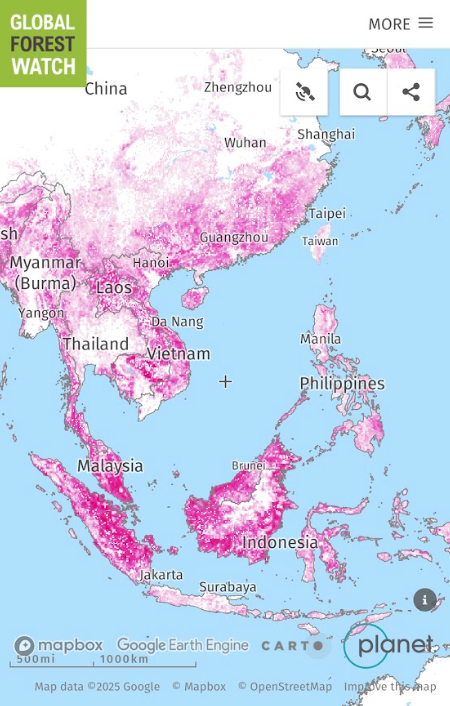
The consequences of this deadlock are visible from space. The conversion of vast swathes of tropical rainforest for palm oil and other commodities is a primary driver of global forest loss (Hosonuma et al., 2012). Figure 1 captures the devastating visual contrast between a thriving natural forest and a monoculture plantation. This isn't just a local issue; the fires and haze that regularly choke Southeast Asia are a stark reminder that deforestation is a transboundary crisis, with its global hotspots mapped out in Figure 2.
Surrendering to this false choice sacrifices our future. The good news is that a smarter path is emerging. The solution lies in redefining the concept of economic value itself. We must pivot towards a bio-economy, where the sustainable harvesting of non-timber forest products and the growth of eco-tourism create lasting livelihoods that depend on a living forest (Agrawal et al., 2008). This isn't about locking forests away; it's about managing them wisely for continuous benefits.
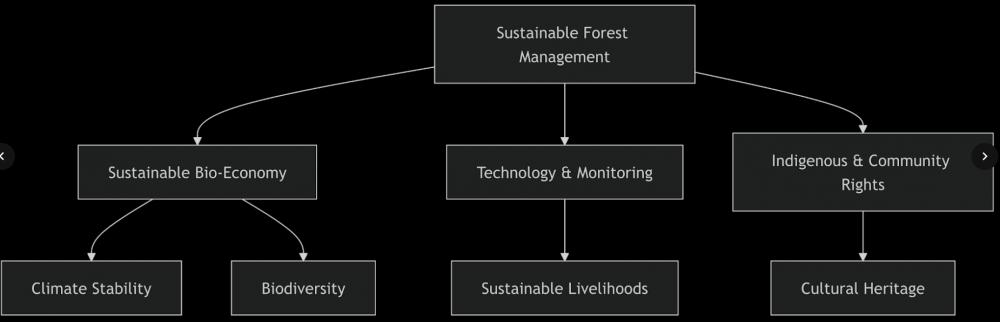
Technology is a powerful ally in this transition. Satellite monitoring platforms, such as Global Forest Watch, have democratised surveillance, enabling everyone from local communities to international watchdogs to hold destructive actors accountable. Furthermore, evidence shows that empowering Indigenous communities, the world's most effective forest stewards, with secure land rights is one of the most successful strategies for conservation (FAO, 2022). Figure 3 illustrates this integrated vision for a sustainable future.
The forests are the lungs of our planet, a treasure trove of biodiversity, and a lifeline for millions. For decades, we have been told that we face a brutal choice: protect these vital ecosystems or exploit them for economic growth. But what if this is a false choice? The real challenge of international forestry is not choosing between conservation and development, but forging a path that secures both.
The old conflict is apparent. International agreements, such as the Paris Accord, and frameworks like REDD+ rightly champion forests as indispensable carbon sinks in the fight against climate change (Seymour & Harris, 2019). Yet, the powerful economic engines of agribusiness, logging, and mining continue to drive deforestation, treating forests as a short-term resource. This creates a policy deadlock where environmental goals are constantly pitted against economic ones.
Deforestation is visible from space.
The consequences of this deadlock are visible from space. The conversion of vast swathes of tropical rainforest for palm oil and other commodities is a primary driver of global forest loss (Hosonuma et al., 2012). Figure 1 captures the devastating visual contrast between a thriving natural forest and a monoculture plantation. This isn't just a local issue; the fires and haze that regularly choke Southeast Asia are a stark reminder that deforestation is a transboundary crisis, with its global hotspots mapped out in Figure 2.
Surrendering to this false choice sacrifices our future. The good news is that a smarter path is emerging. The solution lies in redefining the concept of economic value itself. We must pivot towards a bio-economy, where the sustainable harvesting of non-timber forest products and the growth of eco-tourism create lasting livelihoods that depend on a living forest (Agrawal et al., 2008). This isn't about locking forests away; it's about managing them wisely for continuous benefits.
Technology is a powerful ally in this transition. Satellite monitoring platforms, such as Global Forest Watch, have democratised surveillance, enabling everyone from local communities to international watchdogs to hold destructive actors accountable. Furthermore, evidence shows that empowering Indigenous communities, the world's most effective forest stewards, with secure land rights is one of the most successful strategies for conservation (FAO, 2022). Figure 3 illustrates this integrated vision for a sustainable future.
Conclusion
Saving our forests does not require sacrificing our future. It requires the courage to abandon outdated either/or thinking. The future lies in recognising forests as dynamic, life-support systems that provide a portfolio of essential services from climate regulation and biodiversity to sustainable jobs and cultural heritage. By embracing innovation and investing in the people who know the forest best, we can secure a prosperous future for both humanity and the planet.
References
Agrawal, A., Chhatre, A., & Hardin, R. (2008). Changing the Governance of the World's Forests. Science, 320(5882), 1460–1462. https://doi.org/10.1126/science.1155369
Food and Agriculture Organization of the United Nations. (2022). The state of the world’s forests 2022: Forest pathways for green recovery and building inclusive, resilient and sustainable economies. FAO. https://www.fao.org/documents/card/en/c/cb9360en
Global Forest Watch. (2025.). World Resources Institute. Retrieved October 21, 2025, from https://www.globalforestwatch.org/
Hosonuma, N., Herold, M., De Sy, V., De Fries, R. S., Brockhaus, M., Verchot, L., Angelsen, A., & Romijn, E. (2012). An assessment of deforestation and forest degradation drivers in developing countries. Environmental Research Letters, 7(4), 044009. https://doi.org/10.1088/1748-9326/7/4/044009
Seymour, F., & Harris, N. L. (2019). Reducing tropical deforestation. Science, 365(6455), 756–757. https://doi.org/10.1126/science.aax8546
The REDD+ Desk. (2025). What is REDD+? The Global Canopy Programme. Retrieved October 21, 2025, from https://theredddesk.org/what-redd
Saving our forests does not require sacrificing our future. It requires the courage to abandon outdated either/or thinking. The future lies in recognising forests as dynamic, life-support systems that provide a portfolio of essential services from climate regulation and biodiversity to sustainable jobs and cultural heritage. By embracing innovation and investing in the people who know the forest best, we can secure a prosperous future for both humanity and the planet.
References
Agrawal, A., Chhatre, A., & Hardin, R. (2008). Changing the Governance of the World's Forests. Science, 320(5882), 1460–1462. https://doi.org/10.1126/science.1155369
Food and Agriculture Organization of the United Nations. (2022). The state of the world’s forests 2022: Forest pathways for green recovery and building inclusive, resilient and sustainable economies. FAO. https://www.fao.org/documents/card/en/c/cb9360en
Global Forest Watch. (2025.). World Resources Institute. Retrieved October 21, 2025, from https://www.globalforestwatch.org/
Hosonuma, N., Herold, M., De Sy, V., De Fries, R. S., Brockhaus, M., Verchot, L., Angelsen, A., & Romijn, E. (2012). An assessment of deforestation and forest degradation drivers in developing countries. Environmental Research Letters, 7(4), 044009. https://doi.org/10.1088/1748-9326/7/4/044009
Seymour, F., & Harris, N. L. (2019). Reducing tropical deforestation. Science, 365(6455), 756–757. https://doi.org/10.1126/science.aax8546
The REDD+ Desk. (2025). What is REDD+? The Global Canopy Programme. Retrieved October 21, 2025, from https://theredddesk.org/what-redd