

The EUDR Challenge: Balancing Trade and Forest Protection in Sarawak
Introduction
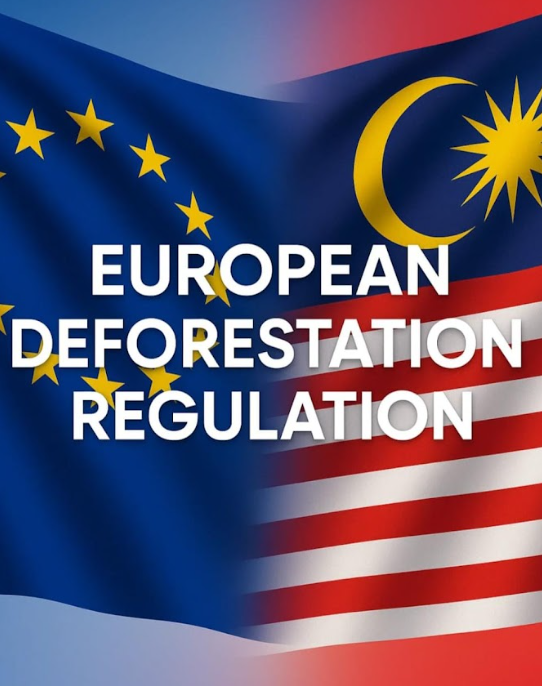
The European Union Deforestation Regulation (EUDR) is reshaping global commodity trade by requiring exporters to the EU to provide robust evidence that their products did not originate from deforested or degraded land after the cut-off date. This regulation covers key commodities, including palm oil, timber, rubber, cocoa, and coffee (Verhaeghe & Ramcilovic-Suominen, 2024). The Malaysian state of Sarawak is home to expansive plantations, forested landscapes, and indigenous land-use dynamics, where the EUDR presents both significant opportunities and serious risks.
Economic Dependence and Trade-Compliance Pressures
Sarawak is a significant player in Malaysia’s timber and oil palm industries. Research shows that the state could re-accelerate forest conversion, positioning itself as “the last frontier for expansion of oil-palm plantation in Malaysia” (Koh et al., 2023). Due to the EUDR's focus on deforestation-free supply chains, this development trajectory means Sarawak's exports may soon be subject to tighter scrutiny. Malaysian palm-oil exporters are already wary of being designated a “standard risk” country by the EU benchmarking system, an outcome that would trigger more frequent inspections.
The compliance burden is not trivial. Exporters must now implement detailed traceability mechanisms (including geolocation, satellite monitoring and chain-of-custody data) to certify that their supply chains meet EUDR standards (Nadras & Mazlan, 2024). For smallholders in Sarawak, many of whom operate fragmented holdings with limited administrative capacity, this presents a real challenge. Studies have found that smallholders struggle with low yields, insecure land tenure, and capacity constraints, even under existing certification schemes (Ogahara et al., 2022). Without targeted support, there is a risk that smallholders in Sarawak will be excluded from EU markets, and by extension marginalised within value chains.
Indigenous Rights and Land-Use Governance
Beyond economics, the EUDR explicitly embeds social legality criteria, meaning that production linked to violations of land-use rights, indigenous customary rights, or weak governance could be considered “high-risk”. For Sarawak, this is especially relevant. Research into land-use assemblage in Sarawak highlights contested Native Customary Rights (NCR) lands, state-leased plantations, and overlapping tenure regimes (Varkkey, n.d.). Furthermore, forest-cover analyses indicate that the state has experienced significant expansion of oil-palm plantations since the late 1990s, raising questions about the past conversion of forest lands (Koh et al., 2023). The implication is that if Sarawak-based supply chains are linked to either deforestation post-cutoff or rights-governance concerns, those export chains may face heightened risk under EUDR.
Pathways Forward: Aligning Governance, Inclusion & Trade
While the EUDR poses risks, it also presents an opportunity for Sarawak to enhance its sustainability credibility. A key pathway is aligning local certification schemes (for instance, the Malaysian Sustainable Palm Oil (MSPO) scheme) with EUDR criteria. Studies indicate that Malaysia’s certification frameworks and traceability efforts could help meet the regulatory demands, but gaps remain, especially for smallholders (Kannan, 2020). In addition, better recognition of indigenous tenure rights, more transparent mapping of land use, and investment in digital traceability could reduce Sarawak’s “risk” profile.
Collaboration will be essential, as government agencies in Malaysia have already identified the need for capacity-building and support for smallholders in light of EUDR. If Sarawak takes a proactive stance to strengthen governance, support smallholders, and engage with international trading partners, the EUDR might become a driver of sustainable development rather than a barrier.
The European Union Deforestation Regulation (EUDR) is reshaping global commodity trade by requiring exporters to the EU to provide robust evidence that their products did not originate from deforested or degraded land after the cut-off date. This regulation covers key commodities, including palm oil, timber, rubber, cocoa, and coffee (Verhaeghe & Ramcilovic-Suominen, 2024). The Malaysian state of Sarawak is home to expansive plantations, forested landscapes, and indigenous land-use dynamics, where the EUDR presents both significant opportunities and serious risks.
Economic Dependence and Trade-Compliance Pressures
Sarawak is a significant player in Malaysia’s timber and oil palm industries. Research shows that the state could re-accelerate forest conversion, positioning itself as “the last frontier for expansion of oil-palm plantation in Malaysia” (Koh et al., 2023). Due to the EUDR's focus on deforestation-free supply chains, this development trajectory means Sarawak's exports may soon be subject to tighter scrutiny. Malaysian palm-oil exporters are already wary of being designated a “standard risk” country by the EU benchmarking system, an outcome that would trigger more frequent inspections.
The compliance burden is not trivial. Exporters must now implement detailed traceability mechanisms (including geolocation, satellite monitoring and chain-of-custody data) to certify that their supply chains meet EUDR standards (Nadras & Mazlan, 2024). For smallholders in Sarawak, many of whom operate fragmented holdings with limited administrative capacity, this presents a real challenge. Studies have found that smallholders struggle with low yields, insecure land tenure, and capacity constraints, even under existing certification schemes (Ogahara et al., 2022). Without targeted support, there is a risk that smallholders in Sarawak will be excluded from EU markets, and by extension marginalised within value chains.
Indigenous Rights and Land-Use Governance
Beyond economics, the EUDR explicitly embeds social legality criteria, meaning that production linked to violations of land-use rights, indigenous customary rights, or weak governance could be considered “high-risk”. For Sarawak, this is especially relevant. Research into land-use assemblage in Sarawak highlights contested Native Customary Rights (NCR) lands, state-leased plantations, and overlapping tenure regimes (Varkkey, n.d.). Furthermore, forest-cover analyses indicate that the state has experienced significant expansion of oil-palm plantations since the late 1990s, raising questions about the past conversion of forest lands (Koh et al., 2023). The implication is that if Sarawak-based supply chains are linked to either deforestation post-cutoff or rights-governance concerns, those export chains may face heightened risk under EUDR.
Pathways Forward: Aligning Governance, Inclusion & Trade
While the EUDR poses risks, it also presents an opportunity for Sarawak to enhance its sustainability credibility. A key pathway is aligning local certification schemes (for instance, the Malaysian Sustainable Palm Oil (MSPO) scheme) with EUDR criteria. Studies indicate that Malaysia’s certification frameworks and traceability efforts could help meet the regulatory demands, but gaps remain, especially for smallholders (Kannan, 2020). In addition, better recognition of indigenous tenure rights, more transparent mapping of land use, and investment in digital traceability could reduce Sarawak’s “risk” profile.
Collaboration will be essential, as government agencies in Malaysia have already identified the need for capacity-building and support for smallholders in light of EUDR. If Sarawak takes a proactive stance to strengthen governance, support smallholders, and engage with international trading partners, the EUDR might become a driver of sustainable development rather than a barrier.
Conclusion
Sarawak’s challenge is emblematic of the broader global tension between economic development and biodiversity preservation. On the one hand, if Sarawak continues to convert large-scale areas of natural forest into plantations, it risks export disruption, reputational damage, and exclusion from premium markets. On the other hand, embracing the EUDR framework opens up a pathway toward more transparent, rights-respecting and globally competitive supply chains. The critical question for Sarawak is not whether to resist or accept the regulation, but how swiftly it can adapt to ensure that forests, livelihoods, and trade can all thrive together.
References
Kannan, P. (2020). A Review On Malaysian Sustainable Palm Oil Certification Process Among Independent Oil Palm Smallholders. Journal of Oil Palm Research, 33(1). https://doi.org/10.21894/jopr.2020.0056
Koh, J., Shazali Johari, Shuib, A., May Ling Siow, & Nitanan Koshy Matthew. (2023). Malaysia’s Forest Pledges and The Bornean State of Sarawak: A Policy Perspective. Sustainability, 15(2), 1385–1385. https://doi.org/10.3390/su15021385
Nadras, S., & Mazlan, R. (2024). The European Union Deforestation-free Regulation (EUDR): Assessing impacts and strategies for Malaysian and the global oil palm industry. Journal of Sustainability Science and Management, 19(6), 54–74. https://doi.org/10.46754/jssm.2024.06.005
Ogahara, Z., Jespersen, K., Theilade, I., & Nielsen, M. R. (2022). Review of smallholder palm oil sustainability reveals limited positive impacts and identifies key implementation and knowledge gaps. Land Use Policy, 120, 106258. https://doi.org/10.1016/j.landusepol.2022.106258
Varkkey, H. (n.d.). Palm Oil, State Autonomy, and Assemblage of Land Use Governance In Sarawak, Malaysia. https://serialsjournals.com/abstract/48475_3_malaysia_helena_varkkey.pdf?utm
Verhaeghe, E., & Ramcilovic-Suominen, S. (2024). Transformation or more of the same? The EU’s deforestation-free products regulation through a radical transformation lens. Environmental Science & Policy, 158, 103807. https://doi.org/10.1016/j.envsci.2024.103807
Sarawak’s challenge is emblematic of the broader global tension between economic development and biodiversity preservation. On the one hand, if Sarawak continues to convert large-scale areas of natural forest into plantations, it risks export disruption, reputational damage, and exclusion from premium markets. On the other hand, embracing the EUDR framework opens up a pathway toward more transparent, rights-respecting and globally competitive supply chains. The critical question for Sarawak is not whether to resist or accept the regulation, but how swiftly it can adapt to ensure that forests, livelihoods, and trade can all thrive together.
References
Kannan, P. (2020). A Review On Malaysian Sustainable Palm Oil Certification Process Among Independent Oil Palm Smallholders. Journal of Oil Palm Research, 33(1). https://doi.org/10.21894/jopr.2020.0056
Koh, J., Shazali Johari, Shuib, A., May Ling Siow, & Nitanan Koshy Matthew. (2023). Malaysia’s Forest Pledges and The Bornean State of Sarawak: A Policy Perspective. Sustainability, 15(2), 1385–1385. https://doi.org/10.3390/su15021385
Nadras, S., & Mazlan, R. (2024). The European Union Deforestation-free Regulation (EUDR): Assessing impacts and strategies for Malaysian and the global oil palm industry. Journal of Sustainability Science and Management, 19(6), 54–74. https://doi.org/10.46754/jssm.2024.06.005
Ogahara, Z., Jespersen, K., Theilade, I., & Nielsen, M. R. (2022). Review of smallholder palm oil sustainability reveals limited positive impacts and identifies key implementation and knowledge gaps. Land Use Policy, 120, 106258. https://doi.org/10.1016/j.landusepol.2022.106258
Varkkey, H. (n.d.). Palm Oil, State Autonomy, and Assemblage of Land Use Governance In Sarawak, Malaysia. https://serialsjournals.com/abstract/48475_3_malaysia_helena_varkkey.pdf?utm
Verhaeghe, E., & Ramcilovic-Suominen, S. (2024). Transformation or more of the same? The EU’s deforestation-free products regulation through a radical transformation lens. Environmental Science & Policy, 158, 103807. https://doi.org/10.1016/j.envsci.2024.103807
