

Wetter day ahead: Malaysia forest in the grip of La Niña & monsoon shifts
Introduction
As Malaysia approaches the end of the southwest monsoon season, skies remain heavy and humid, with temperatures ranging from 25°C to 28°C. Meteorological forecasts indicate that the La Niña phenomenon is expected to influence Malaysia’s weather between October and December 2025, bringing wetter and cooler conditions and above-average rainfall across the country (Nurul, 2025). As reported by Carvalho (2025), the Malaysian Meteorological Department (MetMalaysia) has warned that “more heavy rain and flooding are expected in October” as the nation transitions into the northeast monsoon.
These changes indicate that Malaysia's forests and ecosystems will experience significant changes in rainfall intensity, soil stability, and hydrological patterns in the upcoming months. According to NST Online, hydrology and flood modelling expert from Universiti Kebangsaan Malaysia, (UKM) Professor Dr. Mohd Ekhwan T,oriman said international climate models indicated that La Niña is likely to occur towards the end of this year and persist into early next year. If this happens, La Niña will briefly coincide with the northeast monsoon, which will affect the frequency and intensity of rainfall. He also noted that low-lying areas may be at risk of flooding, while other incidents, such as landslides, sinkholes, and slope failures, can result from excessive rainfall during this period (Nurul, 2025).
As Malaysia approaches the end of the southwest monsoon season, skies remain heavy and humid, with temperatures ranging from 25°C to 28°C. Meteorological forecasts indicate that the La Niña phenomenon is expected to influence Malaysia’s weather between October and December 2025, bringing wetter and cooler conditions and above-average rainfall across the country (Nurul, 2025). As reported by Carvalho (2025), the Malaysian Meteorological Department (MetMalaysia) has warned that “more heavy rain and flooding are expected in October” as the nation transitions into the northeast monsoon.
These changes indicate that Malaysia's forests and ecosystems will experience significant changes in rainfall intensity, soil stability, and hydrological patterns in the upcoming months. According to NST Online, hydrology and flood modelling expert from Universiti Kebangsaan Malaysia, (UKM) Professor Dr. Mohd Ekhwan T,oriman said international climate models indicated that La Niña is likely to occur towards the end of this year and persist into early next year. If this happens, La Niña will briefly coincide with the northeast monsoon, which will affect the frequency and intensity of rainfall. He also noted that low-lying areas may be at risk of flooding, while other incidents, such as landslides, sinkholes, and slope failures, can result from excessive rainfall during this period (Nurul, 2025).
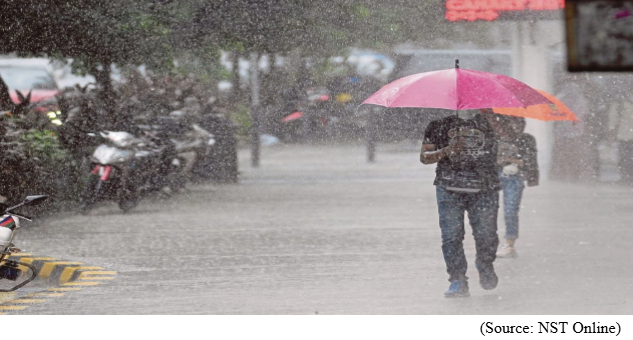
The La Niña phenomenon, expected to affect Malaysia between this month and year-end, could have a significant impact on the country.
Understanding La Niña and Malaysia’s monsoon connection
La Niña occurs when sea surface temperatures in the central and eastern Pacific Ocean cool below average, altering global wind and rainfall patterns (World Meteorological Organisation (WMO), 2025). In Southeast Asia, this typically translates into increased rainfall, cooler temperatures, and prolonged wet seasons. Malaysia, with its dual monsoon systems the Southwest Monsoon (May-September) and the Northeast Monsoon (November-March) is particularly sensitive to such fluctuations (MetMalaysia, 2025).
The convergence of the La Niña weather pattern and the Northeast Monsoon typically intensifies the rainy season, resulting in more intense rainfall, particularly on the east coast of Peninsular Malaysia and in some regions of Sabah and Sarawak. This interaction frequently results in heightened risks of flash floods, overflowing rivers, and unstable soil conditions. MetMalaysia has already warned that several regions face high flood risk, echoing conditions seen during the 2010 and 2020 La Niña events when Malaysia experienced widespread inundation and infrastructure damage (MetMalaysia, 2025).
La Niña occurs when sea surface temperatures in the central and eastern Pacific Ocean cool below average, altering global wind and rainfall patterns (World Meteorological Organisation (WMO), 2025). In Southeast Asia, this typically translates into increased rainfall, cooler temperatures, and prolonged wet seasons. Malaysia, with its dual monsoon systems the Southwest Monsoon (May-September) and the Northeast Monsoon (November-March) is particularly sensitive to such fluctuations (MetMalaysia, 2025).
The convergence of the La Niña weather pattern and the Northeast Monsoon typically intensifies the rainy season, resulting in more intense rainfall, particularly on the east coast of Peninsular Malaysia and in some regions of Sabah and Sarawak. This interaction frequently results in heightened risks of flash floods, overflowing rivers, and unstable soil conditions. MetMalaysia has already warned that several regions face high flood risk, echoing conditions seen during the 2010 and 2020 La Niña events when Malaysia experienced widespread inundation and infrastructure damage (MetMalaysia, 2025).
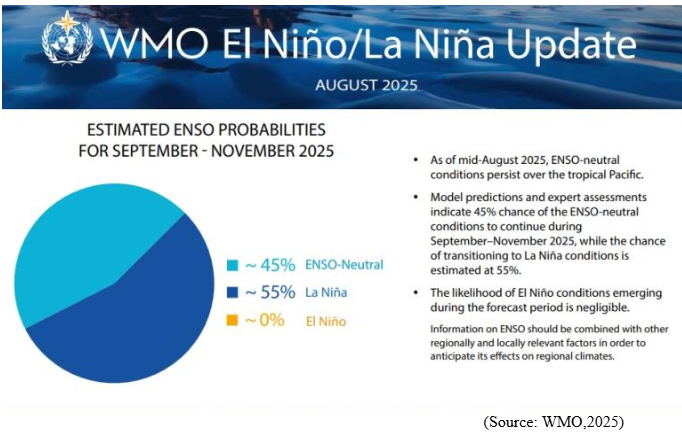
The estimated ENSO probabilities for September-November 2025
Environmental and forest impacts
Malaysia’s forests are deeply intertwined with its climate. While rainfall supports forest productivity, excessive water can disrupt ecological balance. During intense La Niña phases, prolonged soil saturation reduces oxygen availability to roots, weakening trees and increasing mortality. In steep terrain, persistent rain can trigger landslides and erosion, damaging forest structure and threatening communities near forest margins (Department of Irrigation and Drainage Malaysia (DID), 2017). Past flood events in states such as Pahang and Selangor have shown how deforestation combined with extreme rainfall can magnify disaster impacts.
La Niña also affects forest carbon dynamics. Tropical forests act as significant carbon sinks, absorbing CO₂ and moderating temperature. Yet, overly wet conditions can slow decomposition, alter nutrient cycling, and impact how carbon is stored. Waterlogging may reduce microbial activity, while persistent humidity increases risks of fungal infections and tree diseases, particularly in young reforestation areas (Food and Agriculture Organisation (FAO), 2010).
On the positive side, La Niña tends to reduce wildfire risk, providing relief for regions such as Sarawak and Kalimantan where dry-season peat fires are common. Cooler, wetter weather promotes natural regeneration and seedling survival in logged-over forests. If managed effectively, these conditions could aid forest recovery and enhance biodiversity resilience (ASEAN Specialised Meteorological Centre (ASMC), 2025).
Malaysia’s current outlook and preparedness
Forecasts from the ASEAN Specialised Meteorological Centre (ASMC) suggest that Southeast Asia may experience above-average rainfall from late 2025 to early 2026, consistent with the development of La Niña conditions (ASMC, 2025). MetMalaysia has echoed this outlook, projecting heavier rainfall episodes in flood-prone river basins across Johor, Kelantan, Terengganu, and parts of Sabah (MetMalaysia, 2025). Authorities have begun reinforcing flood-management systems and urging close monitoring of landslide-prone slopes.
However, scientists note that La Niña events now occur within the context of a warming global climate. Even as La Niña temporarily cools global temperatures, rising atmospheric energy means rainfall events can become more intense (WMO, 2025). For Malaysia, this suggests that future monsoon seasons may bring longer and heavier downpours, which will stress both natural ecosystems and human communities.
Building forest resilience in a wetter climate
To adapt, Malaysia must strengthen forest and watershed management practices. Maintaining continuous canopy cover and preventing excessive logging are key to stabilising soil and regulating water flow. Reforestation efforts should align with seasonal rainfall forecasts to optimise seedling survival while preventing erosion. Expanding remote-sensing and hydrological monitoring can help detect early signs of forest stress or flooding. Integrating climate and water-flow models would enable more precise early warning systems (MetMalaysia, 2025). Community education is equally vital, ensuring those living near forested slopes understand rainfall-related risks and adapt land use accordingly. Beyond immediate adaptation, La Niña reminds us that forest conservation is essential for climate resilience. Healthy forests absorb carbon, buffer floods, and sustain biodiversity. Investing in their protection enhances Malaysia’s ability to address both the short-term impacts of La Niña and the long-term realities of climate change.
Conclusion
La Niña may bring temporary coolness to the tropics, but its consequences for Malaysia’s forests are complex. As monsoon rains intensify, the balance between forest growth and degradation will depend on proactive management and scientific foresight. The coming months will test Malaysia’s preparedness for extreme rainfall, yet with sustainable forestry practices and community cooperation, the nation’s “green heart” can continue to thrive resiliently amid the rain and steadfast in a changing climate.
References
CARVALHO, M. (2025, September 18). More heavy rain and flooding expected in Oct, says MetMalaysia. The Star. https://www.thestar.com.my/news/nation/2025/09/19/more-heavy-rain-and-flooding-expected-in-oct-says-metmalaysia
Nurul Hidayah Bahaudin. (2025, October 20). La Nina expected to hit Malaysia from Oct to Dec [WATCH]. NST Online; New Straits Times. https://www.nst.com.my/news/nation/2025/10/1298526/la-nina-expected-hit-malaysia-oct-dec-watch
Regional Climate - Seasonal Outlook - ASMC. (2025, October 7). ASMC. https://asmc.asean.org/asmc-seasonal-outlook#Seasonal_Outlook
Forests and climate change adaptation in Asia Overview Climate change and its impacts on forest ecosystems in Asia. (2010). https://www.fao.org/fileadmin/templates/rap/files/NRE/Forests_and_climate_change_adaptation_in_Asia.pdf
(2025). Myfundaction.org. https://myfundaction.org/news/ans-when-la-nina-brings-heavy-rains-to-malaysia
Department of Irrigation and Drainage. (2017). Water.gov.my. https://www.water.gov.my/index.php/pages/view/419
JABATAN METEOROLOGI MALAYSIA PUSAT IKLIM NASIONAL. (n.d.). https://www.met.gov.my/data/climate/tinjauancuacajangkapanjang.pdf
Malaysia’s forests are deeply intertwined with its climate. While rainfall supports forest productivity, excessive water can disrupt ecological balance. During intense La Niña phases, prolonged soil saturation reduces oxygen availability to roots, weakening trees and increasing mortality. In steep terrain, persistent rain can trigger landslides and erosion, damaging forest structure and threatening communities near forest margins (Department of Irrigation and Drainage Malaysia (DID), 2017). Past flood events in states such as Pahang and Selangor have shown how deforestation combined with extreme rainfall can magnify disaster impacts.
La Niña also affects forest carbon dynamics. Tropical forests act as significant carbon sinks, absorbing CO₂ and moderating temperature. Yet, overly wet conditions can slow decomposition, alter nutrient cycling, and impact how carbon is stored. Waterlogging may reduce microbial activity, while persistent humidity increases risks of fungal infections and tree diseases, particularly in young reforestation areas (Food and Agriculture Organisation (FAO), 2010).
On the positive side, La Niña tends to reduce wildfire risk, providing relief for regions such as Sarawak and Kalimantan where dry-season peat fires are common. Cooler, wetter weather promotes natural regeneration and seedling survival in logged-over forests. If managed effectively, these conditions could aid forest recovery and enhance biodiversity resilience (ASEAN Specialised Meteorological Centre (ASMC), 2025).
Malaysia’s current outlook and preparedness
Forecasts from the ASEAN Specialised Meteorological Centre (ASMC) suggest that Southeast Asia may experience above-average rainfall from late 2025 to early 2026, consistent with the development of La Niña conditions (ASMC, 2025). MetMalaysia has echoed this outlook, projecting heavier rainfall episodes in flood-prone river basins across Johor, Kelantan, Terengganu, and parts of Sabah (MetMalaysia, 2025). Authorities have begun reinforcing flood-management systems and urging close monitoring of landslide-prone slopes.
However, scientists note that La Niña events now occur within the context of a warming global climate. Even as La Niña temporarily cools global temperatures, rising atmospheric energy means rainfall events can become more intense (WMO, 2025). For Malaysia, this suggests that future monsoon seasons may bring longer and heavier downpours, which will stress both natural ecosystems and human communities.
Building forest resilience in a wetter climate
To adapt, Malaysia must strengthen forest and watershed management practices. Maintaining continuous canopy cover and preventing excessive logging are key to stabilising soil and regulating water flow. Reforestation efforts should align with seasonal rainfall forecasts to optimise seedling survival while preventing erosion. Expanding remote-sensing and hydrological monitoring can help detect early signs of forest stress or flooding. Integrating climate and water-flow models would enable more precise early warning systems (MetMalaysia, 2025). Community education is equally vital, ensuring those living near forested slopes understand rainfall-related risks and adapt land use accordingly. Beyond immediate adaptation, La Niña reminds us that forest conservation is essential for climate resilience. Healthy forests absorb carbon, buffer floods, and sustain biodiversity. Investing in their protection enhances Malaysia’s ability to address both the short-term impacts of La Niña and the long-term realities of climate change.
Conclusion
La Niña may bring temporary coolness to the tropics, but its consequences for Malaysia’s forests are complex. As monsoon rains intensify, the balance between forest growth and degradation will depend on proactive management and scientific foresight. The coming months will test Malaysia’s preparedness for extreme rainfall, yet with sustainable forestry practices and community cooperation, the nation’s “green heart” can continue to thrive resiliently amid the rain and steadfast in a changing climate.
References
CARVALHO, M. (2025, September 18). More heavy rain and flooding expected in Oct, says MetMalaysia. The Star. https://www.thestar.com.my/news/nation/2025/09/19/more-heavy-rain-and-flooding-expected-in-oct-says-metmalaysia
Nurul Hidayah Bahaudin. (2025, October 20). La Nina expected to hit Malaysia from Oct to Dec [WATCH]. NST Online; New Straits Times. https://www.nst.com.my/news/nation/2025/10/1298526/la-nina-expected-hit-malaysia-oct-dec-watch
Regional Climate - Seasonal Outlook - ASMC. (2025, October 7). ASMC. https://asmc.asean.org/asmc-seasonal-outlook#Seasonal_Outlook
Forests and climate change adaptation in Asia Overview Climate change and its impacts on forest ecosystems in Asia. (2010). https://www.fao.org/fileadmin/templates/rap/files/NRE/Forests_and_climate_change_adaptation_in_Asia.pdf
(2025). Myfundaction.org. https://myfundaction.org/news/ans-when-la-nina-brings-heavy-rains-to-malaysia
Department of Irrigation and Drainage. (2017). Water.gov.my. https://www.water.gov.my/index.php/pages/view/419
JABATAN METEOROLOGI MALAYSIA PUSAT IKLIM NASIONAL. (n.d.). https://www.met.gov.my/data/climate/tinjauancuacajangkapanjang.pdf
