Climate Change, Urban Trees, and Tornadoes: What’s Really Happening?
Introduction
Climate change is causing more extreme weather, and one of the results is an increase in tornado activity. This shift affects not just rural forests, but also urban areas with trees. Urban trees, while essential for the environment, are now facing more challenges than ever due to rising temperatures, changing rainfall patterns, and stronger storms. Urban areas are heating up faster than rural ones. As cities grow, the amount of concrete, asphalt, and buildings increases, trapping heat and contributing to global warming. This phenomenon, known as the urban heat island effect, causes cities to be significantly warmer than their surrounding areas. These higher temperatures contribute to stronger and more intense storms. When storms become severe, they can lead to stronger winds, including tornadoes, which can cause significant damage to urban trees. Trees in cities offer numerous benefits, including cooling the air, reducing pollution, and helping to manage stormwater. However, they also face unique stressors. Urban trees often struggle with compacted soil, limited root space, and pollution. In addition, these trees are not always native to the area, making them less suited to cope with the changing environment brought by climate change. Tornadoes, while rare in some urban areas, are becoming more common in places that weren’t traditionally prone to them.
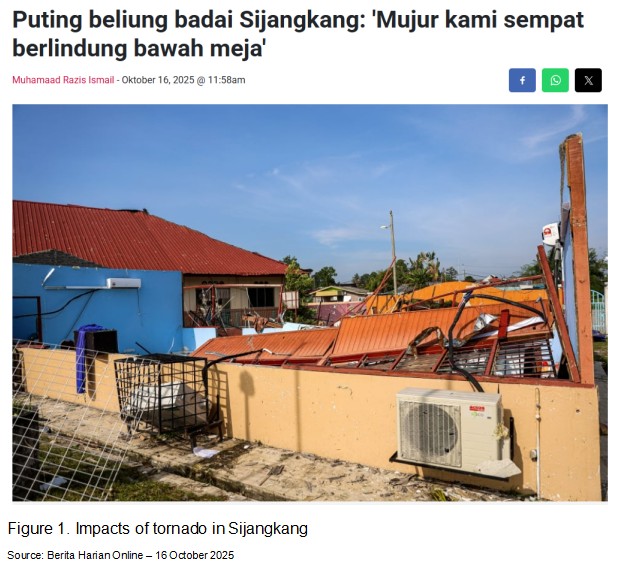
The high winds and rapid pressure changes caused by tornadoes can uproot or break even the strongest trees. In cities, where trees are often planted in small spaces surrounded by concrete, their roots are not deep enough to anchor them against such forces. Climate change is also altering the patterns of tornado formation. Rising temperatures and shifting atmospheric conditions have contributed to an increase in the frequency and severity of tornadoes. Areas that once had mild weather are now seeing extreme storms. This adds to the pressure on urban trees, which are already struggling to survive in harsh conditions. Yesterday, a report came in about a tornado in Sijangkang, a region not traditionally associated with such extreme weather. This event serves as a wake-up call. Tornadoes are becoming more unpredictable, even in areas where they were once rare. This highlights the growing importance of understanding how extreme weather, including tornadoes, will impact urban trees in the future.
What Can We Do?
Improve Tree Planting Practices:
When planting trees in urban areas, it’s essential to choose species that are resilient to extreme weather conditions, including strong winds. Native species are often better suited to handle local weather patterns and are more likely to survive tornadoes. Additionally, planting trees in locations that allow for proper root growth, such as less compacted soil, will help them anchor better against storms.
Strengthen Urban Forests:
Urban planners must ensure that cities invest in green infrastructure that supports the health of trees. This includes creating larger green spaces, reducing the use of concrete around trees, and implementing better irrigation systems. Stronger, healthier trees will be better equipped to withstand extreme weather events, including tornadoes.
Tornado Preparedness for Urban Areas:
Cities need to have better preparedness plans for extreme weather, including tornadoes. This could involve creating early warning systems for residents and ensuring that trees and structures are properly maintained to reduce damage. Furthermore, it’s essential to establish clear protocols for removing hazardous or unstable trees before a storm strikes.
Reforestation and Urban Green Initiatives:
Active reforestation efforts and the establishment of more urban forests can help mitigate the effects of climate change. These green areas not only improve the environment but also act as natural barriers against extreme weather. Creating more green spaces in urban environments could help reduce the overall impact of tornadoes and other storms.
Public Awareness and Education:
Educating the public about the importance of trees and their role in climate adaptation efforts is essential. People can be encouraged to plant trees, protect existing ones, and support local initiatives that enhance urban forestry.
Conclusion
Urban trees are essential for cities, as they provide shade, reduce pollution, and manage stormwater. However, as tornadoes and other extreme weather events become more frequent due to climate change, cities must adapt accordingly. The recent tornado in Sijangkang is a stark reminder of the unpredictable nature of weather today. By taking steps to improve tree planting practices, strengthen urban forests, and prepare for severe weather, we can help ensure that urban trees continue to thrive, even in the face of increasing storms and tornadoes.
Climate change is causing more extreme weather, and one of the results is an increase in tornado activity. This shift affects not just rural forests, but also urban areas with trees. Urban trees, while essential for the environment, are now facing more challenges than ever due to rising temperatures, changing rainfall patterns, and stronger storms. Urban areas are heating up faster than rural ones. As cities grow, the amount of concrete, asphalt, and buildings increases, trapping heat and contributing to global warming. This phenomenon, known as the urban heat island effect, causes cities to be significantly warmer than their surrounding areas. These higher temperatures contribute to stronger and more intense storms. When storms become severe, they can lead to stronger winds, including tornadoes, which can cause significant damage to urban trees. Trees in cities offer numerous benefits, including cooling the air, reducing pollution, and helping to manage stormwater. However, they also face unique stressors. Urban trees often struggle with compacted soil, limited root space, and pollution. In addition, these trees are not always native to the area, making them less suited to cope with the changing environment brought by climate change. Tornadoes, while rare in some urban areas, are becoming more common in places that weren’t traditionally prone to them.
The high winds and rapid pressure changes caused by tornadoes can uproot or break even the strongest trees. In cities, where trees are often planted in small spaces surrounded by concrete, their roots are not deep enough to anchor them against such forces. Climate change is also altering the patterns of tornado formation. Rising temperatures and shifting atmospheric conditions have contributed to an increase in the frequency and severity of tornadoes. Areas that once had mild weather are now seeing extreme storms. This adds to the pressure on urban trees, which are already struggling to survive in harsh conditions. Yesterday, a report came in about a tornado in Sijangkang, a region not traditionally associated with such extreme weather. This event serves as a wake-up call. Tornadoes are becoming more unpredictable, even in areas where they were once rare. This highlights the growing importance of understanding how extreme weather, including tornadoes, will impact urban trees in the future.
What Can We Do?
Improve Tree Planting Practices:
When planting trees in urban areas, it’s essential to choose species that are resilient to extreme weather conditions, including strong winds. Native species are often better suited to handle local weather patterns and are more likely to survive tornadoes. Additionally, planting trees in locations that allow for proper root growth, such as less compacted soil, will help them anchor better against storms.
Strengthen Urban Forests:
Urban planners must ensure that cities invest in green infrastructure that supports the health of trees. This includes creating larger green spaces, reducing the use of concrete around trees, and implementing better irrigation systems. Stronger, healthier trees will be better equipped to withstand extreme weather events, including tornadoes.
Tornado Preparedness for Urban Areas:
Cities need to have better preparedness plans for extreme weather, including tornadoes. This could involve creating early warning systems for residents and ensuring that trees and structures are properly maintained to reduce damage. Furthermore, it’s essential to establish clear protocols for removing hazardous or unstable trees before a storm strikes.
Reforestation and Urban Green Initiatives:
Active reforestation efforts and the establishment of more urban forests can help mitigate the effects of climate change. These green areas not only improve the environment but also act as natural barriers against extreme weather. Creating more green spaces in urban environments could help reduce the overall impact of tornadoes and other storms.
Public Awareness and Education:
Educating the public about the importance of trees and their role in climate adaptation efforts is essential. People can be encouraged to plant trees, protect existing ones, and support local initiatives that enhance urban forestry.
Conclusion
Urban trees are essential for cities, as they provide shade, reduce pollution, and manage stormwater. However, as tornadoes and other extreme weather events become more frequent due to climate change, cities must adapt accordingly. The recent tornado in Sijangkang is a stark reminder of the unpredictable nature of weather today. By taking steps to improve tree planting practices, strengthen urban forests, and prepare for severe weather, we can help ensure that urban trees continue to thrive, even in the face of increasing storms and tornadoes.