

The Future of Ecosystem Services (ES) in Urban Areas in the Malaysian Context
INTRODUCTION
Urban areas, often perceived as concrete jungles, are intricate ecosystems that provide a myriad of essential services crucial for human well-being and environmental sustainability. These "ecosystem services" encompass the benefits that humans derive from natural processes, ranging from clean air and water to climate regulation and recreational opportunities. In the rapidly urbanising landscape of Malaysia, the recognition and integration of these services into urban planning and development are not merely desirable but imperative for fostering resilient, liveable, and sustainable cities.
Malaysia's urban centres have experienced unprecedented growth over the past few decades, with over 77% of its population residing in cities as of 2023. This rapid expansion, while driving economic progress, has often come at the expense of natural green spaces, wetlands, and forests, leading to significant environmental challenges. Issues such as increased urban heat island effects, heightened flood risks due to impervious surfaces, and a decline in urban biodiversity are increasingly prevalent. Historically, urban development priorities have often sidelined nature, resulting in the devaluation of the critical services that ecosystems provide.
THE KEY POINT WE SHOULD KNOW ABOUT ES.
There is a growing understanding of the multi-faceted contributions of urban ecosystems. Regulating services, for instance, are vital for Malaysian cities. Urban forests and green spaces play a crucial role in air purification, absorbing pollutants and releasing oxygen, and mitigating the urban heat island effect through shade and evapotranspiration. They are also instrumental in stormwater management, reducing runoff and flood risks by allowing water infiltration, a critical function in a country prone to flash floods. Provisioning services, although less prominent in urban areas, still include the provision of fresh water through protected watersheds and, in some cases, urban agriculture initiatives.
Cultural services are equally significant, offering urban dwellers opportunities for recreation, mental rejuvenation, and a connection with nature, which are essential for public health and well-being. Furthermore, urban green spaces serve as vital habitats for biodiversity, supporting a wide range of flora and fauna, even within densely populated urban settings. However, studies show that urban wildlife in Kuala Lumpur is declining, highlighting the need for concerted conservation efforts and larger green spaces to protect species.
Looking ahead, the future of ecosystem services in Malaysian urban areas hinges on a paradigm shift towards nature-based solutions and integrated urban planning. Green infrastructure, encompassing elements like urban parks, green roofs, vertical gardens, and constructed wetlands, is emerging as a key strategy. These solutions not only provide ecological benefits but also enhance the aesthetic appeal and liveability of cities. For example, projects in Penang are already implementing street trees, rooftop gardens, and blue-green corridors to reduce surface temperatures and manage stormwater runoff, demonstrating practical applications of nature-based solutions for climate change adaptation.
CASE STUDY
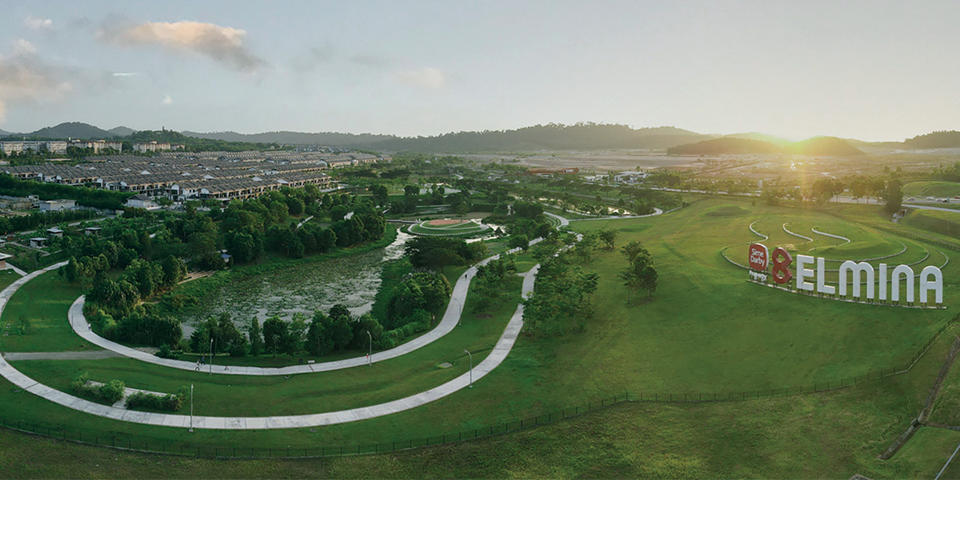
A prominent case study in Malaysia is Sime Darby Property's City of Elmina, which exemplifies the integration of urban biodiversity and nature-based solutions. Located adjacent to the Bukit Cerakah Forest Reserve, the City of Elmina features a 300-acre Central Park and the Elmina Rainforest Knowledge Centre (ERKC). Established in partnership with the Tropical Rainforest Conservation & Research Centre (TRCRC), ERKC supports long-term reforestation projects, nurtures native plant species, and provides hands-on biodiversity education for communities. This initiative aims to restore an urban rainforest, enhance urban biodiversity, mitigate climate change through carbon sequestration, and foster a deeper connection between residents and nature, showcasing a holistic approach to sustainable township development that can support the initiative of ES in urban areas.
Policy and governance will play a pivotal role. While Malaysia has policies supporting sustainable urban development, such as the National Physical Plan, their enforcement and inter-agency collaboration need strengthening to prevent the deforestation of urban forests and ensure consistent green space management. There is also a significant opportunity for increased community engagement and citizen science initiatives, empowering residents to participate in documenting and protecting urban biodiversity, thereby fostering a deeper connection with nature. Technological advancements, including thoughtful city planning and the use of IoT for monitoring green infrastructure, can further optimise the delivery and maintenance of these services.
CONCLUSION
The future of ecosystem services in Malaysian urban areas is bright but contingent on a deliberate and integrated approach. Moving beyond conventional grey infrastructure, embracing nature-based solutions, strengthening policy enforcement, fostering community participation, and leveraging technology will be crucial. By valuing and investing in our urban ecosystems, Malaysia can build cities that are not only economically vibrant but also ecologically resilient, socially equitable, and truly livable for generations to come. This holistic vision is fundamental to ensuring that urban development contributes positively to both human well-being and the health of the planet.
REFERENCES
ClimaHealth.info. (2023). Implementing nature-based solutions through multi-sector, multi-organisation collaboration to enhance urban resilience to climate change in Malaysia. Retrieved from https://climahealth.info/resource-library/mplementing-nature-based-solutions-through-multi-sector-multi-organisation-collaboration-to-enhance-urban-resilience-to-climate-change-in-malaysia/.
IFLA Asia-Pacific. (2023). Green Infrastructure: A trend taking root in our nation. Retrieved from https://iflaapr.org/news/green-infrastructure-trend-taking-root-our-nation.
IIUM Journals. (2024). Evaluation of ecosystem services contributions on urban forests in Kuala Lumpur. Retrieved from https://journals.iium.edu.my/kaed/index.php/japcm/article/download/697/638/2898.
The Edge Malaysia. (2024). Championing Urban Biodiversity for People and the Planet. Retrieved from https://theedgemalaysia.com/content/advertise/championing-urban-biodiversity-for-people-and-the-planet.
United Nations Development Programme.(2021). Don't deny the Dodo: Exploring urban biodiversity as a nature-based solution for ecosystem restoration. Retrieved from https://www.undp.org/malaysia/blog/dont-deny-dodo-exploring-urban-biodiversity-nature-based-solution-ecosystem-restoration.
Source: https://theedgemalaysia.com/
