

Enhancing Climate Adaptation through Food Waste Composting
INTRODUCTION
Malaysia generates 8.3 million metric tons of food waste annually, equivalent to 259.82 kg per person. Every day, approximately 17,000 tons of food waste are disposed of, of which 24% is still edible. Wasting food also means wasting the water and energy required to grow, harvest, transport, and package it. According to the Malaysia Solid Waste and Public Cleansing Management Act 2007 (Act 672), food waste disposal falls under the category of solid waste disposal, which includes techniques such as destruction, incineration, deposition, or decomposition. The two most common methods for disposing of food waste are landfilling and incineration. When compared to other organic waste sources, such as wood, paper, and yard trimmings, food waste has the highest fraction of decomposable, degradable organic carbon (C), which drives the highest rate constant for greenhouse gas emission in landfills (2,708 kg CO2e/dry t).
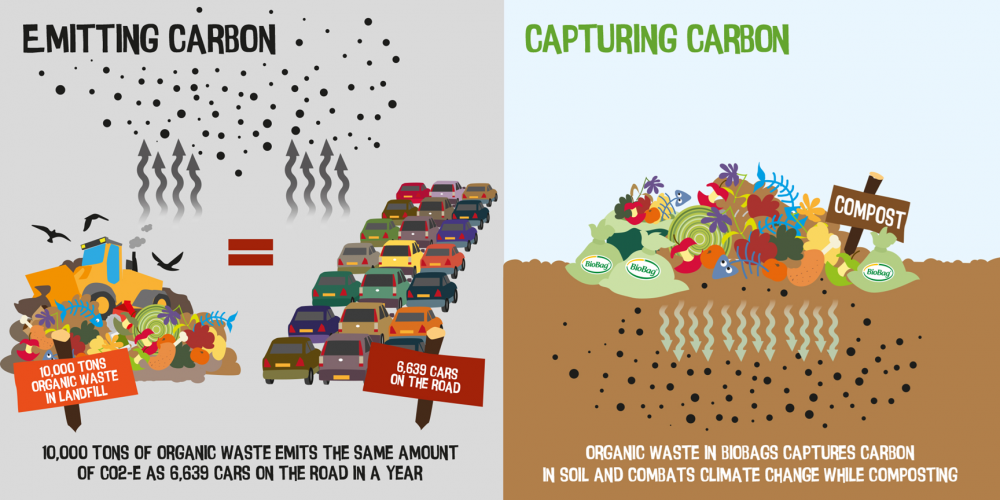
Methane is a greenhouse gas that is much more potent than carbon dioxide and is also produced during the degradation of food waste in landfills. Eliminating food waste might lower between 6% and 8% of total greenhouse gas emissions caused by humans. In the United States alone, the production and loss of food result in greenhouse gas emissions equivalent to those of 32.6 million cars. The average lifecycle greenhouse gas emissions from food waste are expected to be 315 g CO2e per capita in high-income countries and 124 g CO2e per capita worldwide. Composting offers a low-cost, climate-friendly solution by diverting organic waste from landfills, which drastically reduces methane generation. Composting food waste can reduce the volume of solid waste disposed of in landfills, leading to a decrease in greenhouse gas emissions that contribute to climate change.
COMPOSTING MATTERS
Composting involves a sequence of aerobic or anaerobic transformations of organic materials facilitated by microbes, resulting in a stable product referred to as compost. Composting provides several environmental benefits, including decreasing landfill waste volume, mitigating unpleasant odours from anaerobic decomposition of organic materials, lowering methane emissions, and converting organic waste into nutrient-rich soil supplements. A landfill typically requires closure upon reaching capacity; however, segregating food waste for composting can extend the landfill's lifespan and reduce the need for additional land area for new landfills. Composting can be carried out in two conditions: either aerobic or anaerobic. Aerobic composting occurs in the presence of oxygen, whereas anaerobic composting takes place in the absence of oxygen. Windrow composting and vermicompost are examples of aerobic compost, while bokashi compost is an example of anaerobic compost.
Compost supplements soil structure, water retention, nitrogen cycling, and organic matter, all of which contribute to increased soil fertility. Secondary macronutrients, including calcium (Ca), magnesium (Mg), and sulfur (S), as well as vital nutrients like nitrogen (N), phosphorus (P), and potassium (K), are slowly released from the organic materials in compost. Compost also increases microbial activity in soil, which aids in significant soil processes, such as nitrogen mineralisation, phosphorus solubilization, and organic matter decomposition. Soil carbon sequestration, the process of absorbing and storing carbon in the soil, is crucial for reducing atmospheric CO2 levels. One of the promising strategies for soil carbon sequestration is the use of compost. These methods lower greenhouse gas emissions while also encouraging the development of sustainable agricultural systems that are more resilient to the effects of climate change.
CHALLENGES IN COMBATING FOOD WASTE
In Malaysia, the Municipal Council of Petaling Jaya (MBPJ) has implemented strategies in combating food waste through a program under Agenda Petaling Jaya 2. MBPJ's food waste treatment model is an excellent example for other authorities in Malaysia. Local tertiary institutions, including Universiti Malaya and Universiti Putra Malaysia, have established a pilot-scale food waste digester capable of processing 100 kilogrammes of food waste per day as part of their Zero Waste Initiative. Another in a suburban community, Felda Taib Andak (FTA), a pilot composting site is being set up, targeting a large availability of easily degradable organic materials, such as food waste and palm oil biomass. This project is supported by Iskandar Malaysia’s Low Carbon Society Blueprint. Through this project, 77.64% of greenhouse gas emissions are reduced and revenue is generated for the community.
If you plan to start practising composting, there are several challenges that you need to look at. Compost has the potential to release foul odours and leachate due to poor compost management. Effective management and systems, such as installing a simple leachate trap and maintaining a balanced compost mixture, can help mitigate this challenge. Next, limitation can also occur in terms of space to conduct the compost. This can be diminished by practising small-scale composting, such as bokashi bins, vermicomposting units, or aerobic kitchen composters. This type of composting requires a small setup space, making it suitable even for those living in high-rise buildings. Another solution is to set up a centralised community compost station if you live in a residential area.
CONCLUSION
Composting may seem like a small effort in combating climate change, but it can have a significant impact. Turning food waste into valuable compost can enrich soil with essential nutrients and prevent it from decomposing in landfills, which releases harmful emissions into the atmosphere. Enriching the soil can lead to healthier crops, which helps improve food security. It also improves the soil’s ability to retain water, especially during dry seasons, and makes the land more resilient to disasters such as flash floods. Composting can be initiated at the home or municipal level; it’s a simple, low-cost initiative that's great for climate adaptation.
Source: https://biobagworld.com.au/
