

Valorization of Agri-Food Waste and ESG: Sustainable Solutions for the Future of Nature and Economy
INTRODUCTION
In the post-pandemic era marked by uncertainty, Environmental, Social, and Governance (ESG) principles have become an increasingly strategic priority for investors, governments, and society at large. Malaysia is moving in line with regional ESG aspirations, but one solution that remains underexplored is the valorisation of agri-food waste. While ESG discussions often focus on green technology, renewable energy, and sustainable investments, managing agri-food waste through valorisation emerges as a holistic and high-impact driver of change.
Studies show that Malaysia generates more than 17,000 tons of food waste daily, accounting for 44.5% of the total solid waste composition. Of this amount, over 60% is directly suitable for valorisation, yet the formal recovery rate remains below 5%. Instead, most of this waste is disposed of in landfills, contributing to methane emissions, a greenhouse gas 25 times more potent than carbon dioxide. This not only undermines the country’s climate goals but also adds pressure to an already strained solid waste management system, especially in urban and peri-urban areas.
Agri-food waste valorisation, which includes producing organic fertilisers, bioenzymes, biochar, and bio-extracts from agricultural residues, food processing by-products, and unsold food, is a proven effective carbon balancing method. Research from Japan and Korea shows that continuous application of valorised products can increase soil carbon content by up to 28% within five years. Soils enriched with stable organic matter exhibit improved water retention, reduced dependence on chemical inputs, and the activation of essential soil microbes, promoting agroecosystem sustainability. These benefits align strongly with the environmental component of ESG frameworks.
SOCIAL AND GOVERNMENT ROLES
From a social perspective, agri-food waste valorisation technologies are inclusive and democratise sustainable solutions. In several locations in Selangor, community-based agri-food waste recovery systems have successfully engaged diverse groups, including housewives, students, food operators, and informal waste collectors, to generate micro-income while reducing household carbon footprints. For example, a pilot project in Shah Alam reduced 12 tons of food waste in just three months. It generated over RM5,000 in value from bioenzyme and organic fertiliser products for local use.
Governance-wise, integrating agri-food waste valorisation into corporate and local government ESG policies enables more concrete and data-driven impact reporting. Various standards, such as the Global Reporting Initiative (GRI) and Sustainability Accounting Standards Board (SASB), now recognise food waste reduction and greenhouse gas mitigation as key sustainability performance indicators. Companies adopting agri-food waste recovery systems in cafeterias, farms, or supply chains can directly report contributions to Sustainable Development Goals (SDG) 12 (Responsible Consumption and Production) and 13 (Climate Action), thereby improving ESG ratings and investor confidence.
Malaysia has unique advantages to lead tropical agri-food waste valorisation technologies by leveraging local feedstocks such as wet market waste, palm oil residues, fish bones, livestock manure, and bamboo biochar. These materials accelerate degradation rates and produce high-quality organic products with nutrient profiles meeting national fertiliser standards. For instance, laboratory analysis of fish bone-based biofertilizers shows water-soluble phosphorus content exceeding 2.5%, suitable for high-value crops like chilli, herbs, and leafy vegetables.
Investing in agri-food waste valorisation also generates economic returns. It is estimated that processing one ton of food waste can save RM250 in disposal costs and generate between RM300 and RM600 in organic product value if it is appropriately processed. More interestingly, if just 20% of Malaysia’s daily food waste is valorised, the country could save over RM300 million annually while easing pressure on 170 active landfills. This represents a largely untapped opportunity in the circular economy.
In terms of climate adaptation, valorised agri-food products play a crucial role. Soils receiving consistent organic inputs become more resilient to erosion, flooding, and extreme weather shocks. This sustainable approach aligns with the National Green Technology Roadmap and Agrofood Policy 2.0. Valorised outputs are not merely agricultural inputs but dynamic climate assets.
CONCLUSION
Hence, it is timely to elevate agri-food waste valorisation as a national ESG strategy because it encompasses the three core ESG pillars: reducing environmental burdens, empowering grassroots communities socially, and ensuring transparency in governance through data and impact reporting. In a world racing toward high-impact technologies, the real solution to climate change, food security, and sustainable economic development may well be hidden in agri-food waste, awaiting wise recovery and valorization.
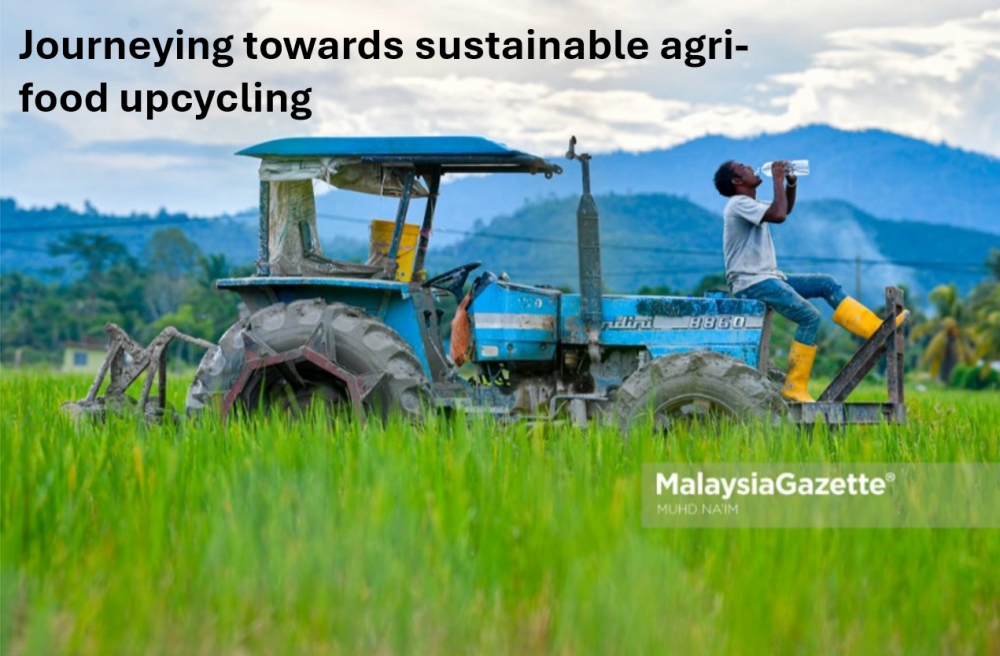
Source: https://malaysiagazette.com/2024/05/15/journeying-towards-sustainable-agri-food-upcycling/
