

Heartbreak on the Highway: Malaysia
INTRODUCTION
On May 11, 2025, a heart-wrenching tragedy occurred on Malaysia’s East-West Highway when a five-year-old baby elephant was struck and killed by a lorry. The collision not only took the life of the young elephant but also left a mother in visible anguish, standing beside her dead calf for hours. This emotional scene, captured on video, has since spread across social media, igniting public outrage and raising urgent questions about the protection of wildlife in Malaysia. The accident is part of a larger, increasingly prevalent issue in Malaysia: the growing number of wildlife-vehicle collisions. As roads and highways continue to expand through forested regions, the risk of such tragic incidents increases, particularly for large mammals like elephants, which are already endangered. These incidents are not only heartbreaking but also expose the larger failure of the infrastructure to adequately account for the country's wildlife needs. In light of this, the case of the baby elephant serves as a stark reminder of the urgent need for wildlife corridors, designated areas where animals can safely cross busy roads throughout Malaysia. The death of this young elephant is not an isolated case. It highlights the pressing need for policy changes, infrastructure reevaluation, and intensified conservation efforts to prevent further loss of life and ensure the safety of endangered wildlife in Malaysia. This tragedy demands immediate action to implement wildlife crossings and enhance road safety for animals nationwide.
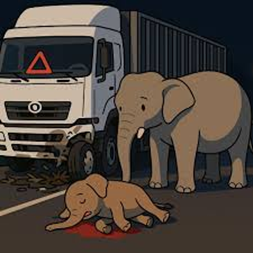
(Source: TikTok @FirdausNawi, (2025)
THE INCIDENT AND ITS AFTERMATH
The tragic event unfolded early in the morning when a lorry driver, transporting poultry, encountered a large adult elephant on the roadside. Despite taking precautions, the driver continued on the road, unaware that a calf was emerging from the forest. The impact was fatal for the baby elephant. The lorry driver, visibly distressed, immediately contacted local authorities to report the accident. However, the mother elephant remained at the scene for nearly five hours, attempting to rescue her calf. Her grief, an unmistakable sign of the strong emotional bond elephants share, highlighted the severity of the situation. In the aftermath, local authorities and wildlife experts arrived to assess the situation and remove the calf. The driver, deeply shaken by the event, expressed that such accidents could be avoided with proper infrastructure. The incident drew significant media attention, with the public calling for greater safety measures to protect wildlife on highways, especially elephants, which are among the most endangered species in Malaysia (The Star, 2025).
THE BROADER CONTEXT: WILDLIFE MORTALITY ON MALAYSIAN ROADS
This tragic incident is a part of a larger and growing problem of wildlife mortality on Malaysia’s roads. Between 2020 and 2024, there were over 2,360 reported incidents of wildlife being killed by vehicles, including endangered species such as tigers, tapirs, and elephants. These figures suggest that the wildlife-vehicle collision issue is not just a one-time event, but a persistent and alarming trend with profound implications for biodiversity conservation. In 2024 alone, over 522 roadkill incidents were recorded, with elephants particularly vulnerable due to their size and habits of moving through areas intersected by roads. The increase in infrastructure development, particularly highways that cut through critical wildlife habitats, has made it more difficult for animals to move between forests safely, thereby exacerbating the risk of such collisions (Bastin et al., 2019). Elephants, whose natural migration routes often intersect with human-made roads, are especially susceptible to such tragic incidents. Elephants have been involved in road accidents across Peninsular Malaysia, with at least eight elephants killed between 2020 and 2025. This includes the tragic death of the calf on the East-West Highway, which occurred in a region heavily frequented by elephants. The death toll continues to rise, emphasising the urgent need for more effective measures to protect wildlife and preserve their habitats (The Vibes, 2025).
THE ROLE OF INFRASTRUCTURE IN WILDLIFE SAFETY
The expansion of road networks, particularly in ecologically sensitive regions, has had a profound impact on wildlife. Roads, highways, and railways effectively fragment natural habitats, creating physical barriers that prevent animals from moving freely across landscapes. As a result, animals, including gigantic mammals like elephants, are forced to navigate dangerous roads, leading to an increase in incidents of wildlife collisions. Studies have shown that roads can affect mammal populations up to 5 kilometers from the road, disrupting their natural movement patterns and limiting their access to food, water, and breeding areas. The situation is exacerbated by the fact that roads often cut through important wildlife corridors, further isolating populations and reducing genetic diversity (Jackson et al., 2021). These disruptions not only lead to fatalities but also contribute to long-term declines in wildlife populations. To mitigate this issue, experts have recommended the construction of wildlife crossings, specially designed corridors that allow animals to cross roads safely. These can include underpasses, overpasses, and tunnels that connect fragmented habitats. Such infrastructure solutions have been successfully implemented in other countries, offering a model for Malaysia to follow. Additionally, measures such as speed bumps, rumble strips, and motion detection systems can help reduce roadkill by alerting drivers to the presence of animals (McDonald et al., 2021).
PUBLIC RESPONSE AND CALL TO ACTION
The tragic footage of the grieving mother elephant has sparked widespread public concern and calls for action. Conservation organizations, such as WWF-Malaysia, have emphasized the importance of integrating wildlife-friendly infrastructure into Malaysia’s road networks. WWF-Malaysia has called on the government to fast-track the implementation of wildlife crossings and ensure that roads in wildlife-rich areas are designed to minimize the risk of animal fatalities (WWF-Malaysia, 2025). The public response has been overwhelmingly supportive of these initiatives. Many Malaysians are advocating for stricter regulations to protect endangered species and prevent further loss of life. The incident has also prompted discussions about the ethical responsibility of striking a balance between infrastructure development and conservation efforts. The need for a comprehensive strategy to address wildlife roadkill is now more apparent than ever, with calls for a nationwide effort to protect Malaysia’s biodiversity while meeting the demands of development.
CONCLUSION
The death of the baby elephant and the heartbreaking response of the mother serve as a tragic reminder of the urgent need to address the issue of wildlife roadkill in Malaysia. As infrastructure continues to expand, wildlife conservation must become an integral part of the planning process. Implementing wildlife crossings, improving road design, and enforcing stricter regulations will help protect endangered species and ensure the safety of wildlife in Malaysia. The time to act is now, to prevent further tragedies and to secure a future where both humans and wildlife can coexist harmoniously.
REFERENCES
Bastin, J.-F., et al., (2019). The global tree restoration potential. Science, 365(6448), 76–79.
Jackson, S. F., & Fahrig, L. (2011). Relative effects of road mortality and decreased connectivity on population genetic diversity. Evolutionary Applications, 4(5), 629-638.
The Star. 2025. https://www.thestar.com.my/news/nation/2025/05/12/calls-for-more-wildlife-protection-measures-after-elephant-tragedy
The Vibes. 2025. https://www.thevibes.com/articles/news/108104/over-2300-wild-animals-killed-in-road-accidents-since-2020-says-minister
WWF-Malaysia. (2025, May 17). Media Release: Paving the Way for Wildlife-friendly Roads in Malaysia. WWF-Malaysia.
