

Forestry Beyond Timber: A Sustainable Future in Malaysia
INTRODUCTION
Malaysia is home to some of the world’s most diverse rainforests, including the tropical rainforests of Borneo and the Taman Negara National Park. These forests support a wide range of wildlife, such as orangutans, Malayan tigers, and hornbills. Additionally, forests help regulate temperatures, store carbon, and maintain clean water supplies, making them essential for environmental stability. Forests are often seen as sources of timber, but they provide much more than just wood. In Malaysia, forests play a crucial role in supporting biodiversity, regulating the climate, and contributing to the livelihoods of local communities. Sustainable forestry goes beyond logging and conserves natural resources while ensuring long-term benefits for people and the environment.
MOVING BEYOND TIMBER: EXPLORING SUSTAINABLE ALTERNATIVES
1. Eco-Tourism: A Green Economic Opportunity
One of the most promising alternatives to timber extraction is ecotourism. Malaysia’s natural beauty attracts tourists worldwide, offering opportunities for nature-based tourism. For instance, Taman Negara, one of the oldest rainforests in the world, draws thousands of visitors each year who come for jungle trekking, canopy walks, and river cruises. Similarly, Sabah’s Sepilok Orangutan Rehabilitation Centre allows tourists to see endangered orangutans up close while supporting conservation efforts. Eco-tourism generates revenue for local communities and encourages the preservation of forests. A study by the World Travel & Tourism Council (WTTC) found that ecotourism in Malaysia contributes significantly to rural economies while minimizing environmental harm. By investing in sustainable tourism infrastructure and promoting responsible travel, Malaysia can reduce its reliance on timber while creating jobs and preserving nature.
2. Non-Timber Forest Products (NTFPs): An Untapped Resource
Forests offer many valuable products beyond timber. Non-timber forest products (NTFPs) include medicinal plants, honey, bamboo, rattan, and wild fruits. Indigenous communities, such as the Orang Asli in Peninsular Malaysia and the Dayak in Sarawak, have relied on these products for centuries. For example, gaharu (agarwood) is highly valued in the perfume and incense industries. Sustainable harvesting and plantation development of gaharu could provide economic benefits without damaging forests. Similarly, bamboo, known for its rapid growth and versatility, can be used for furniture, paper, and textiles. Encouraging small businesses to develop NTFP-based industries can reduce dependence on logging while promoting sustainable forest use.
3. Forest Conservation and Carbon Trading
Malaysia has made progress in forest conservation with initiatives such as the Central Forest Spine (CFS) project, which aims to connect fragmented forests and create wildlife corridors. Another innovative approach is carbon trading, where companies or governments pay for the protection of forests to offset their carbon emissions. For example, the Malaysian government has participated in the REDD+ (Reducing Emissions from Deforestation and Forest Degradation) program, which offers financial incentives for forest conservation. This initiative protects biodiversity and provides economic benefits to local communities.
Malaysia is home to some of the world’s most diverse rainforests, including the tropical rainforests of Borneo and the Taman Negara National Park. These forests support a wide range of wildlife, such as orangutans, Malayan tigers, and hornbills. Additionally, forests help regulate temperatures, store carbon, and maintain clean water supplies, making them essential for environmental stability. Forests are often seen as sources of timber, but they provide much more than just wood. In Malaysia, forests play a crucial role in supporting biodiversity, regulating the climate, and contributing to the livelihoods of local communities. Sustainable forestry goes beyond logging and conserves natural resources while ensuring long-term benefits for people and the environment.
MOVING BEYOND TIMBER: EXPLORING SUSTAINABLE ALTERNATIVES
1. Eco-Tourism: A Green Economic Opportunity
One of the most promising alternatives to timber extraction is ecotourism. Malaysia’s natural beauty attracts tourists worldwide, offering opportunities for nature-based tourism. For instance, Taman Negara, one of the oldest rainforests in the world, draws thousands of visitors each year who come for jungle trekking, canopy walks, and river cruises. Similarly, Sabah’s Sepilok Orangutan Rehabilitation Centre allows tourists to see endangered orangutans up close while supporting conservation efforts. Eco-tourism generates revenue for local communities and encourages the preservation of forests. A study by the World Travel & Tourism Council (WTTC) found that ecotourism in Malaysia contributes significantly to rural economies while minimizing environmental harm. By investing in sustainable tourism infrastructure and promoting responsible travel, Malaysia can reduce its reliance on timber while creating jobs and preserving nature.
2. Non-Timber Forest Products (NTFPs): An Untapped Resource
Forests offer many valuable products beyond timber. Non-timber forest products (NTFPs) include medicinal plants, honey, bamboo, rattan, and wild fruits. Indigenous communities, such as the Orang Asli in Peninsular Malaysia and the Dayak in Sarawak, have relied on these products for centuries. For example, gaharu (agarwood) is highly valued in the perfume and incense industries. Sustainable harvesting and plantation development of gaharu could provide economic benefits without damaging forests. Similarly, bamboo, known for its rapid growth and versatility, can be used for furniture, paper, and textiles. Encouraging small businesses to develop NTFP-based industries can reduce dependence on logging while promoting sustainable forest use.
3. Forest Conservation and Carbon Trading
Malaysia has made progress in forest conservation with initiatives such as the Central Forest Spine (CFS) project, which aims to connect fragmented forests and create wildlife corridors. Another innovative approach is carbon trading, where companies or governments pay for the protection of forests to offset their carbon emissions. For example, the Malaysian government has participated in the REDD+ (Reducing Emissions from Deforestation and Forest Degradation) program, which offers financial incentives for forest conservation. This initiative protects biodiversity and provides economic benefits to local communities.
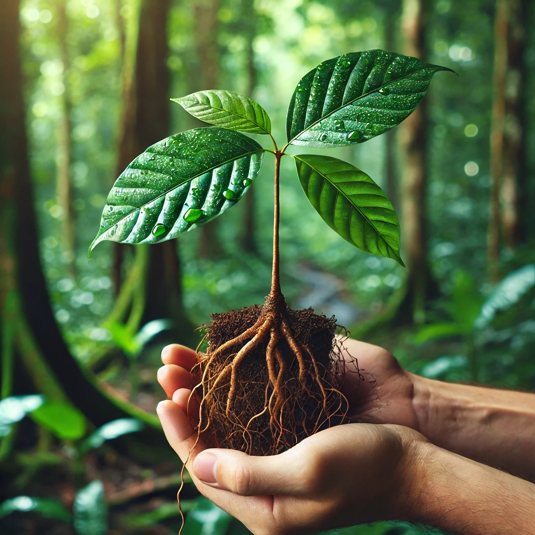
"A single seedling holds the promise of a thriving forest. Protect, restore, and sustain."
CHALLENGES AND SOLUTIONS
Despite the benefits of sustainable forestry, several challenges must be addressed. Illegal logging, land conversion for agriculture, and a lack of awareness remain significant threats to Malaysia’s forests. To mitigate these issues, the country must take proactive measures. Strengthening enforcement is crucial; laws against illegal logging should be strictly implemented, and penalties must be increased to deter offenders. Additionally, promoting sustainable practices can ensure responsible forest management. Certification schemes, such as the Malaysian Timber Certification Scheme (MTCS), ensure forestry activities adhere to environmental standards. Lastly, raising public awareness through educational campaigns can help highlight the importance of forest conservation and encourage consumers to choose sustainable products. By implementing these strategies, Malaysia can achieve a more sustainable and resilient forestry sector.
CONCLUSION
Forests in Malaysia provide more than just timber. The country can ensure a sustainable future while protecting its natural heritage by promoting ecotourism, non-timber forest products, carbon trading, and conservation programs. Investing in these alternatives will benefit the environment, support local communities, and boost the economy. The shift towards sustainable forestry requires collaboration between the government, businesses, and the public, but with exemplary efforts, Malaysia can lead the way in forest conservation and sustainable development.
REFERENCES
FAO. (2021). State of the World's Forests 2021: Forest Pathways for Green Recovery and Building Inclusive, Resilient Economies. Food and Agriculture Organization.
Malaysian Timber Certification Council (MTCC). (2021). MTCS Certification Scheme: Ensuring Sustainable Forest Management. Retrieved from www.mtcc.com.my
Shaharuddin, S., Zainal, A., & Lim, K. (2020). The Role of Non-Timber Forest Products in Indigenous Livelihoods: Case Studies from Malaysia. Forest Ecology and Management, 462, 118014.
UNDP. (2022). REDD+ in Malaysia: Progress and Future Plans. United Nations Development Programme.
World Travel & Tourism Council (WTTC). (2022). Tourism for a Sustainable Future: The Economic Impact of Eco-Tourism in Malaysia. WTTC Report.
WWF Malaysia. (2021). Central Forest Spine: Connecting Malaysia’s Green Corridor. Retrieved from www.wwf.org.my
Despite the benefits of sustainable forestry, several challenges must be addressed. Illegal logging, land conversion for agriculture, and a lack of awareness remain significant threats to Malaysia’s forests. To mitigate these issues, the country must take proactive measures. Strengthening enforcement is crucial; laws against illegal logging should be strictly implemented, and penalties must be increased to deter offenders. Additionally, promoting sustainable practices can ensure responsible forest management. Certification schemes, such as the Malaysian Timber Certification Scheme (MTCS), ensure forestry activities adhere to environmental standards. Lastly, raising public awareness through educational campaigns can help highlight the importance of forest conservation and encourage consumers to choose sustainable products. By implementing these strategies, Malaysia can achieve a more sustainable and resilient forestry sector.
CONCLUSION
Forests in Malaysia provide more than just timber. The country can ensure a sustainable future while protecting its natural heritage by promoting ecotourism, non-timber forest products, carbon trading, and conservation programs. Investing in these alternatives will benefit the environment, support local communities, and boost the economy. The shift towards sustainable forestry requires collaboration between the government, businesses, and the public, but with exemplary efforts, Malaysia can lead the way in forest conservation and sustainable development.
REFERENCES
FAO. (2021). State of the World's Forests 2021: Forest Pathways for Green Recovery and Building Inclusive, Resilient Economies. Food and Agriculture Organization.
Malaysian Timber Certification Council (MTCC). (2021). MTCS Certification Scheme: Ensuring Sustainable Forest Management. Retrieved from www.mtcc.com.my
Shaharuddin, S., Zainal, A., & Lim, K. (2020). The Role of Non-Timber Forest Products in Indigenous Livelihoods: Case Studies from Malaysia. Forest Ecology and Management, 462, 118014.
UNDP. (2022). REDD+ in Malaysia: Progress and Future Plans. United Nations Development Programme.
World Travel & Tourism Council (WTTC). (2022). Tourism for a Sustainable Future: The Economic Impact of Eco-Tourism in Malaysia. WTTC Report.
WWF Malaysia. (2021). Central Forest Spine: Connecting Malaysia’s Green Corridor. Retrieved from www.wwf.org.my
