

ESG and Sustainability: Driving Malaysia’s Ecotourism Industry Forward
INTRODUCTION
Malaysia is home to a wide range of natural environments, such as tropical rainforests, mountains, coasts, and wetlands, making it one of the top destinations for ecotourism. Well-known spots like Taman Negara, Borneo’s rainforests, and marine parks such as Pulau Redang attract visitors interested in outdoor activities like hiking, wildlife watching, and learning about local cultures. Ecotourism in Malaysia has grown quickly, attracting regional and international tourists increasingly drawn to sustainable travel. This form of tourism can generate income while protecting biodiversity, encouraging environmental care, and benefiting local communities. As a result, ecotourism is an integral part of Malaysia’s overall tourism strategy, contributing to the economy, conservation, and cultural preservation. However, increasing tourists also lead to more environmental and social pressures. Therefore, it is crucial to manage tourism sustainably. To ensure that ecotourism in Malaysia remains beneficial for both the environment and local communities, it is essential to adopt Environmental, Social, and Governance (ESG) principles. These principles help ecotourism operators balance economic growth with environmental protection, fair distribution of resources, and good governance, leading to a more resilient and sustainable industry.
INCORPORATING ESG CRITERIA IN ECOTOURISM
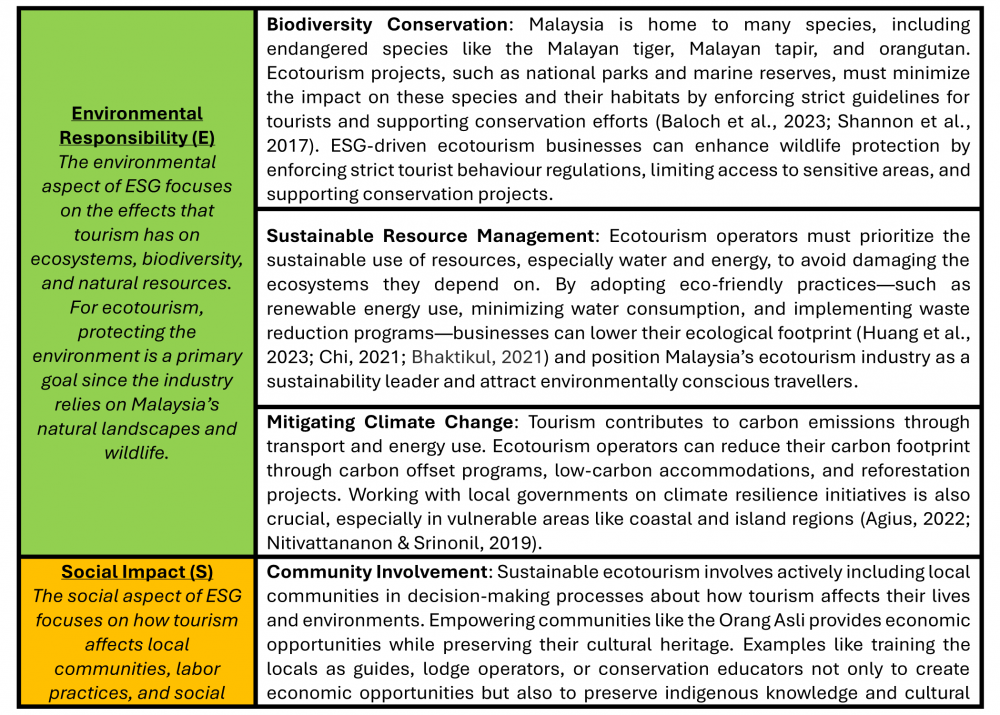
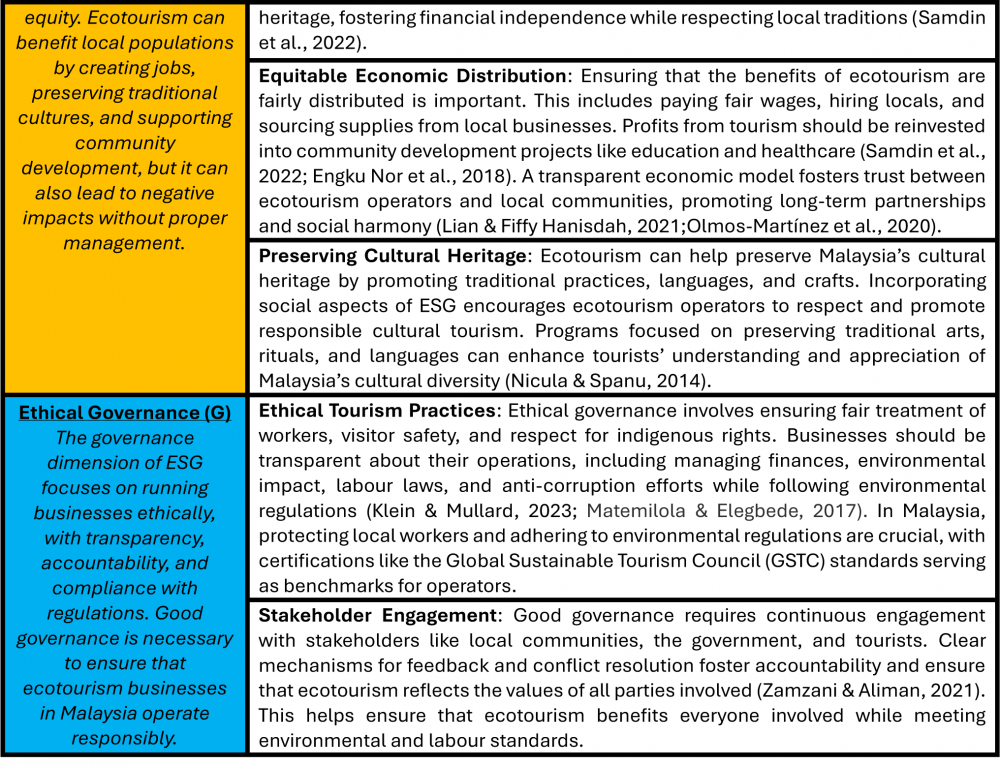
ESG is a framework used to measure a business's sustainability and ethical impact by looking at three key areas: environmental responsibility, social impact, and good governance. When the ESG approach is applied to ecotourism, it provides a strong foundation for promoting sustainability and ethical responsibility within the industry. The approach ensures that businesses focus on protecting the environment and promoting social equality and transparent operations. By doing so, ecotourism ventures can help safeguard natural ecosystems, improve the lives of local people, and uphold responsible business practices. Additionally, integrating ESG principles builds stakeholder trust, increases transparency, and aligns ecotourism with global sustainability goals.
Malaysia is home to a wide range of natural environments, such as tropical rainforests, mountains, coasts, and wetlands, making it one of the top destinations for ecotourism. Well-known spots like Taman Negara, Borneo’s rainforests, and marine parks such as Pulau Redang attract visitors interested in outdoor activities like hiking, wildlife watching, and learning about local cultures. Ecotourism in Malaysia has grown quickly, attracting regional and international tourists increasingly drawn to sustainable travel. This form of tourism can generate income while protecting biodiversity, encouraging environmental care, and benefiting local communities. As a result, ecotourism is an integral part of Malaysia’s overall tourism strategy, contributing to the economy, conservation, and cultural preservation. However, increasing tourists also lead to more environmental and social pressures. Therefore, it is crucial to manage tourism sustainably. To ensure that ecotourism in Malaysia remains beneficial for both the environment and local communities, it is essential to adopt Environmental, Social, and Governance (ESG) principles. These principles help ecotourism operators balance economic growth with environmental protection, fair distribution of resources, and good governance, leading to a more resilient and sustainable industry.
INCORPORATING ESG CRITERIA IN ECOTOURISM
ESG is a framework used to measure a business's sustainability and ethical impact by looking at three key areas: environmental responsibility, social impact, and good governance. When the ESG approach is applied to ecotourism, it provides a strong foundation for promoting sustainability and ethical responsibility within the industry. The approach ensures that businesses focus on protecting the environment and promoting social equality and transparent operations. By doing so, ecotourism ventures can help safeguard natural ecosystems, improve the lives of local people, and uphold responsible business practices. Additionally, integrating ESG principles builds stakeholder trust, increases transparency, and aligns ecotourism with global sustainability goals.
CHALLENGES AND OPPORTUNITIES FOR ESG IN MALAYSIA'S ECOTOURISM SECTOR
Incorporating ESG into Malaysia’s ecotourism industry offers many benefits, but there are also challenges. Many smaller ecotourism businesses, especially those in rural areas, may not have the resources to implement ESG frameworks fully. Additionally, balancing economic growth with environmental and social sustainability is problematic in areas where tourism is a significant income source. However, these challenges also create innovation, collaboration, and capacity-building opportunities. Public-private partnerships, government support, and international cooperation can help the ecotourism sector adopt ESG practices more effectively.
THE FUTURE OF ESG-DRIVEN ECOTOURISM IN MALAYSIA
Incorporating ESG principles into Malaysia’s ecotourism industry is essential for ensuring long-term sustainability. Malaysia can become a leader in responsible tourism by focusing on environmental conservation, social equity, and good governance. The future of ecotourism in Malaysia depends on the combined efforts of stakeholders— including the government, businesses, local communities, and tourists—to embrace ESG practices. As global awareness of sustainability grows, Malaysia’s ecotourism sector has the potential to thrive by aligning with ESG goals, ensuring tourism remains a positive force for environmental, social, and economic change.
REFERENCES
Agius, K. (2022). Climate Change Adaptation and Mitigation in a Small Archipelago: The Role of Ecotourism in Malta. International Journal of Islands Research, 3(1), 6.
Baloch, Q. B., Shah, S. N., Iqbal, N., Sheeraz, M., Asadullah, M., Mahar, S., & Khan, A. U. (2023). Impact Of Tourism Development Upon Environmental Sustainability: A Suggested Framework for Sustainable Ecotourism. Environmental Science and Pollution Research, 30(3), 5917-5930.
Bhaktikul, K., Aroonsrimorakot, S., Laiphrakpam, M., & Paisantanakij, W. (2021). Toward A Low-Carbon Tourism for Sustainable Development: A Study Based on A Royal Project for Highland Community Development in Chiang Rai, Thailand. Environment, development and sustainability, 23(7), 10743-10762.
Chi, N. T. K. (2021). Understanding The Effects of Eco-Label, Eco-Brand, And Social Media on Green Consumption Intention in Ecotourism Destinations. Journal of Cleaner Production, 321, 128995.
Engku Nor, K. E. H., Shuib, A., Kunasekaran, P., Johari, S., & Adam, S. (2018). Local Community Participation in Ecotourism Development in Tasik Kenyir, Malaysia. World Applied Sciences Journal, 36(1), 85–92.
Huang, X., Song, J., Yang, L., Zhong, L., & Yan, K. (2023). Ecotourism certification and regional low-carbon sustainable development: A quasi-experimental study based on the Prototype-zone of National Ecotourism Attractions in China. Journal of Cleaner Production, 423, 138731.
Klein, B., & Mullard, S. (2023). Community-Based Natural Resource Management as A Good Governance and Anti- Corruption Method: Lessons from Madagascar. U4 Issue.
Lian, J. C. K., & Fiffy Hanisdah, B. S. (2021). Exploring tour operators' perspectives on responsible tourism at ecotourism destination: meaning, motivation, and practices.
Matemilola, S., & Elegbede, I. (2017). Transparency: A Tool for Effective Environmental Governance in Nigeria. Open Access Library Journal, 4(12), 1-18.
Nicula, V., & Spanu, S. (2014). Ways of Promoting Cultural Ecotourism for Local Communities in Sibiu Area. Procedia Economics and Finance, 16, 474-479.
Nitivattananon, V., & Srinonil, S. (2019). Enhancing Coastal Areas Governance for Sustainable Tourism in The Context of Urbanization and Climate Change in Eastern Thailand. Advances in Climate Change Research, 10(1), 47-58.
Olmos-Martínez, E., Ibarra-Michel, J. P., & Velarde-Valdez, M. (2020). Socio-Ecological Effects of Government and Community Collaborative Work with Local Development in A Natural Protected Area. Socio-Ecological Studies in Natural Protected Areas: Linking Community Development and Conservation in Mexico, 511-535.
Samdin, Z., Abdullah, S. I. N. W., & Subramaniam, T. (2022). Assessing The Community Participation in Ecotourism at Ulu Muda Forest Reserve, Malaysia. In Tropical Forest Ecosystem Services in Improving Livelihoods for Local Communities (pp. 155-178). Singapore: Springer Nature Singapore.
Shannon, G., Larson, C. L., Reed, S. E., Crooks, K. R., & Angeloni, L. M. (2017). Ecological Consequences of Ecotourism for Wildlife Populations and Communities. Ecotourism’s promise and peril: A biological evaluation, 29-46.
Zamzami, L., & Aliman, M. (2021). The Effect of Ecotourism Development on Marine Conservation Area in West Sumatera, Indonesia. Geo Journal of Tourism and Geosites, 38(4), 1166-1174.
Incorporating ESG into Malaysia’s ecotourism industry offers many benefits, but there are also challenges. Many smaller ecotourism businesses, especially those in rural areas, may not have the resources to implement ESG frameworks fully. Additionally, balancing economic growth with environmental and social sustainability is problematic in areas where tourism is a significant income source. However, these challenges also create innovation, collaboration, and capacity-building opportunities. Public-private partnerships, government support, and international cooperation can help the ecotourism sector adopt ESG practices more effectively.
THE FUTURE OF ESG-DRIVEN ECOTOURISM IN MALAYSIA
Incorporating ESG principles into Malaysia’s ecotourism industry is essential for ensuring long-term sustainability. Malaysia can become a leader in responsible tourism by focusing on environmental conservation, social equity, and good governance. The future of ecotourism in Malaysia depends on the combined efforts of stakeholders— including the government, businesses, local communities, and tourists—to embrace ESG practices. As global awareness of sustainability grows, Malaysia’s ecotourism sector has the potential to thrive by aligning with ESG goals, ensuring tourism remains a positive force for environmental, social, and economic change.
REFERENCES
Agius, K. (2022). Climate Change Adaptation and Mitigation in a Small Archipelago: The Role of Ecotourism in Malta. International Journal of Islands Research, 3(1), 6.
Baloch, Q. B., Shah, S. N., Iqbal, N., Sheeraz, M., Asadullah, M., Mahar, S., & Khan, A. U. (2023). Impact Of Tourism Development Upon Environmental Sustainability: A Suggested Framework for Sustainable Ecotourism. Environmental Science and Pollution Research, 30(3), 5917-5930.
Bhaktikul, K., Aroonsrimorakot, S., Laiphrakpam, M., & Paisantanakij, W. (2021). Toward A Low-Carbon Tourism for Sustainable Development: A Study Based on A Royal Project for Highland Community Development in Chiang Rai, Thailand. Environment, development and sustainability, 23(7), 10743-10762.
Chi, N. T. K. (2021). Understanding The Effects of Eco-Label, Eco-Brand, And Social Media on Green Consumption Intention in Ecotourism Destinations. Journal of Cleaner Production, 321, 128995.
Engku Nor, K. E. H., Shuib, A., Kunasekaran, P., Johari, S., & Adam, S. (2018). Local Community Participation in Ecotourism Development in Tasik Kenyir, Malaysia. World Applied Sciences Journal, 36(1), 85–92.
Huang, X., Song, J., Yang, L., Zhong, L., & Yan, K. (2023). Ecotourism certification and regional low-carbon sustainable development: A quasi-experimental study based on the Prototype-zone of National Ecotourism Attractions in China. Journal of Cleaner Production, 423, 138731.
Klein, B., & Mullard, S. (2023). Community-Based Natural Resource Management as A Good Governance and Anti- Corruption Method: Lessons from Madagascar. U4 Issue.
Lian, J. C. K., & Fiffy Hanisdah, B. S. (2021). Exploring tour operators' perspectives on responsible tourism at ecotourism destination: meaning, motivation, and practices.
Matemilola, S., & Elegbede, I. (2017). Transparency: A Tool for Effective Environmental Governance in Nigeria. Open Access Library Journal, 4(12), 1-18.
Nicula, V., & Spanu, S. (2014). Ways of Promoting Cultural Ecotourism for Local Communities in Sibiu Area. Procedia Economics and Finance, 16, 474-479.
Nitivattananon, V., & Srinonil, S. (2019). Enhancing Coastal Areas Governance for Sustainable Tourism in The Context of Urbanization and Climate Change in Eastern Thailand. Advances in Climate Change Research, 10(1), 47-58.
Olmos-Martínez, E., Ibarra-Michel, J. P., & Velarde-Valdez, M. (2020). Socio-Ecological Effects of Government and Community Collaborative Work with Local Development in A Natural Protected Area. Socio-Ecological Studies in Natural Protected Areas: Linking Community Development and Conservation in Mexico, 511-535.
Samdin, Z., Abdullah, S. I. N. W., & Subramaniam, T. (2022). Assessing The Community Participation in Ecotourism at Ulu Muda Forest Reserve, Malaysia. In Tropical Forest Ecosystem Services in Improving Livelihoods for Local Communities (pp. 155-178). Singapore: Springer Nature Singapore.
Shannon, G., Larson, C. L., Reed, S. E., Crooks, K. R., & Angeloni, L. M. (2017). Ecological Consequences of Ecotourism for Wildlife Populations and Communities. Ecotourism’s promise and peril: A biological evaluation, 29-46.
Zamzami, L., & Aliman, M. (2021). The Effect of Ecotourism Development on Marine Conservation Area in West Sumatera, Indonesia. Geo Journal of Tourism and Geosites, 38(4), 1166-1174.
