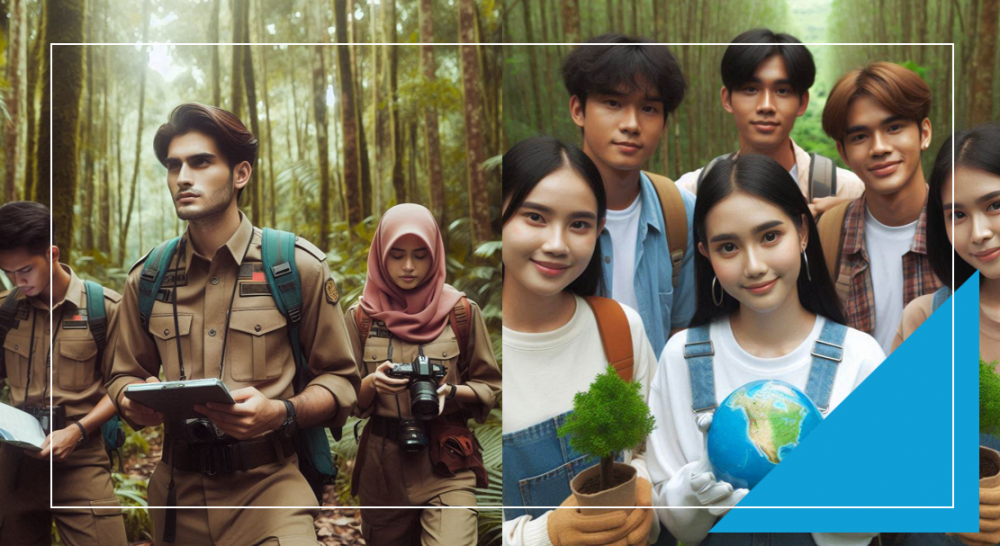
Challenges for a Rebirth in Forestry Education
Forests are complex systems shaped by many different factors, both natural and human-made. These factors include environmental changes, political decisions, and unpredictable events. Forests come in various forms, such as secondary, degraded, fragmented, invaded, or managed, and none of these states are permanent. This offers hope, as even deforestation doesn't have to be forever. Since different people value forests in other ways, the future of tropical forests will likely be a mix of varying forest landscapes. To ensure these landscapes are healthy for the environment, economy, and society, researchers must gather and study what is already known and continue learning. It is essential to have interdisciplinary research at suitable scales to understand the full impact of forest management practices.
Today, well-trained foresters are essential to solving some of the world's biggest challenges, like climate change, deforestation, biodiversity loss, rural poverty, and disease. These issues are closely connected to the state of our forests and the people who care for them. To ensure the future of forests is sustainable, today's and tomorrow’s foresters need the right skills and knowledge regarding SDGs and ESG initiatives. This includes not only forest professionals but also educators, policymakers, Indigenous communities, and researchers.
Today, well-trained foresters are essential to solving some of the world's biggest challenges, like climate change, deforestation, biodiversity loss, rural poverty, and disease. These issues are closely connected to the state of our forests and the people who care for them. To ensure the future of forests is sustainable, today's and tomorrow’s foresters need the right skills and knowledge regarding SDGs and ESG initiatives. This includes not only forest professionals but also educators, policymakers, Indigenous communities, and researchers.
“
Forests are where most of us learn about the importance of nature in our lives - Steve Johnson,ITTO
”
However, there’s a problem – attracting and educating the next generation in forestry is falling short. A recent global survey by the Global Forest Education Project shared at the 2021 International Conference on Forest Education found that primary and secondary schools are not teaching students enough about forests. The curriculum often lacks forest-related content, and many young people have little exposure to forest professionals or real forests. As a result, many students don’t understand the importance of forests, how to manage them sustainably, or the wide range of careers available in forestry.
Similar issues exist at the university and vocational levels. Outdated courses, limited access to digital tools, and insufficient practical experience are common. Graduates are often unprepared for modern forest workplaces, lacking training in important areas like social and cultural aspects of forest management, critical thinking, and communication skills. Additionally, there isn’t enough education about entrepreneurship and green jobs in forestry.
The forest sector also faces an image problem. Many young people see forestry as a low-status career and are unaware of the variety of jobs available or the opportunities for innovation. To revive forest education, we need to improve forest education at all levels – from schools to universities. Hands-on field training, better use of digital tools, and involving local communities in forest management are key steps. Stakeholders are urged to take action to support forest education, ensuring future foresters are equipped to manage forests sustainably for the benefit of both people and the planet.
Similar issues exist at the university and vocational levels. Outdated courses, limited access to digital tools, and insufficient practical experience are common. Graduates are often unprepared for modern forest workplaces, lacking training in important areas like social and cultural aspects of forest management, critical thinking, and communication skills. Additionally, there isn’t enough education about entrepreneurship and green jobs in forestry.
The forest sector also faces an image problem. Many young people see forestry as a low-status career and are unaware of the variety of jobs available or the opportunities for innovation. To revive forest education, we need to improve forest education at all levels – from schools to universities. Hands-on field training, better use of digital tools, and involving local communities in forest management are key steps. Stakeholders are urged to take action to support forest education, ensuring future foresters are equipped to manage forests sustainably for the benefit of both people and the planet.