

Get Ready for Stricter Penalties: 2024 Malaysian Environmental Law Update
INTRODUCTION
The 1972 United Nations Conference on the Human Environment in Stockholm catalysed the promulgation of national legislation worldwide in the 1970s. The development was followed by forming national agencies that managed environmental protection matters. In line with this development, the Malaysian Parliament passed the country’s first national environmental statute, the Environmental Quality Act (Act 127) in 1974 (the EQA). Following this, an Environment Division was established to implement and enforce the EQA. Acknowledging the importance of proper environmental management, the division was later upgraded into a full-fledged department, the Department of Environment Malaysia (DOE). Throughout its half-century existence, the EQA has undergone a few revisions, but many still condemned the inadequacy of penalties under the legislation. In July this year, the much-awaited Environmental Quality (Amendment) Act 2024 came into effect. This article provides an exposition of the latest amendments and delves into what it may entail for the regulator, the industry, and the public.
The EQA Amendment 2024 primarily focuses on raising penalties for various offences under the law. For instance, the amendment explicitly states a minimum fine of RM10,000 for air and noise pollution, which was not stated in the previous law. The maximum penalties for the offences also increased to one million ringgits for air pollution and RM250,000 for noise. Apart from that, stricter penalties await those parties who cause pollution to our soil, rivers, and Malaysian waters. Recognizing the seriousness of pollution of our water resources and improper management or disposal of hazardous wastes, the EQA Amendment 2024 dictates mandatory imprisonment for a term not exceeding five years for such offences. In addition to that, a minimum fine of RM50,000 for inland water pollution and RM100,000 for hazardous waste mishandling will also be imposed upon conviction. Similarly, a mandatory jail term is also mandated for an offence related to failure to observe requirements on environmental impact assessments report, along with a minimum fine of RM100,000 but not exceeding one million ringgits.
The EQA Amendment 2024 also pays attention to the protection of Malaysian waters. The amendment stipulates that the illegal discharge of oil is now punishable with a minimum fine of RM100,000 and not exceeding ten million ringgits or imprisonment not exceeding five years or both. Likewise, the penalty for discharging wastes and pollutants into Malaysian waters in breach of the acceptable conditions specified by the authority has been increased to a minimum fine of RM50,000 and not exceeding ten million ringgits or a jail term not exceeding five years or both. Other than that, punishment for any license holder who fails to comply with licensing terms and conditions is also increased to a minimum fine of RM25,000 and not exceeding RM250,000 or to a jail term not exceeding five years or to both. Previously, the maximum penalties for breaching licensing conditions were fines not exceeding RM25,000 and two years of imprisonment. Aside from that, the maximum amount of compound the authority can issue has been increased to up to fifty percent of the maximum fine of the offence that the person concerned would have been liable for if convicted. Previously, the maximum compound amount was only RM2000. To limit excessive discretionary power, the new amendments stated that the DOE may issue no compound without written approval from the Public Prosecutor.
The 1972 United Nations Conference on the Human Environment in Stockholm catalysed the promulgation of national legislation worldwide in the 1970s. The development was followed by forming national agencies that managed environmental protection matters. In line with this development, the Malaysian Parliament passed the country’s first national environmental statute, the Environmental Quality Act (Act 127) in 1974 (the EQA). Following this, an Environment Division was established to implement and enforce the EQA. Acknowledging the importance of proper environmental management, the division was later upgraded into a full-fledged department, the Department of Environment Malaysia (DOE). Throughout its half-century existence, the EQA has undergone a few revisions, but many still condemned the inadequacy of penalties under the legislation. In July this year, the much-awaited Environmental Quality (Amendment) Act 2024 came into effect. This article provides an exposition of the latest amendments and delves into what it may entail for the regulator, the industry, and the public.
The EQA Amendment 2024 primarily focuses on raising penalties for various offences under the law. For instance, the amendment explicitly states a minimum fine of RM10,000 for air and noise pollution, which was not stated in the previous law. The maximum penalties for the offences also increased to one million ringgits for air pollution and RM250,000 for noise. Apart from that, stricter penalties await those parties who cause pollution to our soil, rivers, and Malaysian waters. Recognizing the seriousness of pollution of our water resources and improper management or disposal of hazardous wastes, the EQA Amendment 2024 dictates mandatory imprisonment for a term not exceeding five years for such offences. In addition to that, a minimum fine of RM50,000 for inland water pollution and RM100,000 for hazardous waste mishandling will also be imposed upon conviction. Similarly, a mandatory jail term is also mandated for an offence related to failure to observe requirements on environmental impact assessments report, along with a minimum fine of RM100,000 but not exceeding one million ringgits.
The EQA Amendment 2024 also pays attention to the protection of Malaysian waters. The amendment stipulates that the illegal discharge of oil is now punishable with a minimum fine of RM100,000 and not exceeding ten million ringgits or imprisonment not exceeding five years or both. Likewise, the penalty for discharging wastes and pollutants into Malaysian waters in breach of the acceptable conditions specified by the authority has been increased to a minimum fine of RM50,000 and not exceeding ten million ringgits or a jail term not exceeding five years or both. Other than that, punishment for any license holder who fails to comply with licensing terms and conditions is also increased to a minimum fine of RM25,000 and not exceeding RM250,000 or to a jail term not exceeding five years or to both. Previously, the maximum penalties for breaching licensing conditions were fines not exceeding RM25,000 and two years of imprisonment. Aside from that, the maximum amount of compound the authority can issue has been increased to up to fifty percent of the maximum fine of the offence that the person concerned would have been liable for if convicted. Previously, the maximum compound amount was only RM2000. To limit excessive discretionary power, the new amendments stated that the DOE may issue no compound without written approval from the Public Prosecutor.
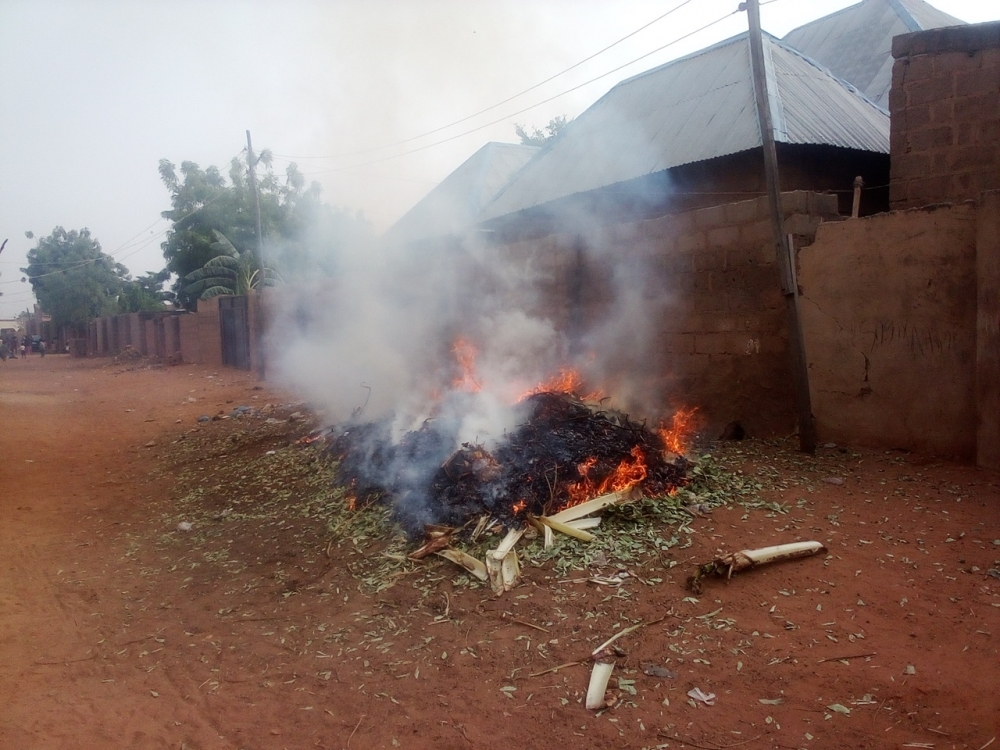
Burning waste materials. Source: Ibrahim. Licensed under Creative Common CC BY-SA 4.0
NEW CHALLENGES NEED NEW KNOWLEDGE AND SKILLS
Burning waste in the open air is another prolonged environmental problem Malaysia faces. Under EQA Amendment 2024, anyone convicted of committing open burning will be penalized with a minimum fine of RM25,000, which may go up to one million ringgits. The person may also be punished with imprisonment for a term not exceeding five years. On top of that, for each day the open burning continues, a further fine of RM5,000 can be imposed. Other than that, the legislation also provides stricter penalties to those parties who fail to comply with any notices issued by the DOE to take specific measures to manage particular environmental concerns.
While we are excited about the new amendments, the DOE needs to be ready to encounter new challenges that may arise in enforcing the law. Among other things, DOE officers must improve their relevant knowledge and skills to develop strong evidence for successful court trial cases. These should include intelligence gathering and forensics. The Government must support the DOE by providing them with more strength in manpower, logistic resources, and the latest technology for them to fight environmental crimes (Hansard, 2024). With more severe penalties, it can be anticipated that fewer accused persons may plead guilty to charges under the EQA. Apart from that, the DOE and prosecution must be cautious in deciding enforcement actions so as not to be ‘captured’ by regulated parties. The authorities should avoid any tendency to offer alternative charges under the various environmental quality regulations with lower penalties to those who breach the EQA (Ariffin, 2019). At the very least, the DOE and prosecution must address blatant individuals or corporations that deliberately break our environmental laws to avoid the cost or effort of compliance. The authorities cannot let non-complying corporations gain an unfair competitive advantage over others that adhere to the law.
As for the industry, the advent of EQA Amendment 2024 should encourage them to be more responsible. The passing of the amendments reflects society's concerns over the gravity of environmental crimes. With a minimum fine specified for many of the offences under the amendments and a much higher maximum sum for the fine, the cost of breaking the law is now getting expensive. Failure to comply with licensing conditions or DOE notices to stop emissions or discharges into the environment is now punishable with a minimum fine of tens to hundreds of thousands of ringgits. There is also mandatory imprisonment for severe offences, including causing pollution to rivers. Therefore, it is timely for the industry to invest its resources and efforts in implementing all its obligations under the EQA without delay.
While its various secondary legislation primarily governs the industrial sector, the EQA prohibitions apply to corporate entities and individuals. For that reason, members of the public must also note the new amendments. Ignorance of the law is not an acceptable excuse to any court of law. One offence many may unknowingly commit under the EQA is burning domestic or garden waste. Strictly speaking, this is an offence of open burning, now punishable by a minimum fine of RM25,000. Another offence that members of the public may often commit is causing air or noise pollution from their vehicles. Under the EQA Amendment 2024, those suspected of breaking the prohibition on air or noise pollution may now be compounded to a sum of up to RM500,000 for vehicle-related air pollution or RM125,000 for noise pollution. The penalties for similar offences upon court conviction are harsher.
CONCLUSION
In conclusion, the latest amendments have given the EQA more bites with higher penalties to protect the country’s environment from irresponsible parties. Nevertheless, the Federal Government must support the DOE and prosecutions with adequate manpower and other resources. Apart from enforcing the law, the DOE needs to educate the public about the law to make them become more responsible citizens and, in turn, able to help the authorities in the fight against environmental pollution. Meanwhile, it is time for the industrial sector to be prepared to comply with all the EQA requirements without excuse. The price for them not to comply is getting more expensive. On top of that, the mandatory imprisonment stipulated in the new amendments should send a strong deterrence message to everyone.
REFERENCES
Ariffin, M. (2019). Enforcement of Environmental Pollution Control Laws: a Malaysian Case Study. International Journal of Public Law and Policy 6 (2), 155-169.
Hansard. (2024, March 25). House of Commons (No. 17), 39-69.
Burning waste in the open air is another prolonged environmental problem Malaysia faces. Under EQA Amendment 2024, anyone convicted of committing open burning will be penalized with a minimum fine of RM25,000, which may go up to one million ringgits. The person may also be punished with imprisonment for a term not exceeding five years. On top of that, for each day the open burning continues, a further fine of RM5,000 can be imposed. Other than that, the legislation also provides stricter penalties to those parties who fail to comply with any notices issued by the DOE to take specific measures to manage particular environmental concerns.
While we are excited about the new amendments, the DOE needs to be ready to encounter new challenges that may arise in enforcing the law. Among other things, DOE officers must improve their relevant knowledge and skills to develop strong evidence for successful court trial cases. These should include intelligence gathering and forensics. The Government must support the DOE by providing them with more strength in manpower, logistic resources, and the latest technology for them to fight environmental crimes (Hansard, 2024). With more severe penalties, it can be anticipated that fewer accused persons may plead guilty to charges under the EQA. Apart from that, the DOE and prosecution must be cautious in deciding enforcement actions so as not to be ‘captured’ by regulated parties. The authorities should avoid any tendency to offer alternative charges under the various environmental quality regulations with lower penalties to those who breach the EQA (Ariffin, 2019). At the very least, the DOE and prosecution must address blatant individuals or corporations that deliberately break our environmental laws to avoid the cost or effort of compliance. The authorities cannot let non-complying corporations gain an unfair competitive advantage over others that adhere to the law.
As for the industry, the advent of EQA Amendment 2024 should encourage them to be more responsible. The passing of the amendments reflects society's concerns over the gravity of environmental crimes. With a minimum fine specified for many of the offences under the amendments and a much higher maximum sum for the fine, the cost of breaking the law is now getting expensive. Failure to comply with licensing conditions or DOE notices to stop emissions or discharges into the environment is now punishable with a minimum fine of tens to hundreds of thousands of ringgits. There is also mandatory imprisonment for severe offences, including causing pollution to rivers. Therefore, it is timely for the industry to invest its resources and efforts in implementing all its obligations under the EQA without delay.
While its various secondary legislation primarily governs the industrial sector, the EQA prohibitions apply to corporate entities and individuals. For that reason, members of the public must also note the new amendments. Ignorance of the law is not an acceptable excuse to any court of law. One offence many may unknowingly commit under the EQA is burning domestic or garden waste. Strictly speaking, this is an offence of open burning, now punishable by a minimum fine of RM25,000. Another offence that members of the public may often commit is causing air or noise pollution from their vehicles. Under the EQA Amendment 2024, those suspected of breaking the prohibition on air or noise pollution may now be compounded to a sum of up to RM500,000 for vehicle-related air pollution or RM125,000 for noise pollution. The penalties for similar offences upon court conviction are harsher.
CONCLUSION
In conclusion, the latest amendments have given the EQA more bites with higher penalties to protect the country’s environment from irresponsible parties. Nevertheless, the Federal Government must support the DOE and prosecutions with adequate manpower and other resources. Apart from enforcing the law, the DOE needs to educate the public about the law to make them become more responsible citizens and, in turn, able to help the authorities in the fight against environmental pollution. Meanwhile, it is time for the industrial sector to be prepared to comply with all the EQA requirements without excuse. The price for them not to comply is getting more expensive. On top of that, the mandatory imprisonment stipulated in the new amendments should send a strong deterrence message to everyone.
REFERENCES
Ariffin, M. (2019). Enforcement of Environmental Pollution Control Laws: a Malaysian Case Study. International Journal of Public Law and Policy 6 (2), 155-169.
Hansard. (2024, March 25). House of Commons (No. 17), 39-69.
