Urban green spaces, such as parks, gardens, and green patches, serve as vital biodiversity refuges for many animals, including insects. These refuges are often considered ‘island’ habitats, offering floral and nesting resources for insects. Insects are experiencing a global population decline, especially pollinators (Potts et al., 2010; Oliver et al., 2015). Factors contributing to this decline include climate change, which disrupts the synchronization between plants' flowering times and insects' activity periods (Forrest, 2016). The excessive use of agrochemicals, such as pesticides and herbicides, kills insects directly and reduces the availability of flowering plants that provide essential resources (Serrao et al., 2022). Habitat degradation, including the destruction and fragmentation of natural habitats, limits the areas where insects can survive (Valladares et al., 2006). Additionally, environmental pollution, from chemical contaminants and light pollution, further stresses insect populations by affecting their health and navigation abilities (Parikh et al., 2021). These challenges drive insects to seek refuge in human-dominated landscapes, which can enhance overall biodiversity and lead to human-wildlife conflicts and issues related to pests and disease vectors.
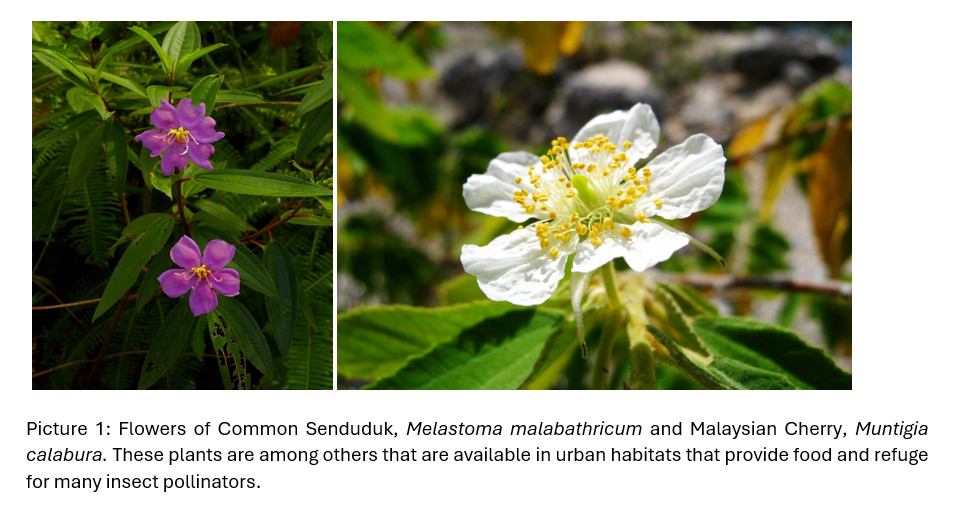
Research indicates that animals contribute approximately 87% to global wild plant pollination (Ollerton et al., 2011). Among these animals, insects, particularly bees, are vital pollinators, responsible for 35% of global crop and wild plant pollination. This vital ecosystem service ensures the reproduction of many plant species, supporting entire ecosystems and human agriculture. The estimated global economic value of animal pollination is around RM 780 billion (Klein et al., 2007), reflecting its critical role in food production and biodiversity. Insect pollinators are dependent on plants for survival. Plants provide refuge, food resources, and microclimate conditions, allowing insects to survive. In urban landscapes, voluntary plants such as Melastoma malabathricum offer critical resources like pollen and nectar, supporting plant-insect interactions.
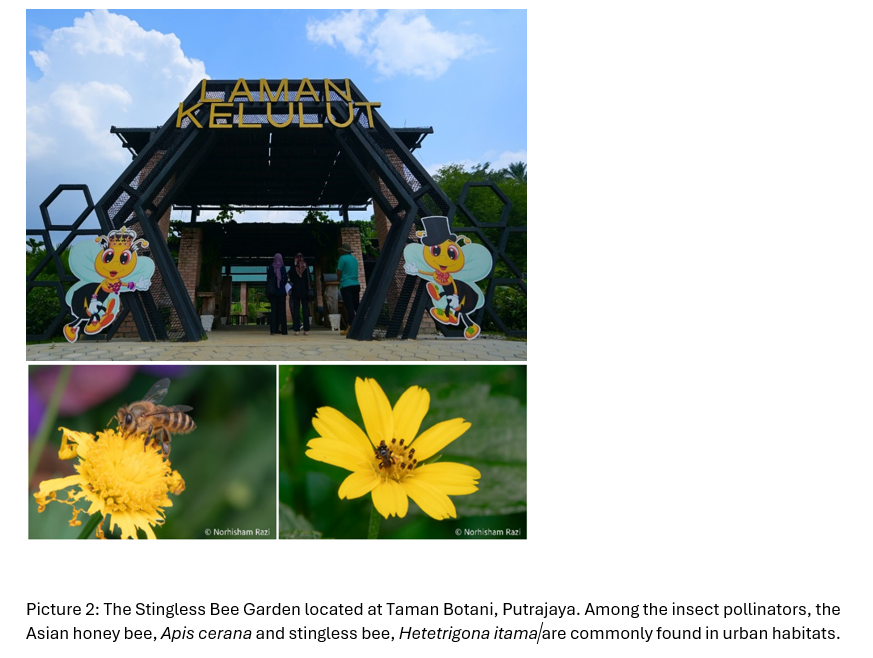
Another example is Muntigia calabura, which is particularly attractive to insect pollinators. These plants exemplify the rich biodiversity that urban green spaces can support, serving as key components in the complex web of plant-pollinator interactions. Insect pollinators such as the Asian honey bee (Apis cerana), carpenter bee (Xylocopa pubescens), and stingless bee (Heterotrigona itama) are dependent on flowering plants in urban habitats. Likewise, the presence of these insect pollinators is crucial for the health and reproduction of these plant species.
URBAN GREEN SUPPORTING WILDLIFE BIODIVERSITY
In Malaysia, urban green spaces are crucial in supporting wildlife biodiversity. These areas serve as vital refuges for many species, providing habitats and resources that help mitigate the adverse effects of urbanization. An exemplary model of urban green space in Malaysia is Putrajaya. This planned city incorporates extensive green areas that serve as excellent insect habitats. The integration of green spaces within Putrajaya enhances the city's aesthetic and provides ecological functions, such as supporting pollinator species and promoting plant-pollinator interactions. With the establishment of urban parks in Putrajaya, each with different planting objectives, Malaysia's efforts towards achieving Sustainable Development Goals (SDGs), particularly SDG 15: Life on Land, are evident. Notable examples include Taman Rimba Alam, Taman Warisan Pertanian, Taman Wetland, and Taman Botani.
Additionally, conservation programs focus on insect pollinators, such as the Stingless Bee Garden in Taman Botani Putrajaya. Taman Botani Putrajaya, also known as the "Mother of All Gardens," is an open plant herbarium with 750 species worldwide. This diversity supports the stingless bee colonies by providing a variety of plants necessary for their survival, including sources of resin and nectar. The diverse flora in Taman Botani Putrajaya further aids in sustaining the stingless bee populations, showcasing the importance of urban green spaces in biodiversity conservation.
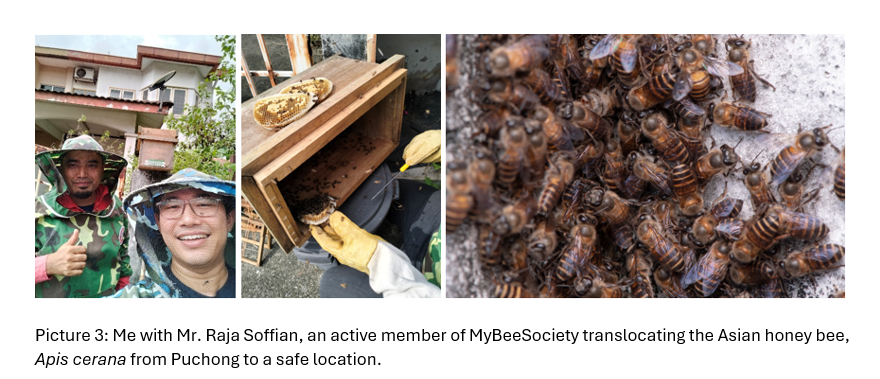
Public awareness and involvement are crucial for the success of conservation efforts. Educational programs and community initiatives can help society understand the importance of pollinators and encourage practices that support their conservation. By raising awareness about the ecological roles of pollinators and the challenges they face, these programs can inspire individuals to act in their own communities. One of the conservation initiatives in Malaysia is the MyBeeSavior Society. This initiative focuses on translocating bees from residential areas to their natural habitats, reducing conflicts between humans and bees. Safely relocating bee colonies can help mitigate the risks associated with bee stings and support the conservation of these important pollinators. The initiative has been instrumental in educating the public about the importance of bees and promoting coexistence between humans and these vital insects. MyBeeSavior relocates bees and provides educational outreach to inform communities about the critical roles bees play in the ecosystems. These efforts have increased public understanding and appreciation of bees, leading to greater community support for conservation activities.
CONCLUSION
In conclusion, urban green spaces are invaluable refuges for pollinator diversity and plant-pollinator interactions. We can create environments where humans and pollinators coexist and thrive by supporting initiatives like MyBeeSavior and promoting green spaces in urban planning. Putrajaya's example highlights the potential for urban areas to serve as sanctuaries for pollinators, providing hope for the future of these essential species. As we face global environmental challenges, preserving and enhancing urban green spaces will be crucial in safeguarding the biodiversity that sustains our ecosystems and food systems.
REFERENCES
Forrest, J. R. (2016). Complex responses of insect phenology to climate change. Current opinion in insect science, 17, 49-54.
Hanski, I. L. K. K. A., & Pöyry, J. U. H. A. (2007). Insect populations in fragmented habitats. Insect conservation biology, 175-202.
Klein AM, Vaissiere BE, Cane JH, Steffan-Dewenter I, Cunningham SA, Kremen C, et al. Importance of pollinators in changing landscapes for world crops. Proc R Soc B-Biol Sci. 2007; 274(1608):303–13.
Ollerton, J., Winfree, R., Tarrant, S., 2011. How many flowering plants are pollinated by animals? Oikos 120, 321–326.
Parikh, G., Rawtani, D., & Khatri, N. (2021). Insects as an indicator of environmental pollution. Environmental Claims Journal, 33(2), 161-181.
Potts, S.G., Biesmeijer, J.C., Kremen, C., Neumann, P., Schweiger, O., Kunin, W.E., 2010. Global pollinator declines: trends, impacts and drivers. Trends Ecol. Evol. 25, 345–353.
Serrão, J. E., Plata-Rueda, A., Martínez, L. C., & Zanuncio, J. C. (2022). Side-effects of pesticides on non-target insects in agriculture: a mini-review. The Science of Nature, 109(2), 17.
Valladares, G., Salvo, A., & Cagnolo, L. (2006). Habitat fragmentation effects on trophic processes of insect‐plant food webs. Conservation Biology, 20(1), 212-217.