

Geo-Spatial Perspective: Transforming Cities Through Data-Driven Planning
Achieving a sustainable urban environment demands a multifaceted approach, with renewable energy as a cornerstone. Renewable energy generation is intrinsic to smart city frameworks, symbolizing the transition to a low-carbon economy. This necessitates deploying photovoltaic systems on rooftops or nearby municipalities, substantially reducing a city's reliance on fossil fuels and concurrently mitigating greenhouse gas emissions (IRENA, 2019). Geospatial technologies, such as Geographic Information Systems (GIS), remote sensing, and global positioning systems (GPS), are indispensable for identifying optimal locations for renewable energy installations based on solar radiation, rooftop orientation, and proximity to the energy grid (Kaza et al., 2019). By prioritizing renewable energy sources, cities can foster environmental sustainability while providing residents with reliable, affordable electricity and minimizing ecological harm. Access to clean energy underpins a sustainable lifestyle by reducing energy expenses and environmental impacts, especially within residential areas (IRENA, 2019).
Sustainable transportation is another fundamental component of urban sustainability. Contemporary smart city plans emphasize walkability, cycling infrastructure, and accessible public transit networks. GIS plays a pivotal role in optimizing transportation systems by analysing traffic patterns, road configurations, population density, and the spatial distribution of transit stops (Rodrigue et al., 2020). Promoting these sustainable transportation modes diminishes reliance on private vehicles, thereby alleviating traffic congestion, improving air quality, and enhancing the overall urban living experience (Banister, 2008). Efficient and environmentally friendly transit options facilitate smooth commutes, reduce travel times, and promote healthier lifestyles. This aspect is particularly critical in commercial and recreational areas, where high pedestrian volumes necessitate robust and sustainable transportation solutions (Banister, 2008).
Integrating green spaces like ornamental trees in cities could foster biodiversity, which is essential to the urban fabric. As illustrated in Figure 1, incorporating green spaces, such as parks and community gardens, within urban planning offers numerous benefits, including improved air quality, noise reduction, and enhanced mental well-being. Geospatial analysis assists planners in identifying and designating these green areas by assessing land use patterns, vegetation coverage, and proximity to residential neighbourhoods (McGarigal et al., 2016). These green spaces also serve as habitats for local plants and animals, contributing to ecological equilibrium and preserving natural ecosystems. Prioritizing green spaces cultivates a long-term harmonious relationship between humans and nature, significantly enhancing the quality of urban life (Chiesura, 2004). This component is crucial in leisure areas and transit hubs, providing residents with oases within the urban environment.
Sustainable transportation is another fundamental component of urban sustainability. Contemporary smart city plans emphasize walkability, cycling infrastructure, and accessible public transit networks. GIS plays a pivotal role in optimizing transportation systems by analysing traffic patterns, road configurations, population density, and the spatial distribution of transit stops (Rodrigue et al., 2020). Promoting these sustainable transportation modes diminishes reliance on private vehicles, thereby alleviating traffic congestion, improving air quality, and enhancing the overall urban living experience (Banister, 2008). Efficient and environmentally friendly transit options facilitate smooth commutes, reduce travel times, and promote healthier lifestyles. This aspect is particularly critical in commercial and recreational areas, where high pedestrian volumes necessitate robust and sustainable transportation solutions (Banister, 2008).
Integrating green spaces like ornamental trees in cities could foster biodiversity, which is essential to the urban fabric. As illustrated in Figure 1, incorporating green spaces, such as parks and community gardens, within urban planning offers numerous benefits, including improved air quality, noise reduction, and enhanced mental well-being. Geospatial analysis assists planners in identifying and designating these green areas by assessing land use patterns, vegetation coverage, and proximity to residential neighbourhoods (McGarigal et al., 2016). These green spaces also serve as habitats for local plants and animals, contributing to ecological equilibrium and preserving natural ecosystems. Prioritizing green spaces cultivates a long-term harmonious relationship between humans and nature, significantly enhancing the quality of urban life (Chiesura, 2004). This component is crucial in leisure areas and transit hubs, providing residents with oases within the urban environment.
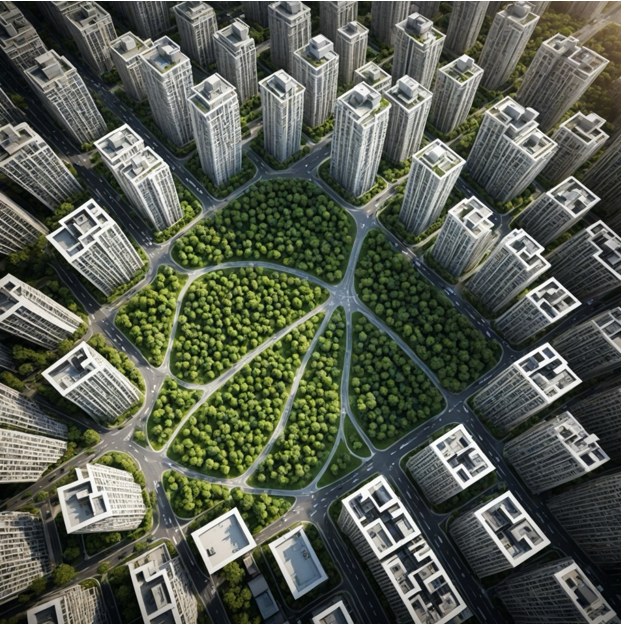
The Urban Forest within a Smart Cityscape
Enhanced connectivity and accessibility are essential components of a smart city's infrastructure. Ensuring universal access to high-speed internet facilitates seamless information exchange, online services, and remote work opportunities (Graham & Marvin, 2001). Geospatial data is instrumental in mapping broadband coverage and identifying areas requiring connectivity improvements (Thompson et al., 2020). Advanced connectivity propels the growth of digital industries, fosters entrepreneurship, and expands educational horizons. By prioritizing digital inclusion and creating an interconnected ecosystem, cities can stimulate economic development, job creation, and a sustainable knowledge-based economy. This facet of smart infrastructure is pervasive across most urban domains, making it a foundational element of urban sustainability (Graham & Marvin, 2001).
Community engagement and participatory governance are vital for achieving sustainable urban living. A smart city strategy that fosters active participation and collaboration among residents strengthens social cohesion and communal responsibility. GIS can be leveraged to visualize and analyse spatial data related to community needs, enabling informed decision-making and resource allocation (Sieber, 2006). Community centres and engagement platforms facilitate resident communication, idea-sharing, and decision-making (Putnam, 2000). Empowering citizens and involving them in shaping their environment cultivates a sense of ownership and social cohesion, enhancing overall well-being and contributing to the community's long-term resilience (Putnam, 2000).
Resilience and disaster management are indispensable for sustainable urban planning. Integrating disaster management and resilient infrastructure into the smart city framework necessitates the implementation of geospatial technologies for early warning systems, emergency response protocols, and robust structural designs (UNISDR, 2017). GIS can model potential disaster scenarios, map vulnerable areas, and plan evacuation routes, enhancing the city's preparedness (Cova, 1999). By strengthening the city's resilience to both natural and human-induced hazards, residents can enjoy a more secure and sustainable livelihood. Resilient infrastructure mitigates the impact of risks, safeguards resident safety, and ensures rapid recovery during a disaster, reinforcing the city's overall sustainability (UNISDR, 2017).
Community engagement and participatory governance are vital for achieving sustainable urban living. A smart city strategy that fosters active participation and collaboration among residents strengthens social cohesion and communal responsibility. GIS can be leveraged to visualize and analyse spatial data related to community needs, enabling informed decision-making and resource allocation (Sieber, 2006). Community centres and engagement platforms facilitate resident communication, idea-sharing, and decision-making (Putnam, 2000). Empowering citizens and involving them in shaping their environment cultivates a sense of ownership and social cohesion, enhancing overall well-being and contributing to the community's long-term resilience (Putnam, 2000).
Resilience and disaster management are indispensable for sustainable urban planning. Integrating disaster management and resilient infrastructure into the smart city framework necessitates the implementation of geospatial technologies for early warning systems, emergency response protocols, and robust structural designs (UNISDR, 2017). GIS can model potential disaster scenarios, map vulnerable areas, and plan evacuation routes, enhancing the city's preparedness (Cova, 1999). By strengthening the city's resilience to both natural and human-induced hazards, residents can enjoy a more secure and sustainable livelihood. Resilient infrastructure mitigates the impact of risks, safeguards resident safety, and ensures rapid recovery during a disaster, reinforcing the city's overall sustainability (UNISDR, 2017).

Transforming Cities Through Geospatial Data-Driven Planning
In conclusion, achieving sustainable urban living requires a holistic approach integrating renewable energy, sustainable transportation, green spaces, enhanced connectivity, community engagement, and resilient infrastructure. Geospatial perspectives are indispensable for building sustainable, resilient, and equitable smart cities in the near future. By harnessing the power of geospatial technologies, urban planners can make data-driven decisions, optimize resource allocation, and improve the quality of life for residents. As technology continues to evolve, the integration of geospatial data into smart city initiatives will become even more critical in shaping the future of urban development.
References
Banister, D. (2008). The sustainable mobility paradigm. Transport Policy, 15(2), 73-80.
Chiesura, A. (2004). The role of urban parks for the sustainable city. Landscape and Urban Planning, 68(1), 129-138.
Cova, T. J. (1999). GIS in emergency management. Geographical Information Systems, 2, 845-858.
Graham, S., & Marvin, S. (2001). Splintering Urbanism: Networked Infrastructures, Technological Mobilities and the Urban Condition. Routledge.
IRENA (International Renewable Energy Agency). (2019). Renewable Energy and Jobs – Annual Review 2019. IRENA.
Kaza, N., Quercia, D., & Strohmaier, M. (2019). Which places need solar energy the most? Predictive geospatial analytics for targeting distributed solar power. Applied Energy, 252, 113436.
McGarigal, K., Cushman, S. A., & Ene, E. (2016). FRAGSTATS v4: Spatial Pattern Analysis Program for Categorical and Continuous Maps. University of Massachusetts.
Putnam, R. D. (2000). Bowling Alone: The Collapse and Revival of American Community. Simon and Schuster.
Rodrigue, J.-P., Comtois, C., & Slack, B. (2020). The Geography of Transport Systems. Routledge.
Sieber, R. E. (2006). Public participation geographic information systems: A literature review and framework. Annals of the Association of American Geographers, 96(3), 491-507.
Thompson, C. J., Reilly, K., & Griffith, D. A. (2020). Broadband Internet adoption and availability: Impacts on rural and urban economies. Regional Science Policy & Practice, 12(1), 209-231.
UNISDR (United Nations Office for Disaster Risk Reduction). (2017). Build Back Better: in recovery, rehabilitation and reconstruction. UNISDR.
References
Banister, D. (2008). The sustainable mobility paradigm. Transport Policy, 15(2), 73-80.
Chiesura, A. (2004). The role of urban parks for the sustainable city. Landscape and Urban Planning, 68(1), 129-138.
Cova, T. J. (1999). GIS in emergency management. Geographical Information Systems, 2, 845-858.
Graham, S., & Marvin, S. (2001). Splintering Urbanism: Networked Infrastructures, Technological Mobilities and the Urban Condition. Routledge.
IRENA (International Renewable Energy Agency). (2019). Renewable Energy and Jobs – Annual Review 2019. IRENA.
Kaza, N., Quercia, D., & Strohmaier, M. (2019). Which places need solar energy the most? Predictive geospatial analytics for targeting distributed solar power. Applied Energy, 252, 113436.
McGarigal, K., Cushman, S. A., & Ene, E. (2016). FRAGSTATS v4: Spatial Pattern Analysis Program for Categorical and Continuous Maps. University of Massachusetts.
Putnam, R. D. (2000). Bowling Alone: The Collapse and Revival of American Community. Simon and Schuster.
Rodrigue, J.-P., Comtois, C., & Slack, B. (2020). The Geography of Transport Systems. Routledge.
Sieber, R. E. (2006). Public participation geographic information systems: A literature review and framework. Annals of the Association of American Geographers, 96(3), 491-507.
Thompson, C. J., Reilly, K., & Griffith, D. A. (2020). Broadband Internet adoption and availability: Impacts on rural and urban economies. Regional Science Policy & Practice, 12(1), 209-231.
UNISDR (United Nations Office for Disaster Risk Reduction). (2017). Build Back Better: in recovery, rehabilitation and reconstruction. UNISDR.
