

Carrying Capacity in Ecotourism Areas
INTRODUCTION
Ecotourism promotes sustainable travel by supporting the conservation of natural environments and the well-being of local communities. Ecotourism areas can be categorised into 1) marine areas, such as marine parks and coastal areas, and 2) terrestrial areas, such as national parks, nature reserves, wildlife sanctuaries, forests and rainforests, mountains and highlands. Ecotourism enables travellers to engage with nature and wildlife while fostering environmental consciousness and responsible travel behaviours. As ecotourism becomes more popular, preventing visitors from disturbing fragile environments is crucial. The concept of carrying capacity is relevant in this context. Understanding and managing the carrying capacity of ecotourism destinations is vital for achieving sustainability.
The carrying capacity of an area is the maximum number of visitors it can sustainably support without causing harm to the environment or negatively impacting visitor experiences. Regrettably, numerous studies fail to provide data on the carrying capacity of ecotourism areas, revealing a deficiency in scientific research. Effective management and conservation of marine parks are crucial for ensuring long-term sustainability and availability for future generations. Managing natural resources in ecotourism areas is essential because restoring depleted areas can be expensive and irreversible. Conducting comprehensive research on carrying capacity can help make consistent progress in reducing the environmental effects of human activities. This, in turn, helps protect natural ecosystems and ensures the long-term sustainability of the tourism industry.
The carrying capacity of an area is the maximum number of visitors it can sustainably support without causing harm to the environment or negatively impacting visitor experiences. Regrettably, numerous studies fail to provide data on the carrying capacity of ecotourism areas, revealing a deficiency in scientific research. Effective management and conservation of marine parks are crucial for ensuring long-term sustainability and availability for future generations. Managing natural resources in ecotourism areas is essential because restoring depleted areas can be expensive and irreversible. Conducting comprehensive research on carrying capacity can help make consistent progress in reducing the environmental effects of human activities. This, in turn, helps protect natural ecosystems and ensures the long-term sustainability of the tourism industry.
UNDERSTANDING CARRYING CAPACITY
Efficiently managing carry capacity is crucial for ensuring the long-term sustainability of tourism destinations. Carrying capacity is vital in environmental management as it represents the maximum resource use and human activity an ecosystem can sustain without causing long-term damage. It helps with the planning, managing, and preserving ecosystems and natural resources by establishing the maximum number of visitors an area can handle without harming the environment, diminishing the visitor experience, or negatively affecting the local community. It is crucial to comprehend and effectively handle the carrying capacity of ecotourism areas to balance promoting tourism and conserving natural and cultural resources.
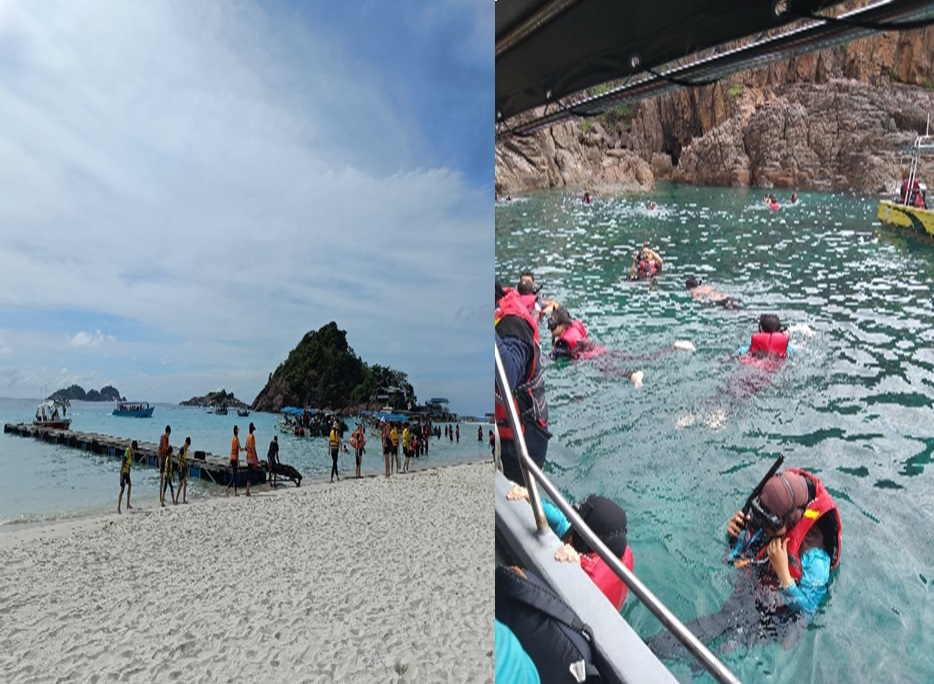
Carrying capacity in marine park (Source: Author (2014))
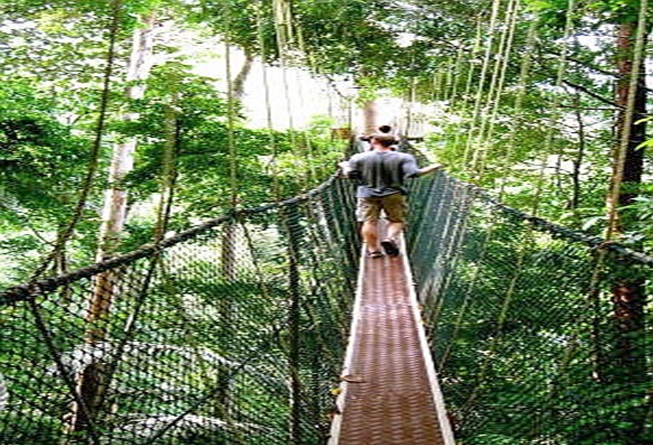
Carrying capacity in National Park (source: https://www.pahangtourism.org.my/v1/index.php/news/item/467-traversing-taman-negara)
TYPES OF CARRYING CAPACITY
Physical Carrying Capacity (PCC)
• It is the maximum capacity of a space to accommodate the highest number of visitors or users at any given time.
• The maximum number of visitors a location can accommodate without causing physical damage, such as trampled vegetation, soil erosion, or disturbance to wildlife.
• The capacity of an area is determined by its infrastructure, including trails, campgrounds, parking spaces, and resources such as water and waste management systems.
• It includes restrictions about trails, parking lots, restrooms, and other amenities.
Real Carrying Capacity (RCC)
• The maximum number of visitors is determined by factors such as the environment, infrastructure, and management capabilities.
Effective Carrying Capacity (ECC)
• Managing the number of visitors is crucial for maintaining a balance between use and sustainability.
• This involves considering the social, economic, and environmental impacts.
Environmental Carrying Capacity
• The threshold at which environmental degradation occurs
• The main focus is determining the maximum number of visitors an ecosystem can sustain without causing significant damage or harm
• Factors such as soil erosion, water quality, wildlife disturbance, and vegetation damage are considered
Social Carrying Capacity
• The point at which the visitor experience starts to decline in quality
• It concerns the maximum number of visitors that can be accommodated without compromising the quality of their experience
• It is the maximum capacity of a space to accommodate the highest number of visitors or users at any given time.
• The maximum number of visitors a location can accommodate without causing physical damage, such as trampled vegetation, soil erosion, or disturbance to wildlife.
• The capacity of an area is determined by its infrastructure, including trails, campgrounds, parking spaces, and resources such as water and waste management systems.
• It includes restrictions about trails, parking lots, restrooms, and other amenities.
Real Carrying Capacity (RCC)
• The maximum number of visitors is determined by factors such as the environment, infrastructure, and management capabilities.
Effective Carrying Capacity (ECC)
• Managing the number of visitors is crucial for maintaining a balance between use and sustainability.
• This involves considering the social, economic, and environmental impacts.
Environmental Carrying Capacity
• The threshold at which environmental degradation occurs
• The main focus is determining the maximum number of visitors an ecosystem can sustain without causing significant damage or harm
• Factors such as soil erosion, water quality, wildlife disturbance, and vegetation damage are considered
Social Carrying Capacity
• The point at which the visitor experience starts to decline in quality
• It concerns the maximum number of visitors that can be accommodated without compromising the quality of their experience
IMPORTANCE OF CARRYING CAPACITY ASSESSMENT
Benefits of assessing the carrying capacity of ecotourism areas:
1. It aids in safeguarding the environment. Limiting the number of visitors to fragile ecosystems, such as coral reefs or rainforests, can help preserve these delicate environments. By preventing overuse, we can maintain the natural beauty for future generations.
2. It improves the visitor experience. Excessive crowding can result in a less pleasant experience, characterised by extended queues, congested paths, and limited chances to observe wildlife. By effectively managing visitor numbers, we can ensure a tranquil and satisfying experience for all.
3. Not considering carrying capacity can result in significant issues. For instance, tourist destinations that fail to control visitor numbers often experience substantial environmental damage. Damage to iconic sites and permanent alteration of natural habitats can result in losing biodiversity and natural beauty.
1. It aids in safeguarding the environment. Limiting the number of visitors to fragile ecosystems, such as coral reefs or rainforests, can help preserve these delicate environments. By preventing overuse, we can maintain the natural beauty for future generations.
2. It improves the visitor experience. Excessive crowding can result in a less pleasant experience, characterised by extended queues, congested paths, and limited chances to observe wildlife. By effectively managing visitor numbers, we can ensure a tranquil and satisfying experience for all.
3. Not considering carrying capacity can result in significant issues. For instance, tourist destinations that fail to control visitor numbers often experience substantial environmental damage. Damage to iconic sites and permanent alteration of natural habitats can result in losing biodiversity and natural beauty.
CASE STUDIES
1. Sipadan Island - The island allows a maximum of 237 daily tourists, totalling 474 dives.
2. Endau Rompin National Park, Johor - Visitors per entry should not exceed 150.
3. Machu Picchu, Peru - The site allows only 2,500 visitors per day to preserve its historic environment.
4. Yellowstone National Park, USA - The site limits snowmobile entry to 720 per day during winter to reduce environmental impacts.
5. Galápagos Islands, Ecuador - Strict daily visitor limits and tour group restrictions minimise human impacts on fragile ecosystems.
6. Inca Trail, Peru - 500 tourists, guides, and porters daily entry to reduce erosion and litter.
7. Maasai Mara National Reserve, Kenya - Limits the daily number of vehicles in certain areas to reduce wildlife stress and prevent habitat degradation.
8. Bhutan - A "high-value, low-impact" policy limits tourists and minimises environmental impacts. Bhutan charges tourists a lot to minimise tourism volume, maintain a peaceful environment, and preserve the landscape.
2. Endau Rompin National Park, Johor - Visitors per entry should not exceed 150.
3. Machu Picchu, Peru - The site allows only 2,500 visitors per day to preserve its historic environment.
4. Yellowstone National Park, USA - The site limits snowmobile entry to 720 per day during winter to reduce environmental impacts.
5. Galápagos Islands, Ecuador - Strict daily visitor limits and tour group restrictions minimise human impacts on fragile ecosystems.
6. Inca Trail, Peru - 500 tourists, guides, and porters daily entry to reduce erosion and litter.
7. Maasai Mara National Reserve, Kenya - Limits the daily number of vehicles in certain areas to reduce wildlife stress and prevent habitat degradation.
8. Bhutan - A "high-value, low-impact" policy limits tourists and minimises environmental impacts. Bhutan charges tourists a lot to minimise tourism volume, maintain a peaceful environment, and preserve the landscape.
ENFORCEMENT
Permit systems, ticketing, and on-site monitoring enforcements to ensure compliance and protect the site's natural and cultural heritage
CONCLUSION
Ecotourism—sustainable travel that protects natural areas and local communities—is expanding. Ecotourism is expanding. Thus, careful management is needed to protect these delicate areas. This is where carrying capacity matters. Understanding and maintaining ecotourism locations' carrying capacity requires establishing the maximum number of tourists without harming the environment or affecting visitor experiences. The carrying capacity of ecotourism sites is inadequately studied in numerous studies, revealing a research gap.
Carrying capacity assessments balance tourist promotion and natural and cultural heritage protection in ecosystem and natural resource planning, management, and preservation. Ecotourism sustainability depends on permit systems, ticketing, and on-site monitoring to enforce these constraints. By doing so, these sites' natural beauty and cultural significance can be preserved for future generations while helping conservation and local communities.
Carrying capacity assessments balance tourist promotion and natural and cultural heritage protection in ecosystem and natural resource planning, management, and preservation. Ecotourism sustainability depends on permit systems, ticketing, and on-site monitoring to enforce these constraints. By doing so, these sites' natural beauty and cultural significance can be preserved for future generations while helping conservation and local communities.
