

Blue Carbon Champions - Storing Carbon, Protecting Our Future
Introduction
Mangroves, saltmarshes, and seagrasses make up blue carbon wetlands, which play a crucial role in climate mitigation strategies by reducing CO2 levels in the atmosphere through long-term carbon removal from coastal vegetated areas and open oceans (Mcleod et al., 2011; Macreadie et al., 2021; Poulter et al., 2023). "Blue carbon" (BC) is the term used to collectively refer to the carbon stored in these ecosystems (Bryan et al., 2020). Mangroves are halophytic shrubs and trees found in 123 countries, covering at least 15.2 million hectares where land meets the sea in tropical and subtropical regions, which are globally significant yet endangered ecosystems (Golebie et al., 2022; Islam et al., 2022). These unique forest ecosystems serve as vital ecological zones for diverse plants and animals due to their geographic location (Shah et al., 2016). The plant community in mangroves has evolved to withstand conditions unique to their growth, such as muddy soils, high salinity, and harsh tides. In addition to providing essential ecosystem services to many communities, mangroves are home to over 200 million people living in or near these forests (Hutchison et al., 2014).
Mangroves, saltmarshes, and seagrasses make up blue carbon wetlands, which play a crucial role in climate mitigation strategies by reducing CO2 levels in the atmosphere through long-term carbon removal from coastal vegetated areas and open oceans (Mcleod et al., 2011; Macreadie et al., 2021; Poulter et al., 2023). "Blue carbon" (BC) is the term used to collectively refer to the carbon stored in these ecosystems (Bryan et al., 2020). Mangroves are halophytic shrubs and trees found in 123 countries, covering at least 15.2 million hectares where land meets the sea in tropical and subtropical regions, which are globally significant yet endangered ecosystems (Golebie et al., 2022; Islam et al., 2022). These unique forest ecosystems serve as vital ecological zones for diverse plants and animals due to their geographic location (Shah et al., 2016). The plant community in mangroves has evolved to withstand conditions unique to their growth, such as muddy soils, high salinity, and harsh tides. In addition to providing essential ecosystem services to many communities, mangroves are home to over 200 million people living in or near these forests (Hutchison et al., 2014).
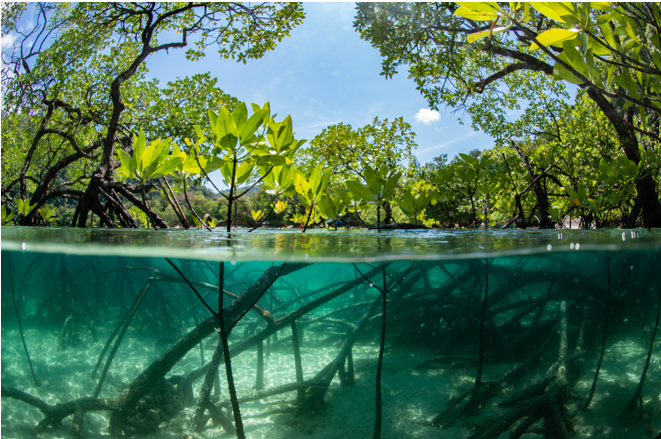
Set aside mangrove forest area as protected through conservation concession or other mechanism (Source: Tanahair.net, 2023)
Roles of Blue Carbon as Ecosystem Services.
Mangroves provide numerous ecosystem services, including high carbon sequestration rates and storage as blue carbon (BC). According to Chatting et al. (2022), mangroves are large carbon sinks (C), and significant interest is being made in using them to reduce greenhouse gas emissions. In mangrove forests, most organic carbon can be stored in living biomass (above and below ground) and soil (Zakaria et al., 2021). Zeng et al. (2021) stated that mangroves are among the world's most carbon-dense vegetated ecosystems and are a crucial link between terrestrial and oceanic carbon cycles based on their high carbon sequestration rates relative to other ecosystems. Furthermore, given that above- and below-ground biomass contains a significant amount of carbon, protecting mangroves is essential for mitigating and adapting to climate change (Hamzah et al., 2020). According to Donato et al. (2011), mangroves can store between 990 and 1074 t/ha of carbon, more significant than any other forest type. These findings highlight the importance of accurately assessing the carbon storage capacity of mangrove forests. In addition, mangroves play an important role in reducing tropical carbon emissions and preventing climate change.
Deforestation and Ecosystem Degradation of Mangroves.
Despite the known benefits of mangrove forests, their area has been decreasing at a rate of 0.16 to 0.39 percent annually on a global scale (Zakaria et al., 2021). Deforestation and mangrove conversion generate substantial carbon emissions, significantly contributing to some countries' greenhouse gas (GHG) emissions. According to Van der Werf et al. (2009), deforestation and ecosystem degradation are the primary drivers of carbon dioxide (CO2) emissions into the atmosphere following the combustion of fossil fuels (Adame et al., 2015). Ongoing high deforestation rates and conversion of these ecosystems are expected to result in significant carbon emissions to the atmosphere. Deforestation and other land-use changes diminish mangrove ecosystem carbon pools, reducing the capacity of these forests to absorb and store carbon.
Mangroves provide numerous ecosystem services, including high carbon sequestration rates and storage as blue carbon (BC). According to Chatting et al. (2022), mangroves are large carbon sinks (C), and significant interest is being made in using them to reduce greenhouse gas emissions. In mangrove forests, most organic carbon can be stored in living biomass (above and below ground) and soil (Zakaria et al., 2021). Zeng et al. (2021) stated that mangroves are among the world's most carbon-dense vegetated ecosystems and are a crucial link between terrestrial and oceanic carbon cycles based on their high carbon sequestration rates relative to other ecosystems. Furthermore, given that above- and below-ground biomass contains a significant amount of carbon, protecting mangroves is essential for mitigating and adapting to climate change (Hamzah et al., 2020). According to Donato et al. (2011), mangroves can store between 990 and 1074 t/ha of carbon, more significant than any other forest type. These findings highlight the importance of accurately assessing the carbon storage capacity of mangrove forests. In addition, mangroves play an important role in reducing tropical carbon emissions and preventing climate change.
Deforestation and Ecosystem Degradation of Mangroves.
Despite the known benefits of mangrove forests, their area has been decreasing at a rate of 0.16 to 0.39 percent annually on a global scale (Zakaria et al., 2021). Deforestation and mangrove conversion generate substantial carbon emissions, significantly contributing to some countries' greenhouse gas (GHG) emissions. According to Van der Werf et al. (2009), deforestation and ecosystem degradation are the primary drivers of carbon dioxide (CO2) emissions into the atmosphere following the combustion of fossil fuels (Adame et al., 2015). Ongoing high deforestation rates and conversion of these ecosystems are expected to result in significant carbon emissions to the atmosphere. Deforestation and other land-use changes diminish mangrove ecosystem carbon pools, reducing the capacity of these forests to absorb and store carbon.
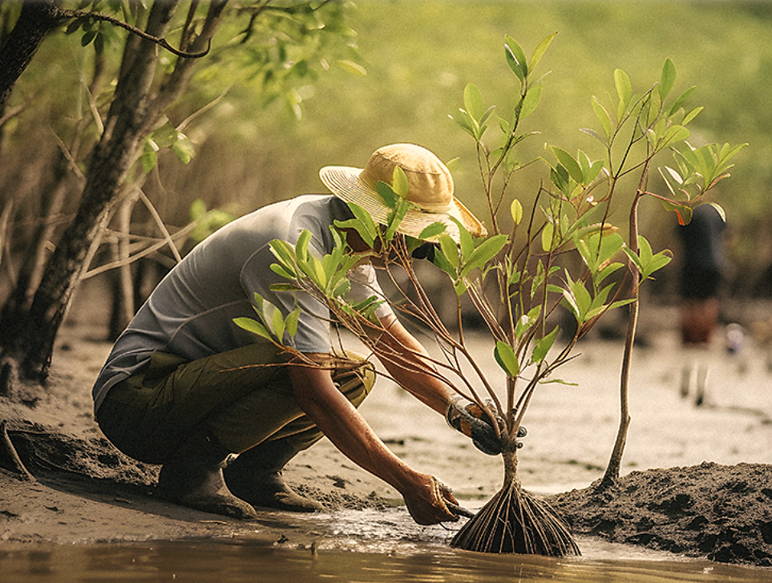
Mangrove: Safeguarding Lives and Livelihoods (Source: Asian Infrastructure Investment Bank, 2023)
Summary
Mangroves play a critical role in connecting and stabilizing both terrestrial and marine ecosystems. As vital blue carbon ecosystems, they are key contributors to carbon sequestration and climate change mitigation. Coordinated conservation efforts are essential to safeguard and maintain mangrove ecosystems for their ecological, social, and economic advantages. Mangroves are nature's triple defence against climate change: they store vast amounts of carbon, protect our coastlines, and provide essential habitats for marine life. Protecting and restoring these remarkable ecosystems is crucial for a healthier planet. The situation is critical, but there's a glimmer of hope. Our coastal ecosystems are in big trouble. We've lost nearly a third of seagrass meadows and half of all salt marshes. Mangroves are disappearing at an alarming rate too, with 2% vanishing every year. But there's a reason to be optimistic! World leaders are finally paying attention. At the COP26 climate summit, they discussed protecting "blue carbon" ecosystems like mangroves. They believe this could prevent over a billion tons of carbon from entering the atmosphere by 2050. With global awareness and action, we can still save these vital habitats.
References
Adame, M. F., Santini, N. S., Tovilla, C., Vázquez-Lule, A., Castro, L., & Guevara, M. (2015). Carbon stocks and soil sequestration rates of tropical riverine wetlands. Biogeosciences, 12(12), 3805-3818.
Bryan, T., Virdin, J., Vegh, T., Kot, C.Y., Cleary, J. & Halpin, P.N., (2020). Blue carbon conservation in West Africa: A first assessment of feasibility. Journal of Coastal Conservation, 24, pp.1-14.
Chatting, M., Al-Maslamani, I., Walton, M., Skov, M.W., Kennedy, H., Husrevoglu, Y.S. & Le Vay, L., (2022). Future mangrove carbon storage under climate change and deforestation. Frontiers in Marine Science, 9.
Donato, D.C., Kauffman, J.B., Murdiyarso, D., Kurnianto, S., Stidham, M. & Kanninen, M., (2011). Mangroves among the most carbon-rich forests in the tropics. Nature Geoscience, 4(5), pp.293-297.
Golebie, E. J., Aczel, M., Bukoski, J. J., Chau, S., Ramirez‐Bullon, N., Gong, M., & Teller, N. (2022). A qualitative systematic review of governance principles for mangrove conservation. Conservation Biology, 36(1), e13850.
Hamzah, M.L., Amir, A.A., Maulud, K.N.A., Sharma, S.A.H.A.D.E.V., Mohd, F.A., Selamat, S.N., Karim, O.T.H.M.A.N., Ariffin, E.H. & Begum, R.A., (2020). Assessment of the mangrove forest changes along the Pahang coast using remote sensing and GIS technology. Journal of Sustainability Science and Management, 15(5), pp.43-58.
Hutchison, J., Spalding, M., & Zu Ermgassen, P. (2014). The role of mangroves in fisheries enhancement. The Nature Conservancy and Wetlands International, 54, 434.
Islam, M.A., Idris, M.H., Bhuiyan, M.K.A., Ali, M.S., Abdullah, M.T. & Kamal, A.H.M., (2022). Floristic diversity, structure, and carbon stock of mangroves in a tropical lagoon ecosystem at Setiu, Malaysia. Biodiversitas Journal of Biological Diversity, 23(7).
Macreadie, P.I., Costa, M.D., Atwood, T.B., Friess, D.A., Kelleway, J.J., Kennedy, H., Lovelock, C.E., Serrano, O. & Duarte, C.M., (2021). Blue carbon as a natural climate solution. Nature Reviews Earth & Environment, 2(12), pp.826-839.
Mcleod, E., Chmura, G.L., Bouillon, S., Salm, R., Björk, M., Duarte, C.M., Lovelock, C.E., Schlesinger, W.H. and Silliman, B.R., (2011). A blueprint for blue carbon: toward an improved understanding of the role of vegetated coastal habitats in sequestering CO2. Frontiers in Ecology and the Environment, 9(10), pp.552-560.
Poulter, B., Adams-Metayer, F.M., Amaral, C., Barenblitt, A., Campbell, A., Charles, S.P., Roman-Cuesta, R.M., D’Ascanio, R., Delaria, E., Doughty, C. & Fatoyinbo, T., (2023). Multi-scale observations of mangrove blue carbon ecosystem fluxes: The NASA Carbon Monitoring System BlueFlux field campaign. Environmental research letters.
Shah, K., Mustafa Kamal, A.H., Rosli, Z., Hakeem, K.R. & Hoque, M.M., (2016). Composition and diversity of plants in Sibuti mangrove forest, Sarawak, Malaysia. Forest science and technology, 12(2), pp.70-76.
Van der Werf, G. R., Morton, D. C., DeFries, R. S., Olivier, J. G., Kasibhatla, P. S., Jackson, R. B., ... & Randerson, J. T. (2009). CO2 emissions from forest loss. Nature geoscience, 2(11), 737-738.
Zakaria, R., Chen, G., Chew, L. L., Sofawi, A. B., Moh, H. H., Chen, S., ... & Adibah, S. Y. S. N. (2021). Carbon stock of disturbed and undisturbed mangrove ecosystems in Klang Straits, Malaysia. Journal of Sea Research, 176, 102113.
Zeng, Y., Friess, D.A., Sarira, T.V., Siman, K. & Koh, L.P., (2021). Global potential and limits of mangrove blue carbon for climate change mitigation. Current Biology, 31(8), pp.1737-1743.
Mangroves play a critical role in connecting and stabilizing both terrestrial and marine ecosystems. As vital blue carbon ecosystems, they are key contributors to carbon sequestration and climate change mitigation. Coordinated conservation efforts are essential to safeguard and maintain mangrove ecosystems for their ecological, social, and economic advantages. Mangroves are nature's triple defence against climate change: they store vast amounts of carbon, protect our coastlines, and provide essential habitats for marine life. Protecting and restoring these remarkable ecosystems is crucial for a healthier planet. The situation is critical, but there's a glimmer of hope. Our coastal ecosystems are in big trouble. We've lost nearly a third of seagrass meadows and half of all salt marshes. Mangroves are disappearing at an alarming rate too, with 2% vanishing every year. But there's a reason to be optimistic! World leaders are finally paying attention. At the COP26 climate summit, they discussed protecting "blue carbon" ecosystems like mangroves. They believe this could prevent over a billion tons of carbon from entering the atmosphere by 2050. With global awareness and action, we can still save these vital habitats.
References
Adame, M. F., Santini, N. S., Tovilla, C., Vázquez-Lule, A., Castro, L., & Guevara, M. (2015). Carbon stocks and soil sequestration rates of tropical riverine wetlands. Biogeosciences, 12(12), 3805-3818.
Bryan, T., Virdin, J., Vegh, T., Kot, C.Y., Cleary, J. & Halpin, P.N., (2020). Blue carbon conservation in West Africa: A first assessment of feasibility. Journal of Coastal Conservation, 24, pp.1-14.
Chatting, M., Al-Maslamani, I., Walton, M., Skov, M.W., Kennedy, H., Husrevoglu, Y.S. & Le Vay, L., (2022). Future mangrove carbon storage under climate change and deforestation. Frontiers in Marine Science, 9.
Donato, D.C., Kauffman, J.B., Murdiyarso, D., Kurnianto, S., Stidham, M. & Kanninen, M., (2011). Mangroves among the most carbon-rich forests in the tropics. Nature Geoscience, 4(5), pp.293-297.
Golebie, E. J., Aczel, M., Bukoski, J. J., Chau, S., Ramirez‐Bullon, N., Gong, M., & Teller, N. (2022). A qualitative systematic review of governance principles for mangrove conservation. Conservation Biology, 36(1), e13850.
Hamzah, M.L., Amir, A.A., Maulud, K.N.A., Sharma, S.A.H.A.D.E.V., Mohd, F.A., Selamat, S.N., Karim, O.T.H.M.A.N., Ariffin, E.H. & Begum, R.A., (2020). Assessment of the mangrove forest changes along the Pahang coast using remote sensing and GIS technology. Journal of Sustainability Science and Management, 15(5), pp.43-58.
Hutchison, J., Spalding, M., & Zu Ermgassen, P. (2014). The role of mangroves in fisheries enhancement. The Nature Conservancy and Wetlands International, 54, 434.
Islam, M.A., Idris, M.H., Bhuiyan, M.K.A., Ali, M.S., Abdullah, M.T. & Kamal, A.H.M., (2022). Floristic diversity, structure, and carbon stock of mangroves in a tropical lagoon ecosystem at Setiu, Malaysia. Biodiversitas Journal of Biological Diversity, 23(7).
Macreadie, P.I., Costa, M.D., Atwood, T.B., Friess, D.A., Kelleway, J.J., Kennedy, H., Lovelock, C.E., Serrano, O. & Duarte, C.M., (2021). Blue carbon as a natural climate solution. Nature Reviews Earth & Environment, 2(12), pp.826-839.
Mcleod, E., Chmura, G.L., Bouillon, S., Salm, R., Björk, M., Duarte, C.M., Lovelock, C.E., Schlesinger, W.H. and Silliman, B.R., (2011). A blueprint for blue carbon: toward an improved understanding of the role of vegetated coastal habitats in sequestering CO2. Frontiers in Ecology and the Environment, 9(10), pp.552-560.
Poulter, B., Adams-Metayer, F.M., Amaral, C., Barenblitt, A., Campbell, A., Charles, S.P., Roman-Cuesta, R.M., D’Ascanio, R., Delaria, E., Doughty, C. & Fatoyinbo, T., (2023). Multi-scale observations of mangrove blue carbon ecosystem fluxes: The NASA Carbon Monitoring System BlueFlux field campaign. Environmental research letters.
Shah, K., Mustafa Kamal, A.H., Rosli, Z., Hakeem, K.R. & Hoque, M.M., (2016). Composition and diversity of plants in Sibuti mangrove forest, Sarawak, Malaysia. Forest science and technology, 12(2), pp.70-76.
Van der Werf, G. R., Morton, D. C., DeFries, R. S., Olivier, J. G., Kasibhatla, P. S., Jackson, R. B., ... & Randerson, J. T. (2009). CO2 emissions from forest loss. Nature geoscience, 2(11), 737-738.
Zakaria, R., Chen, G., Chew, L. L., Sofawi, A. B., Moh, H. H., Chen, S., ... & Adibah, S. Y. S. N. (2021). Carbon stock of disturbed and undisturbed mangrove ecosystems in Klang Straits, Malaysia. Journal of Sea Research, 176, 102113.
Zeng, Y., Friess, D.A., Sarira, T.V., Siman, K. & Koh, L.P., (2021). Global potential and limits of mangrove blue carbon for climate change mitigation. Current Biology, 31(8), pp.1737-1743.
“
"Mangroves are disappearing at an alarming rate, with 2% vanishing every year"
”
